
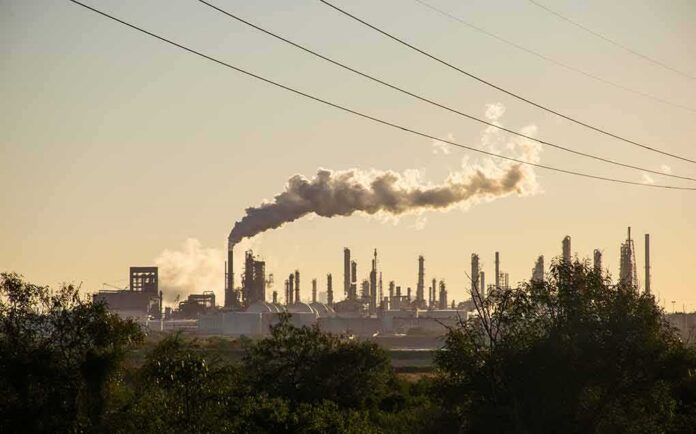
Ukrainian drone strikes have now reached deep into Russia’s oil heartland, and the campaign is shaking fuel supplies at the source.
Quick Take
- Reuters, BBC Verify, AP, and CNBC all reported repeated Ukrainian strikes on major Russian refineries.
- Public reporting says the attacks have caused fires, shutdowns, fuel shortages, and price rises inside Russia.
- The source set supports strikes on many major plants, but it does not fully prove that all eleven biggest refineries were hit.
- Russian officials often say drones were intercepted or that fires came from debris, not direct impact.
Major Refineries Have Been Targeted Repeatedly
Reuters reported that Ukrainian strikes hit the Moscow refinery, the Ilsky refinery, the Omsk refinery, and three refineries in one July attack. CNBC also reported strikes on Bashneft-Novoil and Slavneft-Yanos, while Reuters said Ukraine hit TANECO, TAIF-NK, and Saratov facilities in other attacks. Together, those reports show a broad campaign against the core of Russia’s refining network.
BBC Verify found that 21 of Russia’s 38 large refineries had been hit since January, and at least 10 had fully or partly suspended operations since August. Reuters said attacks on refining had doubled since the start of 2026 and had led to full or partial shutdowns and lower gasoline, diesel, and jet fuel output. Those findings point to a sustained pressure campaign, not a few isolated blasts.
Fuel Pain Is Showing Up Inside Russia
The economic effects are no longer abstract. AP reported that Putin acknowledged a fuel deficit, and BBC said the strikes had helped drive shortages and price rises in some regions. DW also reported long lines at filling stations and higher prices. Reuters added that the affected refinery capacity exceeded 83 million metric tons a year, or about one quarter of Russia’s total refining capacity.
That scale matters because refining is where crude oil becomes usable fuel. When those plants slow down, the damage ripples through transport, farming, industry, and the military supply chain. Reuters described major plants halting or scaling back output after drone attacks, while AP reported that Ukrainian strikes kept setting Russian oil sites ablaze. For readers watching energy prices and wartime resilience, that is the key point.
The Record Supports Disruption, Not Total Proof of Collapse
The strongest pushback comes from Russian air-defense claims and local explanations. Reuters reported that Russian officials said large numbers of drones were shot down, and The Moscow Times said local authorities blamed debris for a fire at Ilsky rather than direct impact. That does not erase the strikes, but it does show that some incidents are disputed on the question of how much damage they caused.
UPDATE — Drone Strike on Nizhnekamsk Kills 13
A Ukrainian drone attack hit the industrial city of Nizhnekamsk in Tatarstan, reportedly killing at least 13 people and wounding 39, according to the local mayor. The strike targeted a major oil refinery, marking one of the deadliest…
— WORFLICT – WAR NEWS (@worflict) August 10, 2026
That distinction matters. The available reporting clearly supports a campaign of repeated hits, fires, and shutdowns across Russia’s refining sector. It does not fully prove the stronger claim that every one of Russia’s eleven biggest refineries has been confirmed hit in a way that permanently crippled each plant. The public record here is solid on disruption, but weaker on a total knockout claim.
Sources:
nbcnews.com, reuters.com, apnews.com, themoscowtimes.com, bbc.com, cnbc.com, dw.com