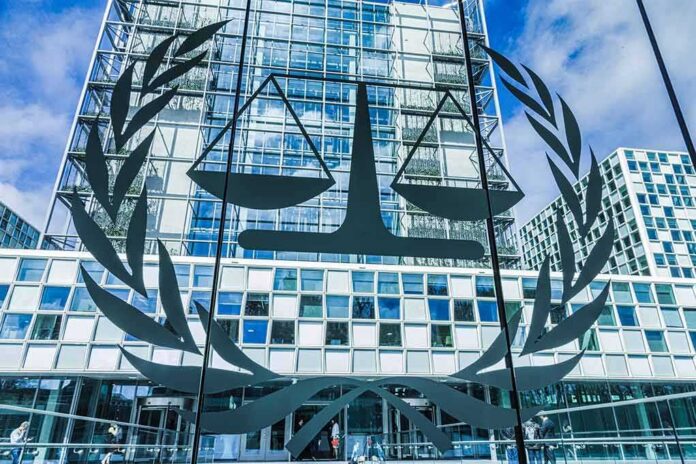
President Trump is moving to choke the International Criminal Court’s money flow using lawful U.S. sanctions, asserting a defense of American sovereignty grounded in an existing executive order.
Story Highlights
- Executive Order 14203 authorizes sanctions against International Criminal Court officials and supporters.
- The State Department used this authority in 2025 to name four International Criminal Court officials tied to cases against Americans and Israelis.
- A federal judge later paused parts of the order, signaling continuing court fights over enforcement.
- Critics claim sanctions threaten the court’s independence, while the administration cites national sovereignty.
What the Executive Order Does and Why It Matters
Executive Order 14203, signed on February 6, 2025, lets the United States block property and restrict access to the U.S. financial system for people who help International Criminal Court efforts against Americans or allied nationals without consent. The order describes the court’s actions as a threat to U.S. sovereignty and to partners who never accepted International Criminal Court jurisdiction. The order empowers the Treasury Department to freeze assets, deny services, and bar entry for designated individuals, creating real costs for those targeting protected persons.
The administration argues that no foreign court can claim power over Americans who never agreed to it. The executive order builds on that view and sets a clear red line. It warns banks, service firms, and nongovernmental groups that supporting targeted International Criminal Court actions could carry penalties. That message aims to deter overreach before arrests or warrants land. The approach claims to defend constitutional self-government by stopping outside actors from punishing U.S. officials or troops without our nation’s consent.
How the State Department Used the Authority
On August 20, 2025, the State Department named four International Criminal Court figures under Executive Order 14203: Kimberly Prost, Nicolas Guillou, Nazhat Shameem Khan, and Mame Mandiaye Niang. The department said these officials engaged in steps to investigate, arrest, detain, or prosecute U.S. or Israeli nationals without the consent of either nation. These designations demonstrated that the order had teeth. They also showed that the sanctions were not symbolic gestures but operational tools aimed at specific conduct.
The measures carry concrete effects. Designated persons can face asset freezes, travel bans, and service restrictions from U.S. persons, including banks and payment firms. Those enforcement tools are designed to shape choices in the real world, not just make a statement. Supporters view this as smart leverage to shield U.S. service members and elected officials from politicized cases. Critics counter that the steps punish legal actors and chill cooperation with war crimes investigations. Advocacy groups framed the sanctions as harmful to justice efforts.
Legal Pushback and the Road Ahead
Litigation quickly followed. A federal judge blocked enforcement of parts of the order after an April lawsuit challenged its scope, confirming that the policy has real and disputed bite. The court fight does not erase the order; it delays pieces of it while judges weigh claims. The administration can revise guidance, shore up records, and continue designations consistent with court rulings. Expect ongoing review as agencies balance national security, foreign policy, and constitutional limits.
Opposition from the International Criminal Court and allied governments has grown louder. Rights groups and commentators argue that sanctions undermine judicial independence and the “rule of law” narrative around atrocities cases. The administration replies that sovereignty and consent are cornerstones of international practice, and no treaty can bind the United States without its approval. That clash—judicial ambition versus sovereign control—will define the debate as new steps are considered or rolled out.
What a Broader Sanctions Package Could Mean
Reporting indicates the administration has considered wider actions that could further restrict the International Criminal Court’s access to finance and services, raising the stakes for institutions that enable its work. Details of any 2026 package remain limited in the public record, but the direction is clear: focus pressure on those advancing cases against Americans and key allies without consent. If implemented, broader measures could deter banks and vendors from serving the court, tightening compliance risk around the world.
⚡️Trump is expected to impose sanctions on the International Criminal Court as an institution shortly. The ICC would be cut off from the global financial system. States Parties have had ample time to prepare for this and undertake contingency planning.https://t.co/z1jZUnsc9q
— Sergey Vasiliev (@sevslv) September 21, 2026
For conservative readers, the stakes are simple. An unaccountable foreign court should not decide the fate of American troops, officials, or voters. Executive Order 14203 gives the United States a lawful way to push back and protect its people. Court challenges will continue, and critics will claim the sky is falling. But the core question stands: who governs Americans—distant judges abroad or a constitutional republic at home? The administration’s answer is firm, and the tools are now in hand.
Sources:
en.wikipedia.org, ofac.treasury.gov, hrw.org, en.apa.az