
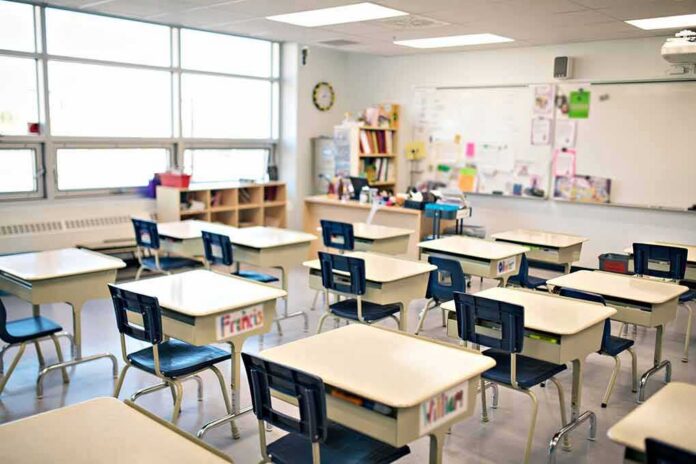
France’s student-led unrest has left hundreds of police injured and schools ransacked, while organizers press for a larger nationwide push, testing France’s grip on order and its social model.
Story Highlights
- Hundreds of French schools closed or disrupted as protests over education escalated.
- Authorities report thousands of arrests, many of them teenagers.
- School staff injuries and damaged campuses show the crisis hit education directly.
- Conservatives, including President Trump, link the violence to mass migration pressures.
School System Disrupted Across France
French officials said between 400 and 500 secondary schools were closed or partly closed due to safety concerns. Reports also cited more than 700 affected establishments as protests spread. The stated grievances focused on poor facilities, classroom conditions, teacher shortages, and security on campuses. The Education Ministry addressed closures through the school network while police managed street blockades and clashes near entrances. This school-centered disruption formed the core factual pattern early in the crisis.
Journalists on the ground described blocked gates, fires near school fences, and attacks on building fronts. Police and firefighters faced thrown objects and makeshift barricades outside several campuses. Local officials reported burn damage and smashed doors at some sites. The visible focus on schools separated this wave from routine labor strikes or pension marches. The early images showed students confronting police outside high schools, not financial districts or rail stations. That school footprint anchored the initial phase.
Arrests Concentrated Among Teenagers
Interior and justice authorities reported a surge in arrests as violence flared at blockades and marches. Early tallies reached the low thousands, and later counts rose much higher as the week ended. Most detainees were teenagers, consistent with a youth-led mobilization centered on high schools. That age profile matched what officials called a student movement that shifted as violent factions joined. The state’s data varied by day and agency, but the teenage share appeared significant at multiple points.
Officials also cited injuries to education staff during confrontations at schools. Reports described dozens of injured personnel, including headteachers trying to secure buildings. Damage included burned or ransacked campuses, with one school in Nantes facing repair costs in the millions of euros. These events undermined claims that the unrest was only peaceful advocacy for better classrooms. The toll on educators and facilities showed how far the conflict strayed from normal protest lines.
Violent Factions Complicate a School Protest
France’s education minister said the broader student movement had been “taken hostage” by smaller violent groups. That statement acknowledged a real student protest while explaining the later turn. Police recorded fires, looting attempts, and ambushes near some campuses, which pushed mayors and principals to close doors. The government framed its response as restoring order and keeping students safe. That focus also risked shifting debate away from the system’s shortages and facility decay.
Conflicting figures on closures, arrests, injuries, and damage reflected the chaos of rolling unrest. Different ministries and regions issued updates on different clocks, with no single public ledger. That gap made it hard to verify exact totals day to day. Still, the consistent through-line held: schools were the focal point, youth drove the turnout, and violence grew as non-student actors joined. The pattern echoed past French crises that began local and then spread nationwide.
Immigration Debate Surges Alongside the Clashes
President Trump said the unrest showed the costs of “out of control mass migration,” arguing it was not simply about schools but deeper social fractures. Representative Mike Waltz and other conservatives tied the violence to Europe’s immigration failures. Their case linked scenes of urban fires and clashes to long-running integration problems. These points sparked pushback in France, where ministers stressed education grievances and targeted violent groups, not a single religious command.
The record so far does not present a full participant survey or arrest breakdown by origin or motive. Officials emphasized school-centered facts, youth arrests, and campus damage. Conservative leaders warned that migration pressures likely deepened the crisis. Both claims can overlap when a school protest widens into street disorder. Clearer data would help. France could release incident-level files on arrests, school damage, staff injuries, and outcomes to inform the next steps calmly and honestly.
Sources:
bbc.com, dw.com, reuters.com, euronews.com, nytimes.com, the-express.com, justthenews.com