
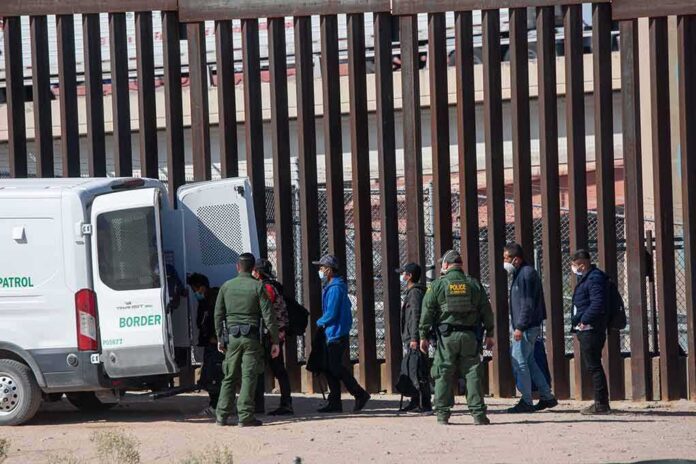
DHS says its Texas crackdown is taking violent offenders off the streets, even as critics claim fear is spreading in Latino communities.
Story Highlights
- DHS reports arrests and deportations of offenders tied to murder, rape, arson, and an ISIS-inspired plot.
- Texas operations include a South Texas stash-house arrest of 16 people for unlawful presence, according to ICE.
- Independent reporting says most Texas ICE arrestees lacked criminal convictions, complicating the focus-on-felons claim.
- Federal watchdogs pressed ICE on body-camera gaps; DHS rejected auto-activation, raising transparency questions.
DHS Emphasizes Removal of Serious Threats
Department of Homeland Security releases list specific Texas arrests that it labels the “worst” offenders, citing Arlington and Fort Worth cases with sexual assault, multiple drunk-driving offenses, and support for an Islamic State-inspired plot. DHS pairs those examples with a stated mission to target public-safety and national-security threats. Officials say the recent deportations include people convicted of murder, rape, and arson. The message from Washington is clear: dangerous offenders are getting removed from American communities.
Homeland Security leadership says the administration will use all lawful options to carry out the largest deportation effort in history. That policy line puts a strong emphasis on enforcing the law as written and restoring order at the border and in the interior. For many conservatives, that is overdue after years of lax control and sanctuary politics. The releases stress that people with serious convictions are a top priority, which aligns with public-safety first principles.
South Texas Operations and Concrete Arrests
Immigration and Customs Enforcement reports a South Texas stash-house discovery that led to 16 arrests tied to unlawful presence. The agency describes it as part of ongoing Rio Grande Valley operations to stop smuggling and protect migrants from cartels and traffickers. That kind of case shows the daily grind of enforcement, not just headline-grabbing removals. The government frames these actions as both border security and anti-crime work, choking off the supply lines that empower smugglers and gangs.
These actions are happening while many Texans still feel the costs of past border chaos. Families remember fentanyl deaths, trespassing, and property damage that surged under open-border policies. Voters who want order support strict enforcement that deters future unlawful crossings. The government’s focus on stash houses, criminal reoffenders, and known threats matches that choice. The argument is simple: enforce the law evenly, remove predators fast, and end the pull factors that fuel illegal entry.
Conflicting Data on Who Gets Arrested
Independent reporting from The Texas Tribune says two of every three people arrested by Immigration and Customs Enforcement in Texas had no criminal conviction, and nationally about thirty-one percent of more than half a million arrests as of early August had convictions. That creates a tension with the administration’s worst-of-the-worst messaging. The issue is not whether some bad actors were caught—the records show they were—but how much of the total operation targets serious criminals versus other immigration violators.
That gap matters for public trust. Texans want violent offenders out fast. Texans also want fair process and smart use of resources. Clear, public numbers by offense type and case outcome would help. A full, auditable Texas dataset would show who is being arrested, where, and for what. Without that, releases may look selective to some readers. Publishing comprehensive arrest and removal data would strengthen the case that enforcement is focused on real threats and not on broad dragnets.
Camera Policy Raises Accountability Questions
The Government Accountability Office found that Immigration and Customs Enforcement lacked automated controls to ensure body cameras activate when required, and it urged automated activation technology. The Department of Homeland Security agreed with several fixes but rejected the automated-trigger recommendation. Officials cited risks like recording informants or First Amendment activity, but watchdogs said the agency did not show other safeguards that guarantee required footage will exist when it counts.
Conservatives value law and order, and that includes proof of proper conduct. Cameras protect good officers and the public. Automated activation when weapons are drawn or force is used would create reliable evidence, reduce false claims, and expose real misconduct. If the department rejects automation, it should present an alternative that works and publish compliance audits. Stronger transparency would blunt critics and let agents do their jobs without a cloud of doubt.
Bottom Line for Texas Voters
President Trump’s team says the mission is to remove criminals and restore the rule of law. DHS has posted examples of violent offenders and smugglers to back that up. Independent reporting challenges how representative those examples are, pointing to large numbers of non-conviction arrests in Texas. The fix is clarity: show the full numbers by crime and outcome, and close the camera gap. Texans can have tough enforcement and real accountability at the same time—and they should demand both.
Sources:
cbsnews.com, dhs.gov, gao.gov, axios.com, krgv.com