
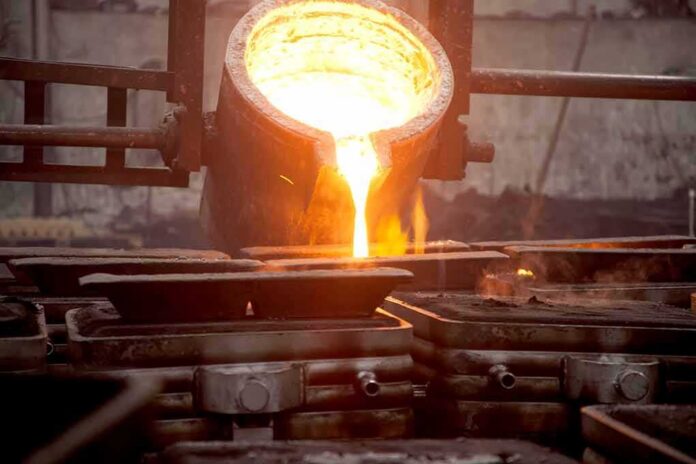
A $300 million private investment will boost American-made submarine parts in Pennsylvania and bring hundreds of skilled jobs back to a critical steel shop.
Story Highlights
- Hadrian bought Kutztown Foundry & Machine and plans a $300 million upgrade.
- Project targets steel castings and forgings for Columbia- and Virginia-class submarines.
- Factory will add automation and a new “Factory of the Future,” aiming for hundreds of jobs.
- Move aligns with Navy efforts to fix casting and forging bottlenecks in the supply chain.
Hadrian Purchase and Planned Investment
Hadrian announced it acquired Kutztown Foundry & Machine in Pennsylvania and will invest $300 million to expand production at the site. The company said the plan includes modern equipment, advanced software, and a new “Factory of the Future” to increase output and cut lead times. The focus is naval-grade steel castings and forgings that go into submarines and other defense systems. A defense trade outlet reported the plant had 49 workers before the deal, with growth to come.
U.S. Senator Dave McCormick praised the project as a chance to strengthen the defense industrial base and support hundreds of good-paying jobs in Pennsylvania, according to the announcement. Company materials connected the expansion to the United States Navy’s Columbia-class ballistic-missile submarines and Virginia-class attack submarines. Those programs depend on heavy steel parts that only a handful of domestic firms can produce at the scale and quality required for warships.
Why Castings and Forgings Matter Right Now
The United States Navy has warned that the submarine supply chain faces single-source risks and tight capacity in areas like castings and forgings. The Navy’s shipbuilding plan describes ongoing investments to expand the submarine supplier base so production can meet annual goals for Columbia- and Virginia-class boats. Navy supply-chain reports also show foundry modernization projects can cut lead times and raise casting capacity when upgrades are done well and on time. This is the bottleneck Hadrian says it will help relieve.
A recent industry white paper noted that years of plant closures and shrinking skilled workforces pushed lead times for key metal parts beyond nine months across many programs. That strain slows delivery of submarine components and complicates schedules for shipyards and their top-tier suppliers. Public Navy updates say they have funded supplier projects in dozens of states, including work on castings and heavy machining, to add capacity and stabilize output. The Kutztown investment fits that national push to rebuild critical manufacturing.
Jobs, Timelines, and What to Watch Next
Trade coverage put the facility’s pre-expansion headcount at 49 and said the modernization is expected to create hundreds of jobs, though specific hiring targets and timing were not detailed. The company’s release did not break down the $300 million by buildings, furnaces, robotics, software, or training, and it did not list contract numbers or production volumes tied to submarine parts. The announcement presents a forward plan; spending, construction milestones, and output will be measured over time.
US defense manufacturer Hadrian acquires Pennsylvania’s historic Kutztown Foundry, announcing a $300 million privately funded expansion to produce naval-grade steel for US Navy submarines.
Construction begins in January, with plans to create hundreds of American manufacturing…
— AF Post (@AFpost) November 17, 2026
Pennsylvania families and American taxpayers have a clear stake. When core parts are made here at home, the fleet is stronger, quality is easier to verify, and supply lines are less exposed to overseas shocks. If Hadrian delivers on the upgrade, local workers gain durable trades, and the Navy gains reliable parts. Readers should track building permits, hiring, and first deliveries as simple markers of progress. For now, a major private bet is on the table to rebuild a vital shop floor in the heartland.
Sources:
insidedefense.com, prnewswire.com, usni.org, secnav.navy.mil, payneinstitute.mines.edu, gao.gov