
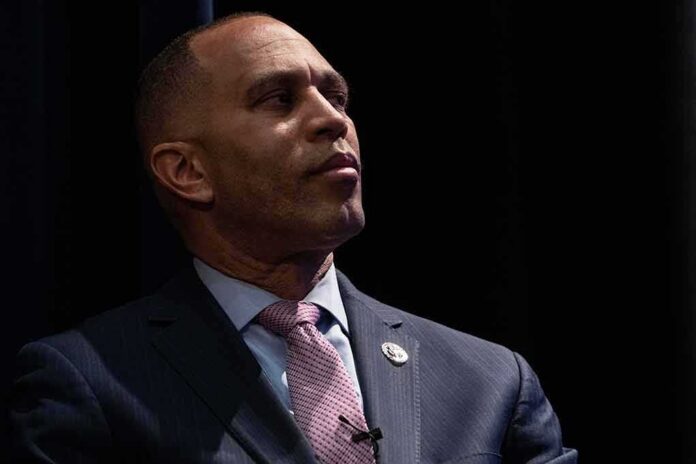
House Democratic Leader Hakeem Jeffries said he supports bringing deported DACA recipients back and giving them “remedial assistance.”
Story Highlights
- Jeffries said “certainly” when asked if deported DACA recipients should be brought back.
- He tied returns and “remedial assistance” to cases he says were unfair or unjust.
- He did not define who qualifies, what help means, or how it would work.
- The plan raises cost, authority, and fairness questions for taxpayers and law enforcement.
Jeffries Backs Return of Some Deported DACA Recipients
On November 10, 2026, House Democratic Leader Hakeem Jeffries told PBS NewsHour he supports efforts to bring deported recipients of Deferred Action for Childhood Arrivals back to the United States. When asked if he supports those efforts, Jeffries answered, “Certainly.” He then said anyone “treated unfairly and unjustly” by the administration should receive “remedial assistance” and have damage “undone”. His office published a transcript repeating the same language and framing.
Jeffries did not describe what “remedial assistance” would include. He did not say if it would be legal help, travel support, cash, status relief, or something else. He did not identify a legal path for return. He did not mention using parole, reopening cases, new visas, or a vote in Congress. He gave no numbers, no agency in charge, no funding source, and no timeline. That leaves core questions about cost, enforcement, and process unanswered.
What “Remedial Assistance” Could Mean Under Current Law
Deferred Action for Childhood Arrivals defers removal but does not grant lawful status. United States Citizenship and Immigration Services says people with Deferred Action for Childhood Arrivals can still face serious consequences if they have a removal order or depart without advance parole. Leaving after a removal order can block reentry and trigger more penalties. These facts shape which tools exist for any potential return and show why broad promises can collide with hard law.
Any real program would need a clear standard for “unfair” or “unjust” treatment. It would also need a way to review files, confirm facts, and rule on each case. That means case officers, lawyers, and time. It also means money. If Congress is involved, appropriators must set levels and guardrails. If agencies act, they must name authorities and limits. Without that, talk about returns and remedies will outpace what officers can lawfully do on the ground.
Taxpayer Stakes and Border-Enforcement Realities
Taxpayers would carry the load for any travel, legal work, or payments if those are part of “remedial assistance.” Jeffries did not say who pays or how much. Agencies already face heavy caseloads and tight budgets. Adding reviews for deported recipients could slow other work if Congress does not fund it. It could also cause new court fights if advocacy groups and states challenge the policy or its legal basis. Clear details would reduce confusion and waste.
President Trump’s administration has focused on strong border enforcement and the rule of law. That means removal orders and criminal checks matter. If Democrats push to bring people back without a narrow, lawful test, it risks sending a message that removal orders are optional. That would reward past violations and invite more. A strict, case-by-case process that names the law used, sets proof rules, and bars public benefits unless Congress approves would limit damage to enforcement.
What Conservatives Should Watch Next
Conservatives should track four items. First, the exact definition of “unfair and unjust” treatment, written in plain rules. Second, the legal path used for return, whether parole, reopened cases, or legislation. Third, the price tag and who pays it. Fourth, whether any benefit package goes beyond legal help into cash or welfare. Jeffries’s words are on record, but the plan is not. Demands for detail now can stop a broad, open-ended amnesty by another name.
Lawmakers should insist that any review uses public standards, not political whim. Agencies should publish guidance before acting. Congress should vote on any funding and set limits on benefits. United States Citizenship and Immigration Services guidance proves the stakes: Deferred Action for Childhood Arrivals is not a shield from removal or a ticket back after a removal order. The nation needs compassion with order, not slogans that weaken the law and drain taxpayers.
Sources:
yournews.com, mediabias.news, meridian.news