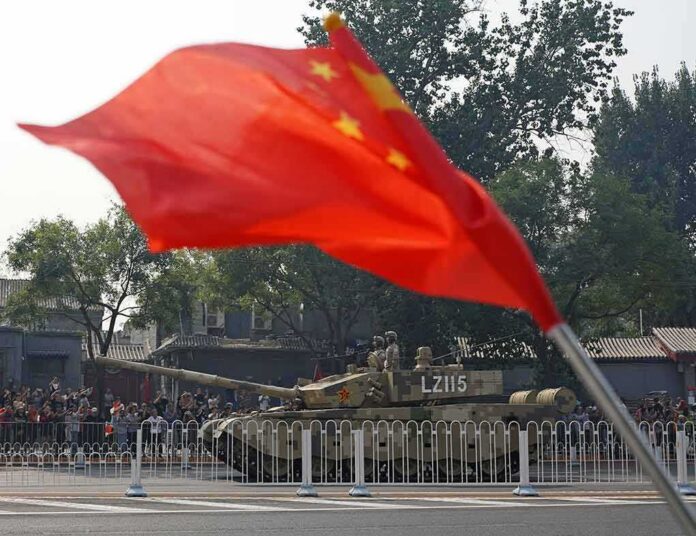
China’s state media is celebrating Tuesday’s stunning midterm results, telling its own citizens that a Democrat-run Congress means tariff relief, a faster end to the Iran war, and new openings in Latin America.
Story Snapshot
- Democrats swept the November 3 midterms, flipping the House, the Senate, and red strongholds like Texas and Ohio.
- China’s state-run Xinhua news agency openly framed the results as good news for Beijing’s trade and foreign policy goals.
- Democrats already tried once to kill President Trump’s tariff authority and now have the numbers to try again.
- President Trump’s veto pen and the Senate’s 60-vote rule still stand between Democrats and a full tariff rollback.
Beijing Cheers Democrats’ Midterm Sweep
China’s Communist Party-run Xinhua news agency wasted no time reacting after Democrats took both chambers of Congress on November 3. Chinese analysts cited by the outlet said a Democrat-controlled Congress improves Beijing’s odds of seeing President Trump’s tariffs rolled back, the war pressure on Iran eased, and a path reopened for Chinese influence across Latin America.
The midterm results were not close. Democrats flipped governor and Senate races in deep-red states including South Carolina, Iowa, Kansas, and Mississippi, on top of their Texas sweep, according to Gateway Pundit’s election tracking. For a party that spent years losing ground in middle America, it was a historic reversal, and one Beijing’s propagandists clearly noticed first.
Democrats Already Tried to Kill Trump’s Tariffs
This is not a new fight. Senator Ron Wyden introduced a resolution back in April 2025 to terminate the national emergency powers underlying Trump’s global tariffs. It failed 49-49. A similar resolution came back in October and passed 51-47, with every Democrat and four Republicans on board. With full control of Congress now, Democrats have the votes to send these measures to Trump’s desk far more easily.
Why Trump’s Veto Still Stands in the Way
Here is the catch Beijing’s cheerleaders are glossing over. Reuters reported Democrats are projected to hold roughly 54 Senate seats, well short of the 67 votes needed to override a presidential veto. Trump can simply veto any tariff repeal that reaches his desk, and Democrats would need serious Republican defections to beat that veto, something that has not materialized so far.
The Senate filibuster adds another wall. Reuters noted Democrats would still need Republican votes to clear the 60-vote threshold required to pass most trade legislation, even with their new majority. Bloomberg’s own coverage of the midterms confirmed Trump retains full veto power over tariff measures, meaning any Chinese hope for quick relief depends on Republicans crossing party lines, not just Democratic control of Congress.
Iran War Funding Becomes New Battleground
Democrats have signaled they want to cut off funding for military operations against Iran once they take over in January. Representative Rosa DeLauro put it bluntly, saying Democrats “will absolutely not fund Trump’s war of choice with Iran” because of rising costs and safety concerns for American families. That funding fight, like the tariff fight, would still require Republican votes to survive a filibuster or override a veto, limiting how fast Beijing’s wish list actually gets delivered.
China’s Long Game in Latin America
China’s push into Latin America did not start this week. Trade between the regions grew nearly eighteen-fold between 2002 and 2020, making Beijing the top trading partner for Brazil, Chile, and Peru. That expansion reflects decades of Chinese investment in ports, mining, and infrastructure, not a single American election. Analysts still warn that any sign of U.S. political division gives Beijing an opening to deepen that foothold further.
Even analysts tracking the region note the picture is not simple. One APAC Advisors expert told Al Jazeera that whichever party runs Congress, lawmakers are likely to keep tightening restrictions on China’s access to American technology. That is a reminder that Beijing’s celebration may be premature, and that hawkish instincts on China run deeper than one election cycle, regardless of who holds the gavel.
What Comes Next for Republicans
Back home, Republicans are left sorting through the wreckage of a devastating election night, with finger-pointing already aimed at Senate leadership over the losses. For conservative voters, the real lesson is clear. A weakened GOP majority gives Beijing, Tehran, and every foreign adversary more daylight to test American resolve, even if the Constitution’s veto and filibuster rules still keep Trump’s core policies standing for now.
Sources:
thegatewaypundit.com, aljazeera.com, today.rtl.lu, cnbc.com