
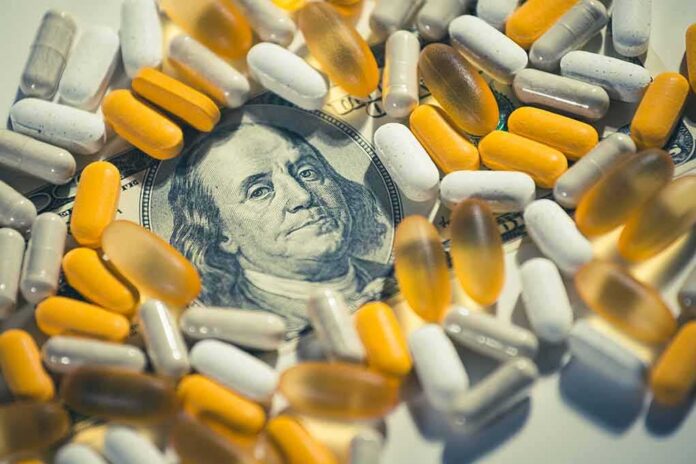
A Queens family is charged with a $55 million Medicare and Medicaid pharmacy scheme that prosecutors say bled taxpayers and rewarded kickbacks.
Story Highlights
- Federal grand jury indicted four related defendants tied to five Queens pharmacies.
- Prosecutors say Medicare and New York Medicaid paid over $55 million for bogus or unnecessary drugs.
- Charges include conspiracy, illegal kickbacks, money laundering, and tax offenses.
- Case fits a wider pattern of pharmacy fraud risks in public programs, officials say.
Federal Indictment Names Four Family Members and Five Pharmacies
The Justice Department said a federal grand jury in the Eastern District of New York indicted four family members for a sweeping pharmacy fraud scheme. Prosecutors identified siblings Zhang Huang and Yanle Huang as alleged beneficial owners of five Queens pharmacies from September 2020 through March 2026. The named companies are 168 DME Inc., 169 DME Inc., QS Pharmacy Inc., ROK Pharmacy Inc., and 19 Pharmacy Corp. The indictment also charges their parents, Jian Xin Huang and Xiuqin Huang, in the same plan.
Prosecutors said the group conspired to bill Medicare and New York Medicaid for medications that were not medically necessary. The indictment also alleges illegal kickbacks, money laundering, and tax crimes. Investigators said the pharmacies took in more than $55 million in government payments tied to the suspected scheme during the six-year period. A Washington Times report also stated that Medicare alone paid more than $55 million to the pharmacies during the charged window.
Alleged Scheme and Kickbacks Within a Known Risk Area
The government’s announcement did not list each prescription at issue, but it described a pattern of bogus or unnecessary drug claims. The charges also include paying illegal kickbacks to drive government billing. While the indictment will need to be proven in court, the described methods mirror fraud risks that watchdogs have flagged for years in pharmacy billing within public health programs.
Separate New York cases show how such pharmacy scams can work. In October, state officials charged a Queens pharmacy owner in a plan involving cash to Medicaid beneficiaries, diverted HIV medications, and false claims for reimbursement. That case, while different from the Huang indictment, illustrates the cash-for-claims and drug diversion tactics that investigators have documented in the same borough’s pharmacy market.
Taxpayer Impact and Program Integrity Stakes
The alleged $55 million loss strikes at seniors, working families, and every taxpayer who funds Medicare and Medicaid. When fraud drains these programs, honest patients face higher costs and less access. Government Accountability Office reports classify both programs as high risk because of their size and complex billing rules. The Department of Health and Human Services estimated more than $100 billion in improper payments across Medicare and Medicaid in fiscal 2023, underscoring the scale of the challenge.
Improper payments are not the same as proven fraud. They also include documentation and processing mistakes. But pharmacy fraud remains a recurring target for enforcement. Federal and state teams have stepped up data analytics, audits, and joint operations. Those efforts have produced national takedowns and major prosecutions that seek to claw back funds and bar bad actors from billing again.
Law-and-Order Focus Under President Trump
President Trump’s administration has prioritized rooting out health care fraud to protect taxpayers and seniors. Federal agents and prosecutors continue to press cases that target kickbacks and sham billing. The Queens indictment fits that effort by charging alleged owners and family members who, prosecutors say, directed or benefited from the scheme. The Justice Department’s approach signals that pharmacy shell games, money laundering, and tax evasion will be met with full penalties if proven.
The defendants are presumed innocent unless and until proven guilty. A defense attorney quoted in news coverage stressed that an indictment is an accusation, not a conviction. Next steps could include arraignments, discovery, and potential motions. If the case proceeds to trial, prosecutors will need to show the prescriptions lacked medical need, that kickbacks occurred, and that the money trail supports the fraud and laundering counts beyond a reasonable doubt.
What to Watch: Claims Data, Medical Necessity, and Money Trail
Key evidence will likely include pharmacy billing records, prescribing histories, and claims submitted to Medicare and New York Medicaid. Investigators may rely on bank accounts, cash withdrawals, and internal ledgers to map suspected kickbacks and money movement. Medical necessity questions often turn on diagnosis codes, lab results, and prior authorizations. The government may also present witness testimony from pharmacy staff, beneficiaries, and prescribers to link roles and knowledge across the family and the companies.
For taxpayers and families who play by the rules, this case highlights why strong borders, strong laws, and strong audits matter. When fraudsters exploit health programs, costs rise and trust falls. Effective oversight, swift prosecution, and recovery of stolen funds uphold fairness. Conservatives should expect continued pressure on fraud, waste, and abuse so that seniors get real care, not fake claims, and so that every tax dollar serves patients—not kickbacks.
Sources:
washingtontimes.com, justice.gov, ag.ny.gov, oig.hhs.gov, bn.ag.ny.gov, omig.ny.gov