
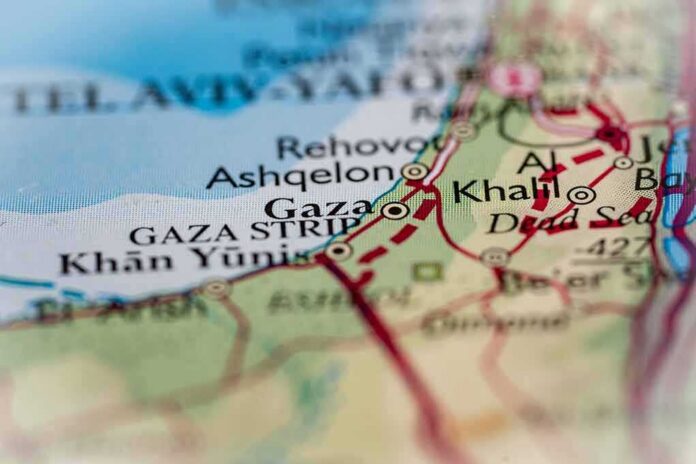
Israel’s defense minister warned that one million Gazans could be moved south again unless Hamas gives up its weapons, tying disarmament to a new named operation.
Story Snapshot
- Israel Katz linked Hamas disarmament to avoiding “Operation Gideon’s Chariot II,” a fresh Gaza push.
- Katz said the plan would repeat earlier evacuation models and move about one million civilians south.
- Reports say Hamas has rejected disarmament demands without broader conditions, keeping talks frozen.
- United Nations officials warn forced transfer is unlawful and carries severe humanitarian risks.
Katz’s Ultimatum: Disarm or Face “Gideon’s Chariot II”
Israel’s defense minister, Israel Katz, posted a warning that Hamas must disarm or face a new Israeli operation in Gaza, which he called “Operation Gideon’s Chariot II.” Reports say Katz tied demilitarization to President Trump’s plan for Gaza and said the military would move about one million residents south before clearing ground under the Rafah and Beit Hanoun model. Media accounts describe the one-million figure and evacuation direction as central parts of his message.
Katz framed the choice as voluntary disarmament by Hamas or a forced military disarmament. Outlets relaying his statement said the approach repeats earlier clearing operations, signaling a defined playbook if Hamas refuses to hand over weapons. Coverage highlights that the message came as a public warning, not a published cabinet order, leaving questions about the formal decision path but making the operational intent clear to both Hamas and outside audiences.
Operational Specifics and What Is Missing
Reports say Katz invoked specific areas, prior clearances, and a southward movement of civilians. That level of detail shows forethought and a deterrent signal. Yet coverage also notes no public map, route plan, or reception capacity for moving that many people safely has been released. Without those items, outside observers focus on feasibility and humanitarian risk. This gap lets critics frame the plan as forced displacement rather than a shield for civilians caught near militants.
Analysts often say disarmament works best inside a broader process with clear security, governance, and economic steps. The current public message focuses on weapons and an evacuation, not on reintegration or verified civilian protections. That narrow focus explains why the proposal draws global scrutiny and why its success likely depends on visible protections for families, the sick, and children who cannot move quickly or far without help.
Hamas Position and International Law Concerns
Hamas’s armed wing has rejected early disarmament talks. Reuters reported the group would not discuss giving up weapons without conditions such as full Israeli withdrawal, and it attacked disarmament demands as a way to extend what it calls genocide. That stance keeps the core dispute frozen: Israel demands disarmament to end the threat, while Hamas demands changes before disarmament even begins. This standoff raises the odds of renewed operations if neither side shifts.
United Nations human-rights officials warn that forced transfer is a serious violation of international humanitarian law and a crime under international law. Prior statements from United Nations experts said repeated displacement and broad destruction had already uprooted most Gazans many times. They argued this amounts to forcible transfer under international law, and urged protection for civilians whether they leave or stay, plus the right to return when safe. Those legal warnings shape how foreign capitals and aid groups will judge any mass movement plan.
Why This Matters to American Readers
President Trump has pushed a security-first path that aims to break Hamas’s grip and end rocket threats on Israel. Katz’s message linked his plan to that vision. For Americans who value strong borders, law and order, and clear red lines against terror, the demand for disarmament tracks with common sense. But any action that moves huge civilian populations without a transparent, safe plan can fuel global backlash, drive costs for allies, and invite charges of government overreach abroad.
Conservatives expect real results and respect for the rule of law. That means pressing Hamas to surrender weapons and release hostages, while also insisting on practical steps that protect innocent families. Clear maps, routes, medical aid, and timelines would show the plan targets militants, not civilians. Without those details, critics will own the narrative. The stakes are high: stop terror, protect the innocent, and avoid actions that hand a propaganda win to those who hate the West.
Sources:
insiderpaper.com, rte.ie, france24.com, lbcgroup.tv, ohchr.org, un.org, news.un.org