Congress may soon question U.S. intelligence officers about a 2025 “orange orb” encounter near a sensitive military site, testing secrecy against accountability.
Story Highlights
- Rep. Eric Burlison says intelligence witnesses to a 2025 orb incident could testify before Congress.
- Lawmakers seek transparency while protecting classified locations, methods, and personnel.
- Prior hearings pushed stronger whistleblower protections for service members reporting unidentified objects.
- The Pentagon’s anomaly office says most resolved cases end up as balloons, drones, or aircraft, not exotic tech.
What Rep. Burlison Says Could Happen Next
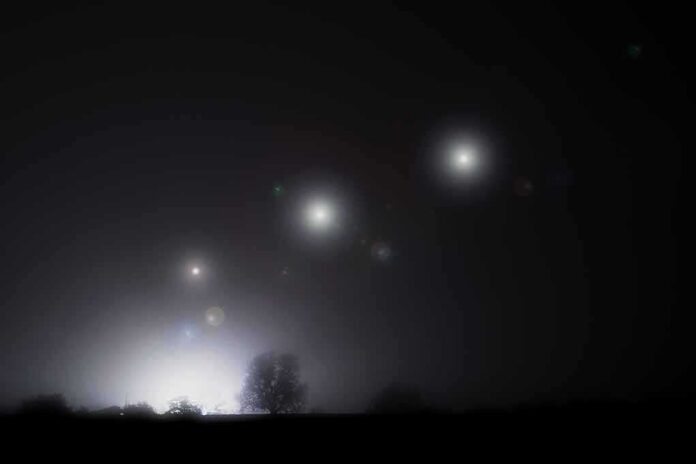
Rep. Eric Burlison of Missouri said U.S. intelligence representatives who reported seeing orange spheres, including smaller orbs emerging from a larger “mothership,” could be called to testify before Congress. He emphasized the need to guard classified information tied to a confidential West Coast military installation while seeking facts for the public record. His comments outline a path for sworn testimony that respects national security and answers basic oversight questions about the 2025 mission and what officials observed.
Potential testimony would mark a step forward after multiple briefings and hearings on unidentified objects. Burlison has pressed for access to restricted sites and programs to verify claims and to cut through rumors. He has framed the goal as simple: let responsible members of Congress review the evidence, then share what can be shared without exposing sources and methods. That balance mirrors broader House oversight efforts that demand sunlight while keeping troops and capabilities safe.
Why Congress Is Pushing: Transparency With Guardrails
House oversight leaders have warned that the government’s own processes can block needed scrutiny. A previous committee summary faulted the system for slow and uneven transparency about unidentified objects and interagency coordination. Lawmakers argued that robust oversight prevents mission creep and protects civil liberties, even in sensitive areas. They also urged stronger whistleblower protections so uniformed personnel and intelligence staff can report encounters without fear of punishment or career harm.
Those safeguards matter when incidents intersect with secret operations, restricted airspace, and critical infrastructure. Witnesses tied to intelligence work often handle classified platforms and data. Public hearings therefore must separate observations from operational details. Members can use closed sessions to review protected material and then release cleared facts. That approach ensures Americans learn what happened while adversaries learn nothing useful about U.S. defenses. Burlison’s comments point to exactly that kind of structured process.
What The Pentagon’s Anomaly Office Has Found So Far
The Defense Department’s All-Domain Anomaly Resolution Office says most resolved sightings trace back to everyday objects. Its recent report states that of the cases it could close, all were explained by balloons, satellites, birds, aircraft, or uncrewed systems. Officials add that many files stay open due to limited data, not because they show exotic craft. This baseline helps Congress weigh any new testimony against what has been verified to date, claim by claim.
This record does not diminish the duty to investigate. It sets the standard for evidence. If witnesses describe orbs splitting from a larger sphere, Congress can request sensor logs, flight records, and time-matched radar. If security rules block full release, members can still review material in classified settings. The public then deserves a cleared summary that explains whether the event reflects misidentification, foreign surveillance, a training artifact, or something that remains unresolved under current data.
What It Means For Security, Sovereignty, And The Taxpayer
Protecting American skies is not optional. Unidentified objects near military sites raise questions about surveillance, spoofing, and gaps in our defenses. Conservatives expect strong borders, secure bases, and straight answers. Congress should confirm what these officers saw, verify the chain of custody for any recordings, and identify whether a foreign actor or common object was involved. That protects troops, deters adversaries, and avoids waste by steering resources toward proven threats and effective countermeasures.
Next Steps: A Clear Path To Answers
Lawmakers can schedule transcribed interviews, hold a classified briefing, and, if feasible, host a public panel with cleared witnesses. They can compel relevant records and set deadlines for agencies to produce logs. They can also reinforce whistleblower protections so intelligence and military professionals can speak through proper channels. Done well, this process respects security, restores trust, and gives citizens a plain-English account of the 2025 orb report without revealing sensitive operations or weakening American defenses.
Sources:
nypost.com, ministryintheweird.substack.com, oversight.house.gov, defensescoop.com, liberationtimes.com, aaro.mil