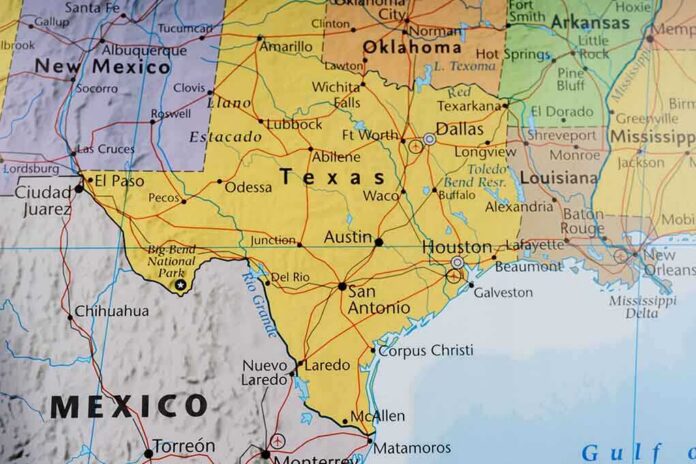
A wave of lawsuits now targets President Trump’s Big Bend border security plan, claiming illegal waivers and land grabs while federal officials insist no 30-foot wall is planned inside the park.
Story Highlights
- Landowners and groups sued to stop border infrastructure in the Big Bend region, citing property and environmental harms.
- Department of Homeland Security waived dozens of environmental and historic laws across more than 150 miles to speed work.
- Customs and Border Protection says no 30-foot wall is planned in the park; work centers on roads, sensors, and vehicle barriers.
- A temporary pause gives time for an on-the-ground review with local leaders and stakeholders.
What the Lawsuits Say and Why It Matters
Texas landowners, ranchers, and a regional nonprofit filed suit to halt planned border infrastructure across the Big Bend area. They argue the Department of Homeland Security misused powers that allow waivers only where illegal crossings are concentrated, and that federal actions threaten property, river access, and livelihoods. Plaintiffs also warn of damage to archaeological and cultural sites and say federal outreach has leaned on the threat of eminent domain letters to secure access for surveys.
The cases target the legal backbone of the project: broad authority to bypass normal reviews. Plaintiffs contend this shortcut strips communities of their voice and weakens accountability. They say the region’s rough terrain and low traffic make massive construction wasteful, and that smarter tools like surveillance towers would work better. They seek court orders to stop on-the-ground work until full reviews and landowner rights are respected, including fair process and compensation if takings proceed.
What the Administration Plans on the Ground
Customs and Border Protection states the current Big Bend plan is survey and design work, one new access road, improvements to existing roads, added detection technology, and limited vehicle barriers at strategic spots. The agency says it is not building a 30-foot wall or stadium lighting in Big Bend National Park, Big Bend Ranch State Park, or the Black Gap Wildlife Management Area. Officials stress the focus is mobility, visibility, and response time, not a continuous concrete or steel wall.
Officials cite the terrain and park resources as reasons to adapt. They argue patrol roads and sensors give agents reach without cutting off iconic landscapes. They also say cleared areas support surveying and will later support about 200 miles of patrol roads and 17 miles of vehicle barriers in specific places, rather than a solid wall. The message: secure the border, fit the land, and protect access to public treasures while improving enforcement grip on remote crossings.
The Waivers, the Pause, and the Political Stakes
The Department of Homeland Security waived 28 environmental and historical protection laws to move fast from Fort Quitman to Colorado Canyon, a stretch exceeding 150 miles. That decision accelerates schedules but deepens local anger over process and stewardship. Waivers sideline normal checks that protect waterways, artifacts, and ranch operations. The legal fight turns on how far Congress let the department go and whether the region’s risk justifies skipping full review.
Landowners, ranchers, business owners and the nonprofit Conserve Big Bend have filed suit seeking to stop border-wall and associated infrastructure construction through the Big Bend National Park region.https://t.co/fqQaQAEjY9#bigbend #borderwall
— ATWA (@ATWAofficial) September 15, 2026
In response to rising concern, Customs and Border Protection paused activity inside Big Bend National Park to allow a personal on-site review. Leaders promised to meet sheriffs, landowners, and community members, and to balance security with long-term protection of park resources. That step signaled flexibility and opened a lane for practical fixes that save money, limit flooding risk, and avoid needless takings while still stopping cartel traffic that exploits gaps in remote country.
Property Rights and Conservative Priorities
Landowners report “Right of Entry” letters that warn eminent domain may follow if they refuse survey access. That approach heightens backlash in a region built on deed, water, and work. Conservatives view secure borders and property rights as partners, not rivals. The administration’s claim that the plan avoids a towering wall inside the park, leans on roads and sensors, and now pauses for local input offers a path to defend the line while respecting Texans’ land and the nation’s heritage.
Sources:
eenews.net, pbs.org, statesman.com, tpr.org, cnn.com, texastribune.org