President Trump closed Xi Jinping’s U.S. visit by showing him the Constitution, turning pageantry into a pointed civics lesson.
Story Highlights
- Trump and Xi ended the summit with a tour of the National Archives, viewing the Constitution and Bill of Rights.
- The visit capped a ceremony-heavy trip with limited policy breakthroughs on trade, technology, or security.
- House leaders used the moment to contrast American liberty with Chinese Communist Party control.
- Officials framed the stop as symbolic of U.S. principles at a time of sharp differences with Beijing.
National Archives Tour Capped Xi’s Washington Schedule
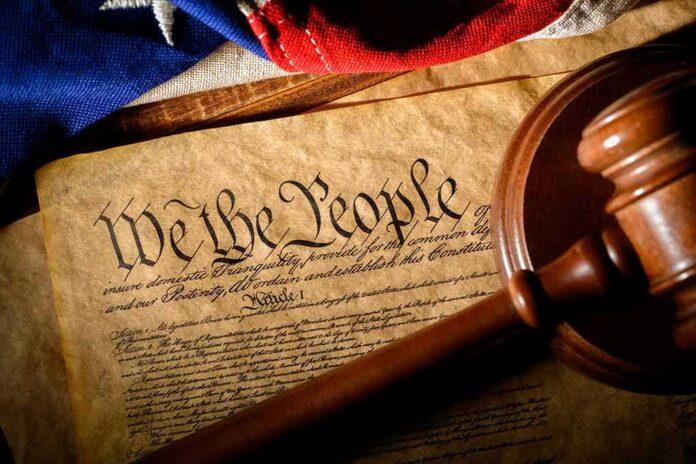
Reuters reported that after tea in the White House Red Room, President Trump and Chinese President Xi Jinping traveled by motorcade to the National Archives. There, they viewed the Declaration of Independence, the Constitution, and the Bill of Rights, with the National Archivist guiding the brief tour. The Associated Press and other outlets described the stop as the last event of Xi’s state visit, aligning with a schedule built to highlight America’s founding texts before Xi’s departure.
Deutsche Welle, CBS News, and others said the leaders staged a highly choreographed close to a visit full of formal images and careful optics. Cameras captured the two presidents and their spouses in the Rotunda where the Charters of Freedom are kept. The stop offered a clear visual: America’s core rights on display to the head of the world’s most powerful communist state. That picture underscored differences that talks did not resolve in public statements.
Symbolism High, Concrete Agreements Scarce
Reuters noted the summit featured flyovers, tours, and a state dinner but produced no announced deals on trade frictions, artificial intelligence safeguards, Taiwan tensions, or China’s ties with Iran. Outlets described the meeting as rich in ceremony and short on deliverables, a pattern seen in past United States–China encounters where both sides seek calm images while hard issues remain. The Archives visit fit that pattern by stressing values, not specific policy steps, at the trip’s end.
CBS News reported the National Archivist showed the group the Constitution and described the documents’ place in American life. That scene echoed a basic message of the stop: rights come from laws that limit government power. For many Americans, that is not a small point. It is the heart of why the United States resists one-party rule, internet controls, forced speech, and attacks on worship. The images from the Rotunda carried that message without a word.
Capitol Voices Contrast Freedom With Party Control
The House Select Committee on the Chinese Communist Party used the moment to draw a sharp contrast. In a press release, Chair John Moolenaar said America stands for life and liberty while the Chinese Communist Party stands for tyranny and oppression. He urged that Xi’s exposure to the founding documents inspire change for the Chinese people. That statement linked the Archives visit to a broader fight over human rights and political freedom.
For a conservative audience, the lesson is clear. The United States must defend the First Amendment, the Second Amendment, and due process at home while pressing abroad for fair trade and basic freedoms. Pageantry cannot mask disputes over intellectual property theft, censorship, and military threats. Showing the Constitution to a rival is a strong symbol. Backing it up means clear rules, real enforcement, and a focus on American workers and families in every policy choice.
Why This Moment Matters for U.S. Policy
The National Archives is more than a museum. It is a reminder that rights limit government, not citizens. That principle guides debates over speech online, school agendas, religious liberty, and gun ownership. When leaders from abroad walk past the parchment, the United States sends a message about what we protect and why. That message matters when talks stall. It anchors any future deal in American values that should not be traded away for short-term calm.
The visit’s images will outlast the schedule. They signal that discussions with Beijing continue, but on American ground and under American ideals. Next steps will test whether ceremony leads to action. Results should be measured in lower theft of technology, fair market access, safer supply chains, and respect for freedom of conscience. Until then, the Constitution in the Rotunda speaks louder than any toast, and it sets the standard for what comes next.
Sources:
apnews.com, reuters.com, dw.com