The Vatican confirmed that Pope Leo XIV cast a U.S. mail-in ballot, placing the papacy inside America’s partisan arena for the first time.
Story Highlights
- The Holy See said Pope Leo XIV submitted a Chicago mail-in ballot as a U.S. citizen.
- Major outlets reported he is the first pope to vote in a U.S. election.
- Reports show he remains registered to vote in Illinois.
- The Vatican framed it as personal civic duty, not an endorsement.
What The Vatican Confirmed And Why It Matters
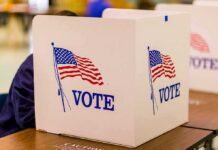
The Holy See Press Office said Pope Leo XIV “submitted his mail-in ballot in Chicago,” stressing he exercised his right as a United States citizen and has long practiced civic participation. That single line made history and raised new questions. The Associated Press and other outlets reported he is the first pontiff to cast a vote in a U.S. election. The step is legal. The step is also symbolic. A sitting pope joined an American election that will shape national policy and power.
CBS News and the Associated Press framed the move as a first in church history, marking a rare blending of spiritual office and a national ballot box. CNN reported he remains registered in suburban Illinois, reinforcing that this was not a theoretical eligibility claim, but an actual ballot tied to a real district. The Vatican’s note did not name a candidate or party. It stressed rights and duties, not endorsements. Still, the act itself invites partisan readings in a polarized time.
Neutrality Questions Collide With A Real Ballot
Conservatives see a core issue: the appearance of neutrality. The Vatican leads a worldwide flock, yet the pope voted in a hard-fought American race. Reporters highlighted that this election helps decide America’s political future, which heightens the signal others may read into his action. There is no proof he endorsed anyone or ordered church institutions to engage in campaigning. But visibility matters. A secret ballot can still create a public perception risk when the voter is the pope.
Illinois records and media coverage show the pope, born in the Chicago area, remained on voter rolls and used normal procedures to participate. That concreteness is why the story is not going away. This is not a rumor, and not a mere dual-citizenship trivia point. It is a counted civic act. The Vatican’s message linked voting to moral duty, which many Americans share. Yet for the head of a universal church, the line between private action and public meaning is thin, and critics will say it just got thinner.
What We Know And What We Do Not Know
We know the pope voted by mail and that the Holy See confirmed it on the record. We know national outlets called it a historic first in a U.S. election. We know he remains a registered voter in Illinois, which grounds the act in a specific place and process. We do not know the contents of the ballot. ABC-style voter history tools do not show candidate choices, and reporting stresses the secrecy of his vote, not a public endorsement.
We also do not have evidence that Vatican diplomacy changed because of the vote. No sourced material shows a shift in policy, a directive to American bishops, or a campaign push tied to a party. That is an important limit on claims. The story is about a real vote and the message it sends, not about proven intervention. Still, the first-time nature of this act ensures it will echo in debates about faith, politics, and the role of moral leaders in elections.
How This Lands With American Conservatives
Many on the right will ask why a spiritual monarch stepped into a U.S. contest while preaching neutrality. They see years of elite pressure on borders, speech, energy, and family policy. They worry that any outside weight on U.S. politics will lean toward global agendas over national sovereignty. The pope’s vote does not prove that. But it makes the perception fight harder. When the election is close, even an act framed as “private” can be read as public influence.
🚨 Pope Leo XIV reportedly becomes the first pope to vote in a US election, casting a mail-in ballot in Illinois.
A historic moment that raises an interesting question: can the head of the Catholic Church participate in national politics while maintaining the Vatican’s… https://t.co/HxFzCjnwsU
— MarketPulse (@MarketPulse24X) October 31, 2026
Common sense steps can reduce the fallout. Clear guidance can explain how personal civic rights fit with institutional neutrality. Transparent boundaries can assure the faithful that church teaching is not party talking points. For American voters, one rule still stands: we judge leaders by policies, not symbolism. President Trump’s administration will continue to be held to account by the people, not by foreign signals. Ballots decide. Sovereignty stays at home.
Sources:
lifesitenews.com, vaticannews.va, ansa.it, us.cnn.com, wisn.com