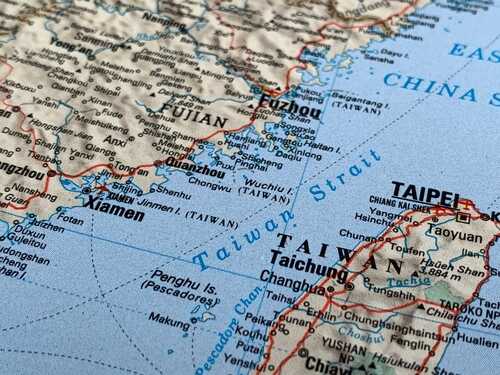
A Canadian warship just steamed through the Taiwan Strait on the eve of high‑level talks with Beijing, exposing the gap between Canada’s new “China reset” rhetoric and its quiet decision to stand with Western allies against communist pressure.
Story Snapshot
- Canadian frigate HMCS Charlottetown transited the Taiwan Strait days before Chinese Foreign Minister Wang Yi’s visit, despite explicit Chinese warnings.[2]
- Ottawa publicly calls the passage a “routine” transit in international waters, while Beijing denounces it as deliberate disruption that threatens “peace and stability.”[2][3]
- Canada has conducted at least a dozen such transits since 2018, often alongside United States and Australian warships, to reinforce freedom of navigation in the region.[1][3][4][5]
- Trump’s Washington continues to push allies to treat the Taiwan Strait as international waters, sharpening the clash between open‑sea rights and China’s expanding sovereignty claims.[1][2][3]
Canada’s ‘Routine’ Transit Collides With Beijing’s Red Lines
According to Canadian defense officials, the Halifax‑class frigate HMCS Charlottetown carried out a “routine Taiwan Strait transit” from May 22 to May 23, sailing through what Ottawa and its allies describe as international waters governed by the law of the sea.[2] Canadian spokespeople rooted the move in transit passage rights under the United Nations Convention on the Law of the Sea, which allows warships to cross narrow straits without seeking permission from nearby coastal states.[2] That legal framing mirrors long‑standing United States practice in the region.
Beijing’s reaction underscored how far apart the two sides remain on basic definitions. Chinese military authorities and state media have repeatedly blasted Canadian and allied passages as “provocations” and “trouble‑making,” claiming such operations undermine regional peace and stability.[3][5] When a Canadian frigate and Australian destroyer sailed the strait in 2025, China lodged protests and framed the combined transit as a threat to its security posture around Taiwan.[5] The Chinese Communist Party’s strategy depends on treating the entire strait as a de facto buffer zone under Beijing’s veto.
Pattern of Allied Transits Backs Free Navigation Over China’s Claims
This latest voyage is only the most recent in a steady pattern. Canadian naval vessels crossed the Taiwan Strait 11 times between 2018 and the end of former Prime Minister Justin Trudeau’s tenure, embedding Canada in a broader allied effort to keep the corridor open.[2] Since Prime Minister Mark Carney took office, Charlottetown’s passage marks his government’s second such transit, following a 2025 mission where a Canadian frigate and Australian destroyer made a joint north–south run and drew sharp Chinese complaints.[2][5] Taiwan’s government has repeatedly welcomed these operations as concrete support for freedom of navigation and regional stability.[1][4]
The United States has treated Canadian participation as proof that key allies are willing to share risk in contested waters. A United States Seventh Fleet statement describing an earlier voyage by destroyer USS Higgins and Canadian frigate HMCS Vancouver labeled their October 2024 passage a “routine Taiwan Strait transit” through a high‑seas corridor beyond any country’s territorial waters.[3] The release stressed that navigation and overflight rights in the strait “should not be limited” and that Washington rejects sovereignty claims inconsistent with these freedoms.[3] Trump’s second‑term national security team has pressed partners to echo that stance, signaling that the West will not quietly accept creeping control by Beijing.
Carney’s China Reset Meets Constitutional Principles at Sea
Prime Minister Carney has tried to engineer a “China reset,” tempering the confrontational tone of the Trudeau years while courting trade and diplomatic engagement with Beijing. Yet Charlottetown’s transit came just days before Chinese Foreign Minister Wang Yi’s visit, despite explicit warnings from China’s ambassador that such a move would be seen as hostile.[2] That timing suggests Ottawa is still unwilling to sacrifice core maritime principles to buy short‑term calm, even as it publicly downplays any intent to provoke China.[2] For conservatives, the episode shows how pressure from Washington and allied capitals can keep wavering governments anchored to rule‑of‑law commitments.
Canadian frigate transits Taiwan Strait despite Chinese warningshttps://t.co/7hGhEHn2q8
— Taiwan News (@TaiwanNewsEN) May 29, 2026
For American readers, the deeper issue resonates far beyond Asian waters. At stake is whether authoritarian powers can gradually redefine international spaces as their own property through intimidation and diplomatic spin. Trump’s administration has continued to emphasize that the Taiwan Strait is international waters, much as previous Republican leaders insisted the United States would not yield shipping lanes in the Cold War. Canada’s repeated participation—eleven transits before 2024, plus at least two under Carney—shows that some Western governments will still put steel in the water when principles like free navigation and national sovereignty are on the line.[1][2] The clash between Beijing’s claims and allied practice is a front‑line test of whether the rules that protect American strength, energy shipments, and global trade will hold.
Sources:
[1] Web – Canada Taunts Beijing With Frigate’s Taiwan Strait Transit Despite …
[2] Web – Canadian Frigate HMCS Ottawa Transits Taiwan Strait – USNI News
[3] Web – U.S. 7th Fleet Destroyer and The Royal Canadian Navy Conduct …
[4] Web – Chinese military condemns Canadian warship’s transit of sensitive …
[5] Web – Canada’s Transit of the Taiwan Strait