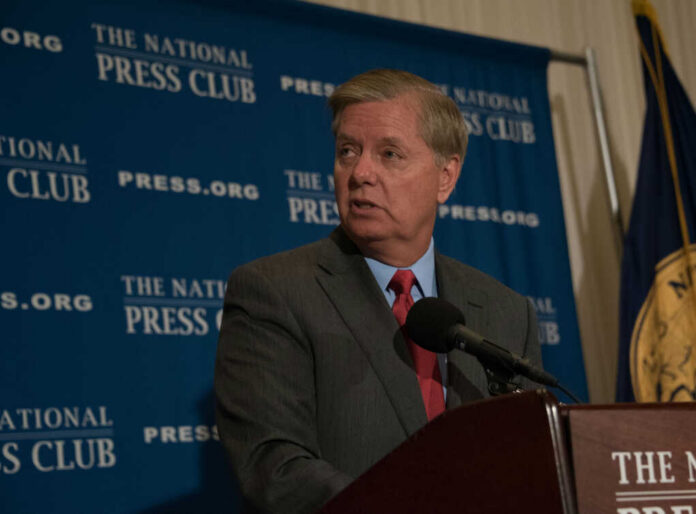
Senator Lindsey Graham’s sudden death has opened a big question for conservatives: who will now carry his unique role of building bridges while standing with President Trump?
Story Snapshot
- Senator Lindsey Graham, a key Trump ally, died July 11 at age 71 after a sudden illness.
- Emergency crews answered a cardiac arrest call at his Capitol Hill home before he passed.
- Graham had just returned from Kyiv, where he met Ukrainian President Volodymyr Zelenskyy.
- Senator Tim Scott is now spotlighted as a bridge-builder between Trump, conservatives, and skeptics.
Graham’s sudden death and his bond with President Trump
Senator Lindsey Graham’s office announced that the longtime South Carolina Republican died Saturday night, July 11, 2026, at age 71 after what they called a “brief and sudden illness.” Reports say emergency responders were called to his Capitol Hill home for a cardiac arrest and worked to stabilize him before he was taken to a hospital, where he later died. Graham’s staff has not released a detailed medical cause, which is common in many sudden deaths but leaves some questions for the public.
Lindsey Graham had become one of President Donald Trump’s closest allies in the Senate after first being a critic during the 2016 campaign. He shifted from attacking Trump’s candidacy to backing his agenda, especially on judges, national security, and securing the border. Graham often said his “bottom line” was to help President Trump succeed, and he defended Trump during tough fights over impeachment, foreign policy, and attacks from the left on core conservative values. This bond made his death a major loss for Trump’s team in Congress.
Bridge-building between Trump, establishment Republicans, and Democrats
Many conservatives saw Graham as a rare figure who could walk between worlds. He kept strong ties to Trump and the base while still talking with establishment Republicans and even some Democrats. He pushed for a robust national defense and often worked on bipartisan trips and talks overseas. At home, he tried to cut spending and reduce government waste, even while dealing with colleagues who wanted to grow Washington’s power. This “bridge-building” did not mean surrendering values; it meant finding ways to move conservative goals through a divided Senate.
Senator Tim Scott, also from South Carolina, now draws attention for a different style of bridge-building. Scott has built a reputation for speaking calmly about race, faith, and opportunity while still backing Trump-era policies on low taxes, energy independence, and strong borders. He often talks about lifting families through work and school choice instead of more welfare and more government rules. That message helps connect suburban voters and moderates to core conservative ideas without giving an inch to the woke agenda.
Ukraine trip, foreign policy questions, and conservative concerns
Graham’s last public mission was a bipartisan Senate trip to Ukraine, where he met President Volodymyr Zelenskyy in Kyiv just one day before his death. He long backed an aggressive foreign policy and supported strong aid to allies overseas while pressing for firm action against Iran and Russia. Many conservatives agreed with his push to confront enemies, but some worried about endless foreign spending and globalist drift that could weaken focus on America’s borders, debt, and energy costs. His Ukraine visit followed this familiar pattern and will likely spark more debate.
The fact that Graham died so soon after returning from Ukraine will fuel questions on both sides, especially because the official statement gives little medical detail. At the same time, health experts note that sudden natural deaths often get vague early descriptions, and many never get a clear public cause even when an autopsy is done. Conservatives should be careful to demand transparency without falling into wild rumors. The key issue is not political games around his passing, but who will now guard American interests and limit foreign adventures while still defending the Constitution and our security.
What comes next for South Carolina conservatives and Trump’s agenda
South Carolina now faces the legal process to fill Graham’s seat, which state law says involves an appointment followed by a special election so voters can choose their new voice in Washington. That choice will have major impact on President Trump’s second-term plans, especially on spending fights, court nominations, border policy, and efforts to roll back leftist overreach from the past decade. Early talk already points to possible contenders, and many grassroots conservatives want someone as tough on the woke agenda and illegal immigration as Graham often was.
For Trump supporters, the deeper question is about bridge-builders. Lindsey Graham showed how a Republican senator could move from skeptic to ally once he saw Trump delivering on judges, taxes, and America First priorities. Senator Tim Scott offers another model: speaking to hearts and minds while staying grounded in faith, family, and freedom. As the movement looks ahead, conservatives will need leaders who can stand firm on gun rights, parental authority, and limited government while reaching those still unsure about Trump. Graham’s sudden death raises the stakes, but it also reminds patriots that the fight for constitutional, common-sense leadership must go on.
Sources:
youtube.com, instagram.com, nbcnews.com, facebook.com, postandcourier.com, pmc.ncbi.nlm.nih.gov