President Trump’s new push on election “vulnerabilities” has reopened a high‑stakes fight over voting machines, foreign data theft, and who really protects Americans’ votes.
Story Snapshot
- Trump used a primetime White House speech to warn that voting machines are “easily compromised.”
- Declassified intelligence shows foreign powers can target voter databases, but not that votes were changed.
- Election and intelligence officials still say there is no evidence machines altered results in 2020.
- The clash sets up a bigger fight over paper ballots, voter ID, and restoring trust in elections.
Trump revives election security fight with primetime warning
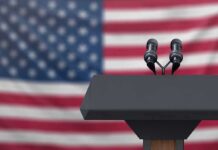
President Trump used a 25‑minute primetime speech from the White House to tell Americans that voting machines and ballot‑counting systems are “extremely exposed to attack,” “vulnerable,” and “easily compromised.” He tied his warning to newly declassified intelligence reports his administration posted under an “Election Integrity” banner. Those documents describe how hostile countries, including China and Russia, have the capability to probe American election systems and go after voter databases, especially around the 2020 race.
Trump framed the disclosures as proof that Washington insiders and bureaucrats downplayed real risks for years, while average voters were told to “just trust the system.” He argued that federal and state officials ignored or hid warnings about technology weaknesses, from voter registration databases to the machines that scan and tally ballots. For many conservatives already angry about past chaos with mail‑in ballots and unsecured drop boxes, his speech echoed long‑standing demands for tougher safeguards.
What the declassified intelligence actually says about foreign threats
The memo Trump highlighted from the National Intelligence Council does say foreign adversaries have the “capability” to compromise parts of U.S. election infrastructure, including voter registration systems. Intelligence assessments over the last several years have confirmed that countries like Russia, China, Iran, and North Korea probe American networks and collect information on voters and political targets. In his address, Trump claimed China went even further by obtaining around 220 million U.S. voter records, which he called the largest compromise of election data in history.
Intelligence and law enforcement summaries, however, also stress what these foreign efforts did not do. A major 2021 assessment concluded there were “no indications” that any foreign actor altered any technical aspect of the voting process in 2020, including casting or counting ballots. The same report said China likely continued long‑running efforts to gather information on U.S. voters and officials, but provided no proof that Beijing used those voter files to change votes or outcomes. News outlets reviewing the newly posted memo say it likewise offers no direct evidence that vote tallies were touched.
Officials push back on ‘easily compromised’ voting machine claim
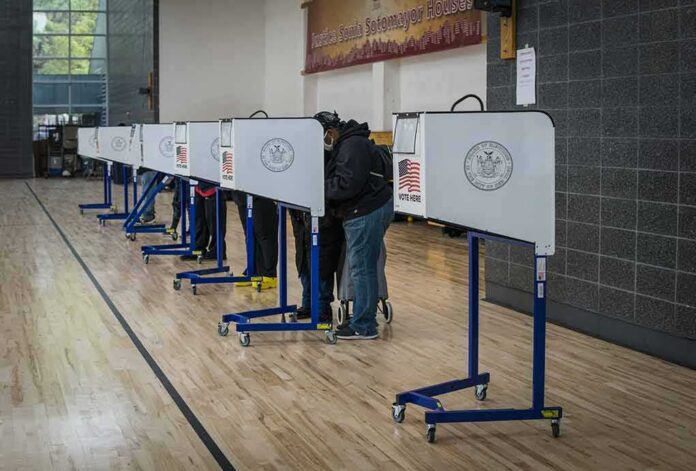
Trump’s sharpest line was his charge that voting machines are “easily compromised” and that people in government “knew that.” Cybersecurity officials and election administrators, including many Republicans, have repeatedly rejected that broad claim. The federal Cybersecurity and Infrastructure Security Agency said after 2020 there was “no evidence that any voting system deleted or lost votes, changed votes, or was in any way compromised,” calling that election the most secure in American history. State and local officials across the country publicly backed that view.
Fact‑checkers who examined the same intelligence documents Trump cited say they do show vulnerabilities that need ongoing work, but they do not state that voting machines are easy to hack in real‑world elections. The National Intelligence Council memo itself notes that vote‑tabulation systems would be “difficult to manipulate on a wide enough scale to compromise election results.” Independent reviews, court cases, and even Trump‑aligned investigations since 2020 have not produced verified examples of machines changing votes. Some experts warn that constant talk of “rigged” machines, without proof, risks convincing honest voters that their ballots no longer matter.
Real weaknesses, conservative concerns, and where reforms go next
Election security specialists do agree that America’s voting technology is not perfect and must be guarded carefully. In Georgia, one court case documented several serious software flaws in that state’s touchscreen system, showing how a determined attacker might try to break in under lab conditions. Experts argue these kinds of findings support more paper backups, more audits, and less blind trust in vendors and bureaucrats. Many conservatives see this as backing for long‑standing calls to move toward hand‑marked paper ballots and stronger checks on local election offices.
Trump is now using the declassified intelligence to push Congress and the states toward stricter voter ID rules and major changes to how Americans cast ballots. For right‑of‑center voters who watched years of mail‑in ballot expansions, rushed pandemic rules, and big‑tech censorship of election debates, the latest fight over voting machines fits a wider story of elites telling them to stay quiet. At the same time, the official record from intelligence agencies and election watchdogs still says no foreign government changed votes in 2020, and that broad claims of “easily compromised” machines overstate what the evidence shows.
Sources:
cbsnews.com, thehill.com, nextgov.com, chosun.com, ndtv.com, abcnews.com, theglobeandmail.com, instagram.com, mirror.co.uk, facebook.com