Iran’s president told the United Nations his country has “no limitations to peaceful nuclear technology” while international inspectors say Tehran won’t even let them count its uranium stockpile.
Story Snapshot
- Iranian President Masoud Pezeshkian declared “no nuclear weapons and no limitations to peaceful nuclear technology” during his United Nations speech.
- The International Atomic Energy Agency says it cannot verify Iran’s uranium stockpile because inspectors have been denied access for nearly a year.
- The agency’s board referred Iran to the United Nations Security Council in September, the first such move in 20 years.
- Officials warn Iran’s stockpile of 60 percent enriched uranium could fuel roughly 10 nuclear bombs if enriched further.
- Iran’s own history includes a hidden weapons program that ran until 2003, according to the agency and Western officials.
Pezeshkian Claims Peaceful Intent At World Podium
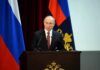
President Pezeshkian stood before the United Nations General Assembly and said Iran’s nuclear program exists only for civilian benefit. He called it “cure and treatment” for sick people, “food security” for farmers, and “advancement and progress” for industry. His speech came one day after President Trump warned of consequences if Iran pursued nuclear weapons, and an American delegate reportedly walked out during the address.
Iran backed up the rhetoric with paperwork. In an official filing to the International Atomic Energy Agency, Tehran claimed “the absence of any evidence of diversion to military purposes reaffirms the peaceful nature of Iran’s nuclear program,” insisting it holds no undeclared materials or hidden activities. Iran also leaned on the Nuclear Non-Proliferation Treaty, arguing Article IV guarantees its right to develop nuclear energy without outside interference.
Inspectors Say They Can’t Confirm Any Of It
The claims run headlong into a basic problem: nobody outside Tehran can check them. The International Atomic Energy Agency reported it could not verify Iran’s declared stockpiles of highly enriched and low-enriched uranium for nearly a year because Iran blocked access to key sites. Director General Rafael Grossi has said plainly that without better cooperation, the agency “will not be in a position to provide assurance that Iran’s nuclear program is exclusively peaceful”.
That is not a minor bureaucratic hiccup. The agency’s board took the rare step of referring Iran to the United Nations Security Council in September 2026, the first such referral in two decades. Reporting has pointed to roughly 440.9 kilograms of uranium enriched to 60 percent purity sitting in Iran’s stockpile before recent strikes, a level dangerously close to weapons-grade material. Officials have warned that stockpile could theoretically supply around 10 nuclear bombs if Iran chose to weaponize it.
A Regime With A Documented History Of Hiding The Truth
Conservatives have long argued that trusting Tehran’s word requires a short memory. The International Atomic Energy Agency and Western nations have said Iran ran a secret, organized nuclear weapons program up until 2003, a fact that continues to shadow every new denial from Iranian leaders. Uranium traces found at undeclared sites have led Western officials to suspect they may be leftover evidence from that hidden weapons effort.
Iran did not go it alone in defending its program. At the International Atomic Energy Agency’s General Conference, Iran joined 15 nations in declaring that peaceful nuclear facilities “must under no circumstances be targeted or threatened with attack” and insisting every nation has “the legitimate right” to develop nuclear energy without discrimination. That statement conveniently sidesteps the actual dispute, which isn’t about the right to peaceful energy but whether Iran is honoring the inspection commitments tied to that right.
Iran's President REJECTS U.S. Pressure, Says Nuclear Deal Still Possible
President Masoud Pezeshkian told Fox News that Iran has NO intention of building a nuclear weapon while defending its RIGHT to a peaceful nuclear program under the NPT. pic.twitter.com/7yBFnr528F
— Chikhi Cato (@husseinMBChB) September 25, 2026
President Trump’s administration inherited a nuclear standoff that has simmered for years under weak enforcement and endless diplomatic patience. Iran’s state-run media outlets have echoed Tehran’s line that the latest agency reports actually “confirm” peaceful intent, but that argument comes from a source with every incentive to say so. Until inspectors get real access to Iran’s facilities and stockpiles, Americans have every reason to treat Tehran’s UN promises as words, not proof.
Sources:
iaea.org, iranintl.com, abc.net.au, news.un.org, apnews.com, ans.org, farsnews.ir, thejournal.ie