
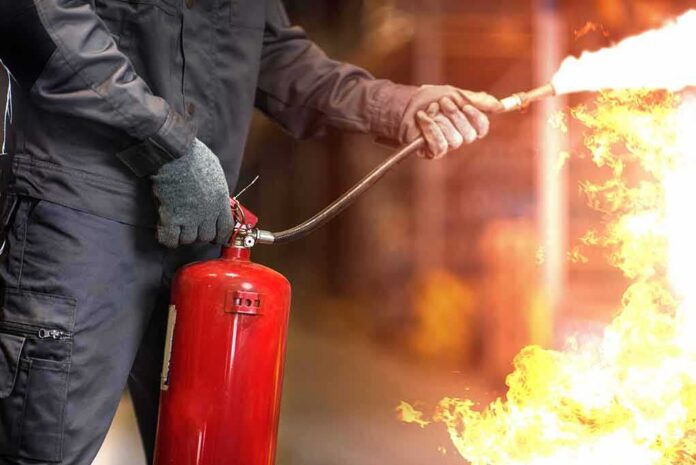
A 35-second video out of Ohio State University shows two young men on fire while a crowd stood by laughing before someone finally grabbed a fire extinguisher.
Story Snapshot
- Columbus police are investigating a video showing two people with their clothes on fire at an Ohio State fraternity event.
- A preliminary police report says the victims suffered second- and third-degree burns from a “dangerous” activity.
- Ohio State placed the Sigma Alpha Epsilon chapter on interim suspension while police, fire investigators, and the university look into possible hazing.
- The fraternity’s national chief executive says the organization will hold anyone responsible accountable once the investigation wraps up.
Video Shows Students Engulfed in Flames
The video shows one person’s clothing catch fire before he tackles another student, whose pants then ignite too. A crowd of bystanders watches and reportedly laughs before someone steps in with a fire extinguisher to put the flames out. The clip, which spread fast on social media, cuts off before the fires are fully extinguished.
A 911 call tied to the incident first alerted investigators to the video, according to reporting on the case. The call reportedly referenced pledges being set on fire, pointing police toward a possible hazing situation tied to Greek life near Ohio State’s campus rather than a random street fight or accident.
Police Report Details Serious Burns
Columbus police opened a preliminary report that classifies the incident as potential hazing. The report states that “two victims participated in an activity that was dangerous” and says the activity left them with second- and third-degree burns, described as moderate injuries requiring medical treatment. That detail matters. These were not minor scrapes from a prank gone slightly wrong.
Real people ended up hospitalized with serious burns. The Columbus Division of Fire’s Arson Unit joined the investigation alongside city police and Ohio State’s own safety officials, a sign that authorities are treating this as more than a simple case of youthful bad judgment. Multiple agencies rarely combine forces unless the injuries are severe enough to demand it.
Ohio State Suspends Fraternity Chapter
Ohio State announced an interim suspension of its Sigma Alpha Epsilon chapter soon after the video surfaced, calling the footage “extremely concerning”. An interim suspension is a precaution, not a final verdict. It lets the university pull the chapter’s recognition and activities while investigators do their work, without yet declaring the fraternity legally responsible for what happened.
The police report reportedly notes that the fraternity’s chapter president was interviewed the day after the incident and is listed as part of the investigation. Steve Mitchell, chief executive of the national Sigma Alpha Epsilon organization, said the group takes the matter seriously and will hold members accountable once investigators determine what actually happened.
Investigation Continues Amid Few Public Answers
Ohio State has not publicly explained exactly how the fraternity is tied to the event, and the police report does not name other participants beyond the two victims and the chapter president. That leaves plenty of unanswered questions about who organized the gathering, who lit the fire, and whether anyone pressured the victims into taking part. One caveat worth noting: police describe the hazing charge as still preliminary.
Police are investigating whether two Ohio State University students who were treated for deep burns after being engulfed in flames at an outdoor fraternity party were victims of hazing. The university placed the Sigma Alpha Epsilon fraternity on interim suspension. pic.twitter.com/iSPjaTMDYP
— Spectrum News 1 OH (@SpectrumNews1OH) November 11, 2026
Hazing on college campuses is nothing new, and it is badly underreported by the students who live through it. One national study of more than 11,000 students found 55% involved in campus organizations experienced some form of hazing, yet only about 5% actually called it hazing. Fraternities showed especially high rates, at roughly 73%.
Students near campus have already raised a fair point: cracking down too hard on fraternities risks pushing this behavior further off campus and further from university oversight, making it harder to catch next time. For parents sending kids to college, the message is blunt. Supposed brotherhood traditions can turn into genuine physical danger fast, and administrators owe families real transparency, not vague statements, while the investigation plays out.
Sources:
youtube.com, thelantern.com, cnn.com, cincinnati.com, cbsnews.com