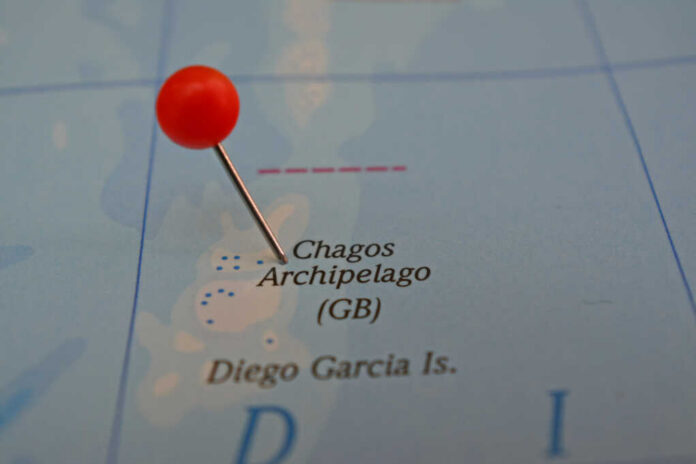
A quiet chain of islands in the middle of the Indian Ocean could decide whether America keeps a crucial military lifeline—or watches global rivals and international lawyers chip away at its security from thousands of miles away.
Story Snapshot
- President Trump is weighing a U.S. purchase of the Chagos Islands to lock in long-term control of the Diego Garcia base.
- Left‑driven decolonization pressure and a United Kingdom–Mauritius sovereignty deal threaten to complicate U.S. access.
- Diego Garcia is one of America’s most important overseas bases, central to power projection from the Red Sea to the South China Sea.
- Conservatives now face a choice: rely on foreign politicians and global courts, or back a clean American title to this strategic outpost.
Trump Considers Buying Islands To Secure A Strategic Lifeline
President Donald Trump is reportedly considering whether the United States should buy the Chagos Islands outright to guarantee permanent control over the Diego Garcia military base, rather than trust a complex deal negotiated by foreign leaders.[1] According to officials cited in recent reporting, Trump’s team has explored a direct acquisition from Mauritius as an alternative to British Prime Minister Keir Starmer’s sovereignty transfer plan, which would hand legal title over the islands to Mauritius under an international decolonization framework.[1][5]
The Telegraph and other outlets report that Trump’s advisers view an American purchase as a way to “secure long-term American control” of Diego Garcia, one of the Pentagon’s most critical overseas facilities.[1][5] That idea has surfaced as the United Kingdom advances legislation to implement a sovereignty-transfer treaty that would see Mauritius take ownership of the entire Chagos Archipelago while the United Kingdom and United States lease back Diego Garcia for 99 years.[1][5] Trump’s camp appears concerned that any future Mauritian or British government could use that arrangement as leverage against U.S. interests.
Why Diego Garcia Matters So Much To U.S. Security
Strategists describe Diego Garcia as a cornerstone of American military power in the Indian Ocean, allowing the United States to project air and naval forces across the Middle East, East Africa, and into maritime chokepoints like the Red Sea and Malacca Strait.[3] The base hosts long runways for heavy bombers and tankers, deep-water port facilities, and extensive logistics infrastructure that function as the “last link” in a global supply chain for U.S. and British operations. For decades, aircraft and ships based there have supported major campaigns from Afghanistan to Iraq and operations against Iranian threats.[1][3][4]
Analysts at Chatham House and other institutions note that Diego Garcia’s isolation is precisely what makes it valuable.[3] Located roughly equidistant from key sea lanes, the atoll allows U.S. forces to stay beyond the easy reach of many regional missiles while remaining close enough to respond quickly to crises from the Persian Gulf to the western Pacific.[3] A Council on Foreign Relations analysis quotes one expert calling it “very valuable real estate,” emphasizing that platforms stationed there can operate beyond Iran’s immediate reach while conserving precious aerial refueling resources.[4] In short, losing reliable access to Diego Garcia would punch a hole in America’s global deterrence posture.
How Global “Decolonization” Pressure Complicated The Status Quo
The current sovereignty fight did not begin in Washington; it grew out of long-running international campaigns targeting British control of the Chagos Archipelago as a colonial relic.[3][4] In 2019, the International Court of Justice issued an advisory opinion claiming that United Kingdom administration of the islands was unlawful and should end as part of decolonization, a view later echoed by a United Nations General Assembly resolution.[3][4] Although advisory and nonbinding, those rulings became political cudgels for Mauritius and its supporters, who pressed London to surrender sovereignty.[3][4]
Responding to this pressure, successive British governments entered talks with Mauritius that produced an agreement in 2024–2025 to transfer sovereignty while maintaining the Diego Garcia base through a leasing arrangement.[4][5] Under the published terms, Mauritius would gain full sovereignty, while the United Kingdom would act “as if” it remained sovereign over Diego Garcia for 99 years, paying billions of dollars in rent and development funds.[4][5] During that time, Mauritius would bar any other country from accessing the surrounding outer islands without British permission, a clause that some American policymakers worry could still introduce legal and political uncertainty down the road.[4]
Why Trump’s Team Is Looking Beyond The UK–Mauritius Deal
Commentary in outlets like The Diplomat concedes that Trump is right about one core point: the base on Diego Garcia does need protection, even if he has been “misled” about specific legal threats.[5] That analysis argues the U.S. military’s real interest is straightforward—secure long-term, legally solid access, ideally with someone else paying the rent.[4][5] The United Kingdom–Mauritius treaty attempts to do that by locking in a 99-year arrangement under which Britain, not the United States, would pay Mauritius for the privilege of effectively treating Diego Garcia as its own territory.[4][5]
However, Trump has publicly blasted the British plan as “stupidity” and signaled he is unwilling to see sovereignty traded away in response to nonbinding international opinions.[2][4] Reports now indicate that U.S. officials are exploring whether a direct purchase from Mauritius could bypass the sovereignty-transfer framework that relies heavily on United Nations and International Court of Justice narratives.[1][5] Such a move would represent a sharp break from the global trend of using international courts and decolonization rhetoric to pressure Western democracies, and would instead assert a clear American ownership stake grounded in a negotiated sale.
What Is At Stake For Conservatives And American Power
For constitutional conservatives, the Diego Garcia debate highlights broader questions about who really controls U.S. security policy: elected American leaders, or international legal bodies and foreign governments. The present arrangement depends on a British territory whose status is being challenged in global forums and on a complex lease with Mauritius that could be revisited by future governments under pressure from activist campaigns.[3][4][5] At the operational level, any disruption could complicate deployments at a time of rising tension with Iran and great‑power competition in the Indian Ocean.[3][4]
💰 Trump administration weighs purchasing Chagos Islands from Mauritius to secure Diego Garcia base
🔎 According to the proposal reported by The Telegraph, the Trump administration would bypass British officials to purchase the islands and take control of the joint US-UK Diego… pic.twitter.com/JcwwXy9PRo
— harici (@haricinews) June 8, 2026
Supporters of an American purchase argue that bringing the Chagos Islands directly under U.S. sovereignty would simplify this picture: Congress, not the United Nations, would ultimately decide the base’s fate, and adversaries would have one fewer lever to pull through international institutions.[1][4][5] Critics counter that such a move could inflame decolonization debates and invite further legal challenges.[3][4] As Trump weighs his options, conservatives watching this quiet but consequential fight see a familiar choice—either cede ground to globalist pressure or secure America’s strategic assets on terms set in Washington, not in New York or The Hague.
Sources:
[1] Web – Trump Mulling Purchase of Chagos Islands To Secure Diego Garcia
[2] Web – Trump eyeing purchase of Chagos Islands to secure Diego Garcia
[3] Web – ‘To preserve viability as a regional security platform’: US weighs …
[5] Web – Trump weighs buying another territory after Greenland fiasco: report