
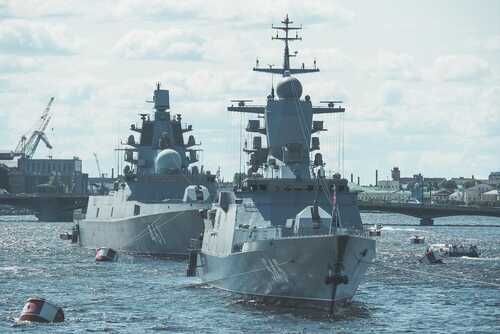
A new wave of Russian naval activity near the UK challenges NATO’s maritime security stance.
Quick Take
- The Royal Navy intercepts Russian warships and tankers in the English Channel.
- Heightened Russian naval presence marks a 30% increase over two years.
- NATO allies join forces to monitor and deter Russian threats.
- UK Defence Secretary reaffirms commitment to maritime security.
Increased Russian Naval Activity in European Waters
The Royal Navy’s HMS Severn recently intercepted the Russian warship RFN Stoikiy and the tanker Yelnya as they passed through the Dover Strait and English Channel. This operation is part of an ongoing effort to monitor the significant rise in Russian naval activity near UK waters, which has seen a 30% increase over the past two years. The interception highlights the UK’s commitment to maintaining maritime security amidst rising tensions.
Following the interception, HMS Severn handed over monitoring responsibilities to a NATO ally off the coast of Brittany, France. This collaboration underscores the importance of alliance cohesion and cooperative monitoring to deter potential threats from Russian naval assets. The operation comes in the wake of several incidents involving Russian electronic warfare tactics, including lasers targeting RAF pilots and GPS jamming.
British navy intercepts Russian corvette and tanker as Moscow steps up naval activityhttps://t.co/KKNUfrWliG pic.twitter.com/byTkPzGJqa
— The Washington Times (@WashTimes) November 24, 2025
Historical Context and Rising Tensions
Russian naval maneuvers near the UK have been on the rise since the annexation of Crimea in 2014 and the subsequent conflict in Ukraine. These actions are part of Russia’s broader strategy to assert power and test NATO’s readiness through a combination of naval deployments and electronic warfare. The Russian spy ship Yantar, part of the GUGI fleet, has been a notable player in these operations, often accused of intelligence gathering and potential sabotage.
The strategic importance of the Dover Strait and English Channel cannot be overstated. These maritime chokepoints are vital for commercial and military traffic, making them prime targets for Russian provocations. Recent activities by the Russian navy are seen as a direct challenge to undersea infrastructure security and NATO’s response capabilities.
NATO’s Vigilance and Future Implications
The UK and NATO remain vigilant, maintaining heightened surveillance and readiness to respond to ongoing Russian naval activities. The UK Defence Secretary, John Healey, has publicly addressed these provocations, emphasizing the nation’s preparedness to counter any threats. As Russian vessels exit the English Channel, the importance of continuous monitoring and rapid response becomes increasingly apparent.
The implications of these developments are significant, both in the short and long term. In the immediate future, there is increased military alertness and public reassurance of maritime security. However, the long-term picture may involve escalated maritime tensions, increased threats to undersea infrastructure, and a sustained need for investment in naval capabilities to counter these challenges.