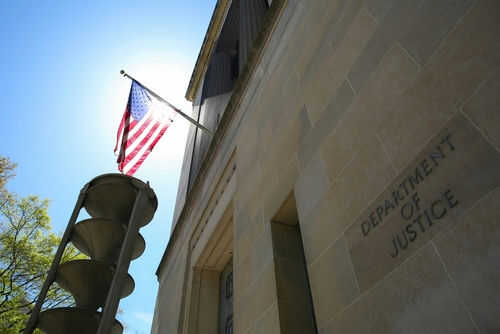
Trump’s promise of “law and order” is colliding with a hard-to-ignore reality: thousands of federal law-enforcement jobs have been cut while tens of thousands of cases were quietly dropped.
Quick Take
- Justice Department records reviewed by Reuters show more than 4,000 personnel cuts across major federal law-enforcement agencies as of April 2026.
- The FBI has reportedly lost roughly 2,600 employees since fiscal year 2024, while key DOJ divisions tied to national security and civil rights saw major staffing declines.
- ProPublica reported the DOJ declined to prosecute more than 23,000 cases in Trump’s first six months back in office, including nearly 11,000 closures in February 2025 alone.
- The administration argues the changes improved efficiency and coincided with major public-safety gains, while critics warn the cuts undermine crime and counterintelligence capacity.
Staff cuts raise questions about federal “law and order” capacity
Justice Department staffing data obtained by Reuters and reported by multiple outlets indicates the Trump administration reduced federal law-enforcement headcount by more than 4,000 across agencies such as the FBI, DEA, and ATF. The FBI alone reportedly lost more than 7% of its staff—about 2,600 people—since fiscal year 2024. DOJ components saw deep reductions too, including the National Security Division losing more than one-third of staff.
For voters who backed Trump expecting a tougher, more focused justice system, the cuts land as a mixed signal. Conservatives generally support trimming bureaucracy, but law enforcement and border security are usually treated as core functions. The reporting also notes roughly 7,000 DOJ jobs remain unfilled, creating a practical question: even if the administration’s priorities are sound, can fewer people and more vacancies realistically sustain federal investigations and prosecutions at scale?
A pivot toward immigration enforcement reshapes DOJ priorities
It describes a significant reassignment of federal agents toward the White House deportation campaign, shifting manpower away from other missions. That change fits the administration’s broader immigration posture and speaks directly to a top conservative concern: restoring control at the border and enforcing immigration law inside the country. But it also forces tradeoffs, because federal agents moved onto immigration operations are not simultaneously working complex narcotics, terrorism, or public-corruption cases.
Critics cited in the coverage argue that the administration’s staffing and reassignment choices contradict its public messaging about crime and terrorism. Supporters counter that immigration enforcement itself is a public-safety strategy, particularly when targeting cartel activity and trafficking networks. What remains unclear is how the DOJ measured those tradeoffs—what categories of investigations slowed, what backlogs grew, and whether state and local agencies can absorb additional burdens when federal capacity contracts.
Dropped cases and fewer drug charges intensify the accountability debate
ProPublica reported that in the first six months after Trump returned to office, the Justice Department dropped more than 23,000 criminal cases without prosecution. The same reporting said February 2025 saw nearly 11,000 cases closed, the highest monthly total since at least 2004, and that federal drug charges fell to their lowest level in decades during 2025. Those figures matter because they point to what citizens actually experience: fewer cases pursued can mean fewer convictions, fewer plea deals, and less deterrence.
The administration’s defenders argue that case declines can reflect better targeting—focusing on the worst offenders instead of padding statistics with low-level cases. That explanation is plausible in principle, but the public cannot easily validate it without detailed breakdowns of what was declined and why. For Americans already suspicious that institutions protect insiders while ordinary citizens face the consequences, transparency becomes the key issue: a smaller DOJ can work, but only if it’s clearly prioritizing the most serious threats and documenting results.
National security and civil rights divisions see steep losses amid leadership turbulence
Beyond street crime, the staffing reductions reported in the DOJ National Security Division—more than one-third—raise concerns about counterintelligence and terrorism workloads. The reporting also says the DOJ Civil Rights Division lost more than half its staff, a dramatic downsizing of a unit that has long been controversial across party lines. Conservatives often argue the division became politicized under prior administrations; liberals argue it protects vulnerable communities when local systems fail. Either way, cutting it by half is a structural change.
The Independent also reported leadership upheaval, including the White House firing the attorney general and homeland security secretary within two months, and described personnel actions under FBI Director Kash Patel that affected counterintelligence staffing. The DOJ spokesperson defended the approach as making the department more efficient and cited major crime-fighting outcomes, including a claimed historically low murder rate and high-profile cartel arrests. The available reporting does not independently reconcile those claims with the capacity losses.
Sources:
Trump’s DOJ cuts thousands of law-enforcement jobs — despite promising to be tough on crime: report
Government & Politics article_c93a88f5-e563-557f-8d92-6a182d82bd57