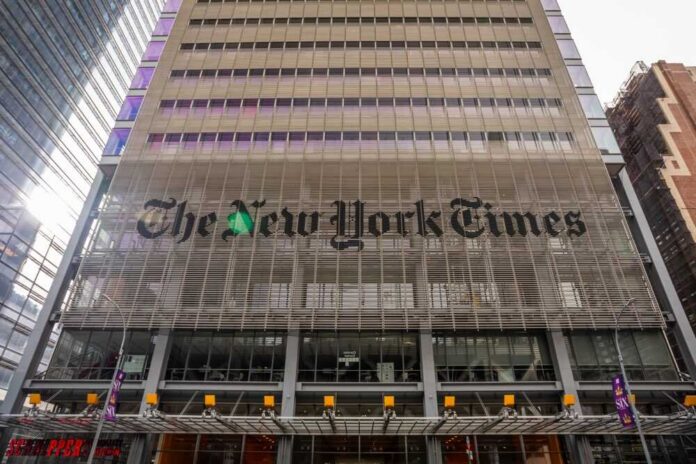
A single New York Times opinion column has triggered a furious Israeli rebuttal, reviving the oldest question in modern media: when do unverified human-rights claims become a kind of “blood libel” that poisons public trust?
Quick Take
- New York Times columnist Nicholas Kristof alleged a widespread “pattern” of Israeli sexual violence against Palestinian detainees, calling it routine and systemic.
- Israel’s Prison Service rejected the claims as “entirely unfounded,” while Israeli outlets and officials blasted the op-ed as defamatory “blood libel.”
- Much of Kristof’s framing leans on a report from Euro-Med Human Rights Monitor, a group critics describe as politicized and unreliable.
- The dispute lands amid a still-raw post–Oct. 7 environment, where Hamas sexual-violence allegations have been treated as credible by U.N. findings while comparable evidence about Israel remains contested.
What the New York Times Column Claimed
Nicholas Kristof’s May 11, 2026 New York Times opinion piece portrayed Israeli sexual abuse of Palestinians as widespread and normalized across multiple institutions. Kristof described alleged assaults by soldiers, settlers, Shin Bet interrogators, and prison guards, and he characterized the conduct as “routine” and akin to “standard operating procedure.” His column leaned heavily on prisoner testimony and an advocacy report arguing that sexual violence is not incidental misconduct but an organized pattern tied to the war’s detention surge.
Kristof’s reporting referenced interviews with former prisoners, including named individuals, and also cited unnamed sources to describe alleged mass arrests, harsh detention conditions, and assaults that supposedly occurred in more than one setting. The op-ed’s overall thrust was not simply that abuses happen in wartime, but that the alleged scale and repetition amount to a systemic practice. That distinction matters, because systemic accusations imply policy-level culpability, not isolated criminal acts.
Israel’s Prison Service Denial and the “Blood Libel” Charge
Israel’s Prison Service responded the next day with a categorical rejection, calling the allegation of widespread rape “entirely unfounded.” Israeli critics argued the op-ed used extraordinary claims while downplaying the evidentiary standard normally expected for allegations that can shape international policy and public opinion. Several responses also framed the narrative as a modern iteration of “blood libel,” a term used for inflammatory accusations historically deployed to demonize Jews as uniquely monstrous or ritually cruel.
The “blood libel” framing is not a technical rebuttal, but it is a warning about propaganda dynamics: once a story suggests collective guilt—such as implicating “the entire Israeli public” or portraying rape as universally endorsed—corrections rarely catch up to the initial outrage. That concern is amplified in the Israel-Hamas conflict, where information warfare is constant and where extreme allegations can travel globally before neutral investigators can verify facts on the ground. The result is a credibility crisis for institutions that publish explosive claims.
The Euro-Med Report at the Center of the Dispute
A major point of contention is Kristof’s reliance on Euro-Med Human Rights Monitor. In the research provided, Euro-Med is described as a Swiss-based advocacy group that critics allege has Hamas ties and a record of sensational claims. Israeli and pro-Israel commentary cited examples attributed to Euro-Med, including lurid allegations like “dog rapes” and claims suggesting nearly universal perpetration. Those details—whether repeated directly by Kristof or elevated through sourcing—drive skepticism because they raise the stakes while remaining difficult to independently corroborate.
The core journalistic problem is not whether detainees can be abused—multiple conflicts show they can—but whether the available evidence supports the specific “systemic” conclusion. The research notes prior scrutiny of Israeli detention practices, including investigations and indictments in earlier cases, which cuts against the idea that abuse is automatically state policy. At the same time, the existence of investigations does not prove the absence of broader wrongdoing. The gap is independent verification: the reporting described here does not cite a fresh, authoritative 2026 inquiry resolving the competing claims.
Why the Oct. 7 Context Keeps Resurfacing
Israeli responses also stressed what they see as a double standard after Oct. 7, 2023, when Hamas’s attack killed roughly 1,200 people and saw about 250 hostages taken, with sexual violence later treated as credible by U.N.-linked findings referenced in the research. In that context, critics argue that a Western newspaper portraying Israel as running “torture camps” and normalizing rape—without similarly firm public evidence—can feel less like accountability reporting and more like narrative warfare that launders the enemy’s talking points.
'Blood Libel': Israel Lashes Out at New York Times After Newspaper Documents 'Rape of Palestinians' https://t.co/M4wd29X4CI
— Mediaite (@Mediaite) May 12, 2026
For American readers watching institutions lose legitimacy at home, this dispute is a familiar pattern: sensational allegations, contested sourcing, and public officials insisting the claims are baseless—all while trust collapses further. Conservatives tend to see elite media as quick to validate narratives that weaken U.S. allies and traditional Western norms; liberals tend to see criticism as an attempt to silence human-rights reporting. The practical takeaway is narrower: extraordinary accusations require extraordinary verification, or they become fuel for polarization rather than a pathway to reform.
Sources:
Nicholas Kristof’s Libel Against Israel
Prison Service: NYT article alleging widespread rape of Palestinian prisoners ‘entirely unfounded’
‘Blood libel’: Israel lashes out at New York Times after newspaper documents ‘rape of Palestinians’