
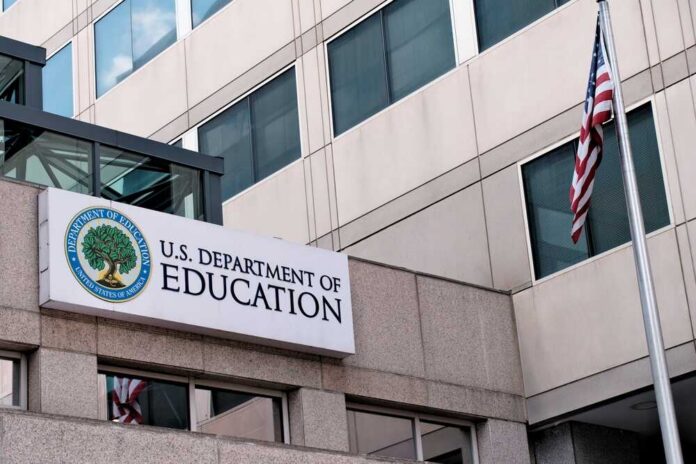
The Trump Education Department just put one of America’s most prominent women’s colleges under federal scrutiny for a policy that critics say makes “women-only” meaningless.
Quick Take
- The Department of Education’s Office for Civil Rights opened a Title IX investigation into Smith College on May 4, 2026.
- The probe focuses on whether admitting transgender women and granting access to women-only housing, bathrooms, locker rooms, and athletics violates Title IX’s single-sex exception.
- Smith has admitted transgender women since 2015 and says it considers applicants who self-identify as women, including cis, trans, and nonbinary women.
- A 2025 complaint from Defending Education—accelerated by Smith honoring and hosting Rachel Levine at commencement—helped trigger the case.
Federal investigators target admissions rules and women-only spaces
The U.S. Department of Education’s Office for Civil Rights announced May 4 that it opened a Title IX investigation into Smith College, a 155-year-old private women’s college in Northampton, Massachusetts. Federal officials said they will examine whether Smith’s admissions and campus access policies allow “biological males” into women’s intimate spaces, including dormitories, bathrooms, locker rooms, and athletic programs. The agency has not publicly provided a firm timeline or the full scope beyond those categories.
Assistant Secretary for Civil Rights Kimberly Richey framed the investigation around privacy, fairness, and legal compliance, arguing that an all-women’s college “loses all meaning” if it admits male students. The department’s position, as described in coverage of its statement, is that Title IX’s single-sex allowance is rooted in biological sex differences rather than gender identity. Smith acknowledged receiving notice of the investigation and said it does not comment on pending government inquiries.
Smith’s policy has been in place for more than a decade
Smith began admitting transgender women in 2015, a long-running approach that became newly controversial as federal enforcement priorities shifted. The school’s stated admissions language is explicit: it considers applicants who self-identify as women, including cisgender women, transgender women, and nonbinary women. That clarity is part of what makes the case high-profile—investigators are not decoding an unwritten practice but testing a published institutional rule against the federal government’s current interpretation of Title IX.
Supporters of Smith’s approach argue the policy reflects inclusion and modern understandings of identity, while critics argue it undermines sex-based boundaries that were central to why women’s colleges exist. Those competing claims are largely political and cultural; the immediate legal question is narrower and more concrete. Regulators must decide whether Smith’s eligibility rules and access to women-only facilities comply with federal requirements tied to receiving federal financial assistance.
The complaint and commencement controversy that escalated the dispute
Reporting indicates the conservative watchdog group Defending Education filed a federal civil rights complaint against Smith in 2025. The complaint gained momentum after Smith awarded an honorary degree to Rachel Levine—who served as Assistant Secretary for Health under President Biden—and invited Levine to speak at commencement. That event became a flashpoint for critics who see elite institutions celebrating policies that, in their view, dismiss ordinary concerns about women’s privacy and competitive fairness in sex-separated settings.
Smith has not outlined a public legal strategy, and details of the original complaint have not been fully disclosed in the available reporting. That information gap matters because Title IX enforcement often turns on specific facts: how a school defines eligibility, how it implements facility access, and what exceptions or accommodations exist in practice. Without those specifics, outside commentary tends to become a proxy fight over national politics rather than a clear evaluation of the policies under review.
Why Title IX’s “single-sex exception” is the real battleground
Title IX prohibits sex-based discrimination in education programs receiving federal funds, but it also contains a single-sex exception that allows institutions to maintain all-male or all-female student bodies. The Trump administration is leaning on that exception to argue that “sex” should be read as biological sex, not subjective gender identity. Progressive critics counter that excluding transgender students can amount to sex discrimination, setting up an interpretive clash likely to be litigated if enforcement actions follow.
For conservatives who feel the federal government has been captured by shifting ideological definitions, this investigation reads as an attempt to restore a plain-meaning, rules-based approach to sex-separated institutions. For liberals who see civil-rights enforcement as protection for vulnerable minorities, the probe looks like politicized pressure on a private college. What both sides can recognize is that Washington’s guidance has swung sharply across administrations—creating uncertainty for students, parents, and schools trying to plan around stable rules.
What happens next—and what remains unknown
The Office for Civil Rights typically gathers documents, interviews witnesses, and evaluates policies before deciding whether a violation occurred and whether corrective action is required. At this stage, key facts remain unclear: the investigation timeline, the precise demands the department may make, and whether the probe is limited to specific facilities and athletics or extends further into admissions operations. The number of transgender students at Smith has also not been provided in the available sources.
Other women’s colleges are watching because an enforcement decision could function as a practical precedent, even without a court ruling. If the federal government insists that women’s colleges must define “woman” strictly by biology to qualify for the single-sex exception, schools may face pressure to rewrite admissions criteria and campus access rules quickly. If Smith prevails, the administration’s broader effort to standardize a biological-sex reading of Title IX may face new legal and political headwinds.
Sources:
https://kffhealthnews.org/morning-breakout/top-3-trump-admin/
https://www.foxnews.com/politics/trump-admin-investigates-womens-college-admitting-male-students