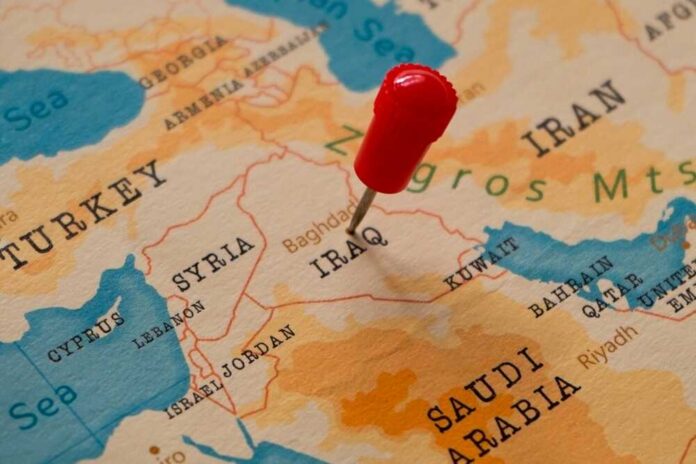
President Trump’s direct intervention in Iraqi politics has successfully blocked an Iran-aligned candidate and installed a reformist businessman as the next prime minister, marking a potential turning point in the Middle East power struggle that many Americans believe Washington should have addressed years ago.
Story Snapshot
- Trump personally congratulated Iraq’s new PM-designate Ali al-Zaidi, inviting him to Washington after blocking Iran-backed former PM Nouri al-Maliki’s comeback bid
- Zaidi, a businessman with minimal Iran ties, has 30 days to form a government Trump promises will be “free from terrorism”
- The nomination breaks a five-month political deadlock fueled by corruption and Iranian militia influence that has plagued Iraq since 2003
- Pro-Iran militias including Kata’ib Hezbollah have attacked U.S. bases housing 2,500 American troops, raising stakes for disarmament efforts
Trump’s Direct Challenge to Iran’s Iraqi Proxy Network
President Trump called Iraq’s newly designated Prime Minister Ali al-Zaidi on Thursday, publicly congratulating him and extending an invitation to the White House once his government forms. Trump posted on Truth Social that he looks forward to working with Zaidi toward “Prosperity, Stability, and Success” in a “new Government free from terrorism.” The direct presidential engagement represents a sharp departure from typical diplomatic protocols and underscores Trump’s determination to counter Iranian influence in Baghdad. Zaidi’s office confirmed the call discussed strategic bilateral relations and regional stability, language that signals alignment with American interests rather than Tehran’s agenda.
Blocking Maliki’s Iran-Backed Return to Power
Trump’s support for Zaidi came after the White House successfully derailed former Prime Minister Nouri al-Maliki’s attempt to reclaim power. Maliki, who led Iraq from 2006 to 2014, maintains close ties to Iran’s regime and its proxy militias embedded within Iraq’s Popular Mobilization Forces. His nomination collapsed under U.S. pressure following months of political deadlock after late 2025 elections. Iraqi President Nizar Amidi nominated Zaidi, a businessman with a reform-oriented reputation and minimal connections to Iran’s Coordination Framework bloc. This represents exactly the kind of decisive action many Americans across the political spectrum have demanded: standing up to Iranian expansion rather than accommodating it through endless diplomatic half-measures.
The Militia Challenge Facing Iraq’s New Government
Zaidi inherits a country where Iran-backed militias operate with near impunity, launching attacks against the approximately 2,500 U.S. troops stationed at Iraqi bases between 2024 and 2026. Groups like Kata’ib Hezbollah function as state-within-a-state forces, officially integrated into Iraq’s security apparatus while taking orders from Tehran and maintaining independent weapons stockpiles. Trump’s insistence on a government “free from terrorism” implies expectations that Zaidi will confront these militias, though no concrete disarmament announcements have emerged yet. The new prime minister-designate faces fierce political wrangling and has just 30 days to assemble a cabinet that can win parliamentary approval while navigating Shiite factional divisions.
Strategic Implications for American Interests
Success in establishing a less Iran-dependent Iraqi government could fundamentally shift Middle East power dynamics by weakening Tehran’s land bridge to Syria and its leverage in regional conflicts. For American troops stationed in Iraq, reduced militia activity would mean fewer attacks and greater operational security. Iraqi oil production of approximately four million barrels per day could stabilize under a reform-minded administration, benefiting global markets and creating opportunities for U.S. investment that have been strangled by corruption and instability. However, the risk of pro-Iran backlash remains significant—militias could sabotage cabinet votes or launch protests to destabilize Zaidi before his government fully forms, repeating patterns that have frustrated reform efforts since 2003.
Trump Congratulates Incoming Iraqi Leader, Who Moves To Disarm Pro-Iran Militias https://t.co/h5qBFkw6WX
— zerohedge (@zerohedge) May 10, 2026
This development exposes a reality that resonates with frustrated citizens on both left and right: for years, establishment politicians talked about countering Iranian aggression while America’s supposed allies in Baghdad cut deals with Tehran. Whether Zaidi can deliver on Trump’s vision of a terrorism-free Iraq depends on his willingness to challenge entrenched militia interests that previous administrations allowed to fester. The next 30 days will reveal whether this represents genuine change or simply another chapter in Iraq’s cycle of broken promises, and whether American leverage can finally produce outcomes that serve ordinary Iraqis and protect U.S. personnel rather than enriching corrupt elites and their foreign sponsors.
Sources:
Trump congratulates Iraqi PM-designate Zaidi, invites to US: PM office
Trump congratulates Iraq PM-designate, hails ‘new chapter’ with US
Trump congratulates Iraq’s al-Zaidi after Maliki bid collapses