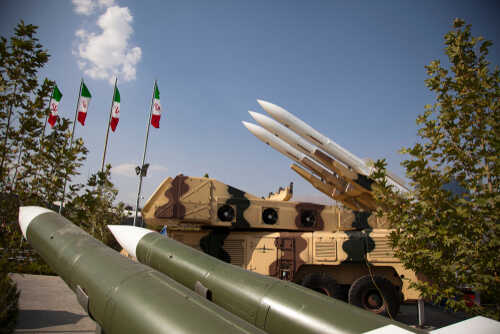
Iran’s new Supreme Leader has issued defiant threats against America and Israel while refusing to show his face, raising alarming questions about who’s really running the regime during an active war.
Story Snapshot
- Mojtaba Khamenei communicates only through written statements read by state TV, avoiding all public appearances despite leading Iran during wartime
- The new Supreme Leader was reportedly injured in the U.S.-Israeli strike that killed his father but officials claim he’s “alive and well”
- His messages threaten continued blockade of the Strait of Hormuz and promise “bitter defeats” for U.S. and Israeli forces
- Experts warn his close IRGC ties signal hardline policies will intensify, not moderate, under the new leadership
Shadow Leadership During Wartime Crisis
Mojtaba Khamenei assumed Iran’s highest office in early March 2026 following his father’s death in a February 28 U.S.-Israeli airstrike. Since then, he has refused to appear publicly, deliver audio messages, or provide any visual confirmation of his condition. Instead, Iranian state television presenters read his written statements to the public. An Iranian official acknowledged Khamenei was injured in the same strikes that killed his father but insisted he remains “alive and well.” The absence of any direct communication raises serious concerns about regime stability and actual decision-making authority during active military conflict.
Defiant Threats and Economic Warfare
The new Supreme Leader’s first official statement in early April ordered continued closure of the Strait of Hormuz, a critical waterway through which significant global oil supplies pass. He called on Gulf Arab states to close U.S. military bases, framing them as tools of American regional dominance. The statement also thanked Iran’s proxy forces—including Hezbollah, Houthi forces in Yemen, and Iraqi resistance groups—describing them as Iran’s “best friends.” Additional messages commemorated the Persian New Year and expressed gratitude to Iraq and Grand Ayatollah Ali Sistani for wartime support, all delivered through written statements rather than personal addresses.
Continuity of Hardline Policies
Analysts assess that Mojtaba Khamenei’s appointment represents defiance rather than reform, signaling that Iran’s aggressive posture will continue or intensify. His close ties to the Islamic Revolutionary Guard Corps provide institutional backing for hardline positions. Experts note his very appointment is an act of defiance, demonstrating that the regime intends no policy moderation despite leadership transition. On the religious side, he reportedly enjoys stronger institutional support than his father did upon assuming leadership in 1989. However, his complete invisibility during wartime creates troubling ambiguity about whether he exercises actual operational control or merely serves as a figurehead for IRGC decision-makers.
Unanswered Questions About Regime Stability
The unprecedented nature of this leadership transition—a Supreme Leader who learned of his own appointment through state television and has never addressed his people directly—reflects either severe incapacity or extreme security concerns. State media publishes images of Khamenei, but provides no indication they are recent photographs. He maintains official Telegram and X social media accounts, yet all communications remain written statements. This opacity comes at a critical moment when Iran faces active military conflict with the United States and Israel, controls a vital shipping chokepoint affecting global energy markets, and coordinates proxy forces across the Middle East. Americans should recognize this situation creates dangerous uncertainty about who controls Iran’s military and nuclear programs during an ongoing war.
Sources:
Iran’s new Supreme Leader issues first statement amid war – CBS News