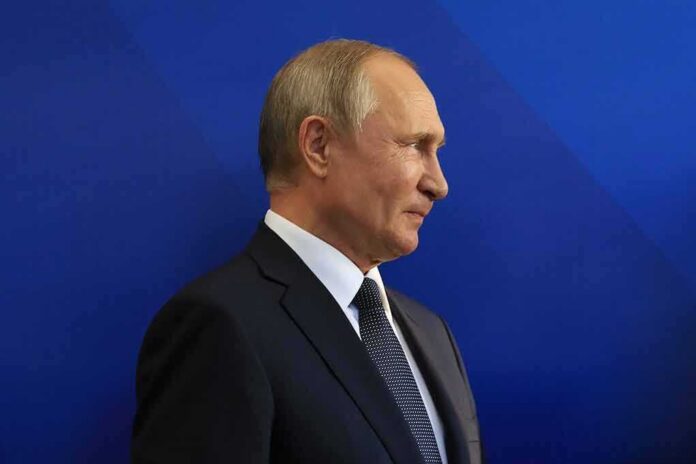
U.S. and allied analysts now warn that Vladimir Putin could test NATO with a limited strike designed to split the alliance, not conquer it, forcing Washington to plan real penalties that stop the next war before it starts.
Story Highlights
- Analysts say Russia may stage a small attack to fracture NATO unity, not fight a total war.
- U.S. intelligence and think tanks outline limited incursion scenarios in the Baltics or Poland.
- Some commentators float “break up Russia” if Moscow hits NATO, while others warn of nuclear risks.
- NATO documents detail Russia’s hybrid warfare aimed at sowing discord across the alliance.
What Analysts Say A Russian Move Would Look Like
Belfer Center research describes Russia’s most likely play as a limited incursion meant to shock NATO decision makers and expose political splits, not seize Europe. The scenario emphasizes gray-zone pressure and quick land grabs near the northeastern flank that force a crisis meeting over Article 5, NATO’s mutual defense clause. The goal would be simple: fracture allied resolve, slow support for Ukraine, and prove NATO cannot act fast together without U.S. leadership. That is the threat planners are gaming now.
United States intelligence assessments reported by major outlets have flagged similar risks. They outline a narrow strike or sabotage designed to test response thresholds rather than start a broad war. RAND analysis adds several plausible pathways for limited escalation into NATO territory during the ongoing conflict, reinforcing why commanders focus on speed, clarity, and pre-set responses to deny Moscow any political wedge. These studies align on one point: Putin looks for division first, territory second.
Hybrid Warfare Is Already Targeting NATO Cohesion
The NATO Parliamentary Assembly records Russia’s expanding hybrid toolkit across the alliance. It lists sabotage, cyberattacks, energy coercion, disinformation, and threats meant to “sow discord” and eventually “break NATO apart”. European assessments warn that if Russia frees forces from the Ukraine front or senses allied fatigue, it could escalate riskier moves around borders, airspace, and critical infrastructure. These actions raise costs for everyday families and test whether governments will hold the line when pressure builds.
Reports from the region show allies on NATO’s eastern flank watch for “provocations,” including staged border incidents or deniable operations intended to trigger political panic rather than a clean military response. Commentators at the Atlantic Council argue that any attack would aim to divide and discredit NATO, not defeat it on the battlefield. That intent fits a pattern Americans know too well: incremental pressure, legal gray zones, and propaganda to slow responses while raising prices, confusion, and fear.
Should The United States Threaten To Break Up Russia If It Attacks NATO?
Some voices argue that if Russia strikes a NATO member, Washington and allies should consider policies that end Moscow’s imperial reach for good, up to backing a breakup of Russia into smaller states. The logic is harsh but clear: if Moscow uses force to shatter European peace again, the response must remove its ability to repeat it. Advocates tie this to deterrence through certainty and pain, not ambiguous warnings that Kremlin planners think they can dodge.
Other experts warn that talk of dissolving a nuclear-armed state carries grave risks. Analyses from Princeton’s archives and later studies caution that fragmentation can weaken nuclear command and control, raise “loose nukes” dangers, and complicate who guards warheads and material during turmoil. Policy briefs also note the collapse of arms control channels and rising nuclear risk after treaty suspensions, which would worsen in a chaotic breakup. These are real hazards that demand sober planning, not slogans.
What A Credible U.S. Strategy Should Do Now
The United States should close off the very scenario Russia seeks. Clear red lines, forward defense, and faster decision rules would deny Moscow a chance to split votes inside NATO. Pre-agreed response menus for cyber, sabotage, and limited incursions would speed action and cut space for political games. Concrete energy, border, and infrastructure security measures would protect families at home from price spikes and blackouts that Russia tries to weaponize. Strength beats confusion every time.
Deterrence also needs costs that Moscow cannot ignore. The U.S. and allies can state that any attack on NATO triggers automatic military pushback to restore the line, paired with sweeping financial and technology blocks that last for years. Washington can add that if Russia escalates further, the alliance will support steps that permanently reduce the Kremlin’s power to threaten its neighbors. That message respects peace, defends the Constitution’s duty to provide for the common defense, and tells tyrants the bill will come due.
Sources:
19fortyfive.com, tvpworld.com, foxnews.com, nato-pa.int, ecfr.eu, theguardian.com, rand.org, medium.com, princeton.edu