
A Philippine senator wanted by the International Criminal Court is barricaded inside his own country’s Senate building, sparking a constitutional showdown that pits international justice against national sovereignty — and raises serious questions about who really controls the Philippines.
Story Snapshot
- The International Criminal Court (ICC) unsealed an arrest warrant against Philippine Senator Ronald “Bato” dela Rosa in May 2026 for alleged crimes against humanity tied to the Duterte administration’s war on drugs.
- Dela Rosa evaded National Bureau of Investigation agents by running through Senate hallways, and the Senate sergeant-at-arms declared he would block any arrest on the premises.
- Dela Rosa publicly appealed to President Ferdinand Marcos Jr. for protection and urged Philippine Military Academy graduates, soldiers, and police to offer “peaceful support.”
- Senate President Alan Peter Cayetano condemned a resolution calling for dela Rosa’s voluntary surrender, while five other senators supported it — fracturing the chamber along political lines.
An ICC Warrant Lands in Manila
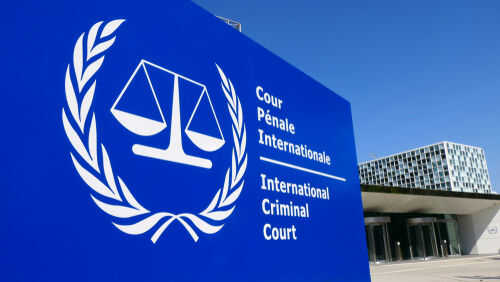
The International Criminal Court (ICC) unsealed an arrest warrant against Senator Ronald “Bato” dela Rosa, former national police chief under President Rodrigo Duterte, for alleged crimes against humanity connected to the Philippines’ bloody war on drugs between 2016 and 2019. The ICC’s pre-trial chamber authorized the warrant, and the court’s official case page confirms dela Rosa faces charges including crimes against humanity. The warrant’s unsealing in May 2026 immediately triggered a crisis inside the Philippine government.
National Bureau of Investigation agents arrived at the Senate on May 12–13, 2026, to serve the warrant. Dela Rosa was caught on camera sprinting through Senate corridors and up a flight of stairs to avoid arrest — footage that quickly became one of the most widely shared political images in recent Philippine history. The Senate sergeant-at-arms then publicly declared he would not permit anyone to arrest dela Rosa inside the Senate building, effectively turning the legislature into a sanctuary.
Dela Rosa Appeals Directly to Marcos and the Military
Holed up inside the Senate for multiple days, dela Rosa held press conferences appealing to President Marcos for protection and urging him not to hand him over to The Hague. He called on Philippine Military Academy graduates, active-duty soldiers, and police officers for “peaceful support,” while insisting he was not inciting violence or unrest. His lawyer indicated dela Rosa would only consider surrender after exhausting all available legal options, including a potential appeal to the Philippine Supreme Court.
Senate President Alan Peter Cayetano pushed back sharply against a resolution introduced by five senators urging dela Rosa to surrender voluntarily. Cayetano called the resolution “disrespectful” and argued that Philippine senators should only be subject to warrants issued by Philippine courts — not a foreign tribunal. Vice President Sara Duterte echoed that sentiment, accusing government agencies of failing to respect the Senate’s institutional independence during the arrest attempts.
Sovereignty vs. International Accountability
The Philippines withdrew from the Rome Statute — the founding treaty of the ICC — in 2019 under Duterte, arguing the court was being weaponized for political purposes. Dela Rosa and his allies contend that withdrawal strips the ICC of jurisdiction over Philippine nationals for acts committed after the withdrawal date. However, legal analysts note the ICC maintains that crimes allegedly committed while the Philippines was still a member remain subject to its jurisdiction, a position the court has consistently applied in similar cases involving withdrawing states.
The standoff reflects a broader global tension between international legal institutions and national sovereignty — a debate conservatives understand well. The ICC has a documented history of selective enforcement, and concerns about a supranational court overriding a nation’s domestic legal system are legitimate. At the same time, dela Rosa’s dramatic flight through Senate halls and his appeals to the military rather than to courts undermine the credibility of a purely procedural defense. Whether Philippine courts ultimately weigh in or Marcos bows to international pressure, the outcome will set a significant precedent for how the Philippines — and other nations — respond to ICC authority going forward.
Sources:
[1] Web – Dela Rosa’s flight turns Philippine Senate into battleground …
[2] Web – Senate sergeant-at-arms will not allow the arrest of Bato
[5] YouTube – Alan Cayetano Slams Sotto Resolution on Bato Surrender Move
[6] Web – Dela Rosa
[7] Web – ICC judges unseal arrest warrant against Ronald Marapon …