The Trump administration’s critics say the antifa terror threat is imaginary, but court cases and federal orders tell a very different story backed by hard evidence.
Story Snapshot
- Trump’s 2025 executive order formally labeled antifa a domestic terrorist organization and described a nationwide campaign of political violence.
- Federal prosecutions in Texas over an attack on an Immigration and Customs Enforcement facility produced terrorism-related convictions and long sentences for antifa-linked defendants.
- The State Department has designated four violent far-left antifa groups overseas as foreign terrorist organizations, showing a broader network of militant activity.
- Legal experts and researchers argue antifa is a loose movement, not a formal group, and say U.S. law does not clearly allow domestic terror designations.
Trump’s Order: Antifa Branded a Domestic Terror Threat
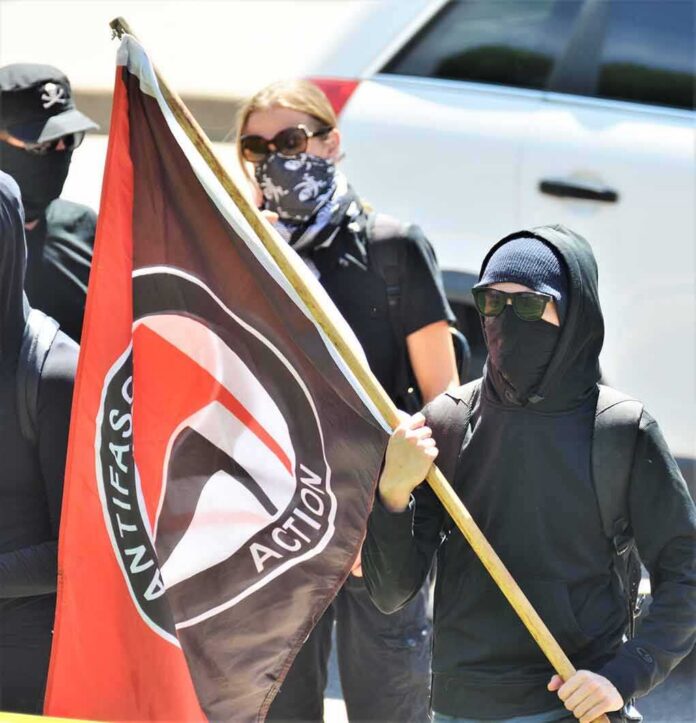
President Donald Trump’s 2025 executive order did not tiptoe around the issue; it flatly declared that **antifa is a militarist, anarchist enterprise that openly calls for overthrowing the United States government and law enforcement**. The order says antifa uses illegal tactics to push political goals, including organized riots, violent assaults on Immigration and Customs Enforcement officers, armed standoffs with police, and campaigns of doxing and threats against political opponents. It directs every “relevant agency” to investigate, disrupt, and dismantle what the White House calls antifa’s campaign of domestic terrorism. For readers worried about chaos in the streets and attacks on police, this order captures the administration’s core belief: far-left political violence is not just protest gone too far, but an organized threat to our constitutional system.
At the same time, legal and research groups point out a key tension: **current U.S. law only provides a formal terrorism designation process for foreign organizations, not domestic movements**. Analysts at the Brennan Center for Justice and others argue that antifa in the United States looks more like a loose, decentralized protest scene than a clear organization with a membership list and command structure. They warn that stretching terrorism tools onto a domestic ideology risks hitting constitutionally protected speech and assembly along with any criminal actors. That clash matters for conservatives who want tough enforcement but also want government power tightly limited by law; the fight here is not only about antifa, but about how far Washington can go inside the country.
Texas ICE Facility Case: From Protest Branding to Terror Convictions
For critics who insist “there is no antifa terrorism,” the strongest counterexample sits in Texas. Reporting on the Prairieland Immigration and Customs Enforcement Detention Center case near Alvarado describes a group accused of antifa ties that carried out an armed assault on a federal immigration facility and was **convicted of multiple serious offenses, including support for terrorism** after a 12-day federal trial. Coverage notes that eight defendants were found guilty, and the apparent leader, Benjamin Song, received a sentence reported at around 100 years in prison, reflecting how seriously the judge and jury viewed the plot. Proponent accounts say trial evidence included encrypted Signal messages, tactical training, and use of safe houses across North Texas, painting the picture of a coordinated cell rather than random lone offenders.
Supporters of the administration argue that this case directly undercuts the claim that antifa violence is only scattered street crime. They point out that federal prosecutors used terrorism-related statutes, including material support for terrorism, along with explosives and rioting charges, and secured convictions. To them, this proves at least some antifa-linked actors are willing and able to plan and carry out targeted political attacks on government facilities. However, major outlets such as The Guardian cast the same trial in a narrower light, stressing defense claims that the defendants saw themselves as protesters and that some devices were commercial-grade fireworks, not military explosives. Critics say the case shows criminal behavior by individuals, but not a nationwide antifa chain of command. That divide shows why evidence can be read in very different ways depending on whether you see antifa as an organized enemy or a loose protest subculture.
Foreign Antifa Designations and the Limits of Domestic Law
Beyond the Texas trial, the Trump team points to international steps to show the threat is bigger than one city. A State Department briefing says **the United States has already designated four violent far-left antifa groups abroad as Foreign Terrorist Organizations and as Specially Designated Global Terrorists**. Those include Antifa Ost and three other groups linked to organized violent actions in Europe. By using its foreign terrorism tools, Washington can freeze assets, block funding, and push allies to crack down on overseas training, safe havens, and propaganda that might feed into violence at home. For readers who worry about hostile networks using our open borders and online platforms, these moves show that antifa-branded militancy is not just an American media story; it has real-world, cross-border footprints.
Still, analysts stress that **foreign designation authority does not automatically translate into a domestic terrorism label for antifa in the United States**. Academic and policy research repeatedly describes antifa here as a decentralized movement or ideology, not a single organization with leaders to target. The Conversation, the Congressional Research Service, and others note that several reviews of terrorism data have found few, if any, events that meet strict criteria for organized antifa terrorist campaigns. For conservatives, this does not mean the violence is fake or harmless; it means the government must build strong, case-by-case criminal files instead of leaning only on broad labels that courts may reject. The Trump administration’s order sets a tough, no-nonsense tone, but even strong supporters should watch how those powers are used, and whether they stay focused on actual violent plots rather than sweeping over peaceful dissent.
Sources:
theconversation.com, theguardian.com, youtube.com, npr.org, pbs.org, brennancenter.org, whitehouse.gov