
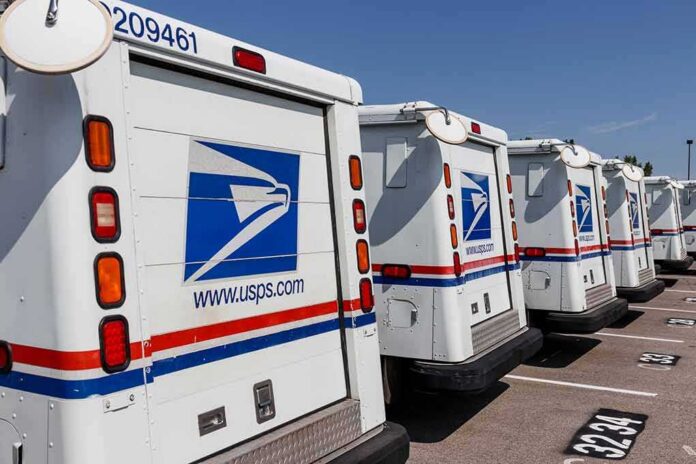
USPS moved more than 54 million election ballots in 2022 at high speed, yet gaps in controls and tracking still leave room for error and doubt.
Story Highlights
- USPS reported fast ballot delivery in 2022, with most ballots moving in three to five days.
- Inspector General audits found many facilities missed required election-mail procedures.
- Tracking covered about 83 percent of ballots, leaving an unmeasured slice in the dark.
- Conflicting metrics let partisans claim either success or failure from the same data.
What USPS Says Went Right: Speed And Scale
United States Postal Service leaders said they processed, transported, and delivered 54.4 million election ballots during the 2022 midterms and the Georgia runoff. Agency data said 98.96 percent of voter-mailed ballots reached election officials within three days, 99.82 percent within five days, and 99.93 percent within seven days. Those numbers show strong speed and capacity across a national system handling heavy loads in a tight window.
The Postal Service Office of Inspector General also reported strong speed for ballots sent to voters that could be measured. The audit found 97.3 percent on-time delivery for identifiable and measurable outbound ballots, which was almost six points above the target. That aligns with the agency’s claim that operations moved ballots quickly during peak season and across many states with different rules and deadlines.
What The Auditors Flagged: Procedures Not Consistently Followed
The Inspector General’s team performed election-mail observations at processing plants and delivery units. They found compliance problems in 41.3 percent of processing-facility checks and 29.4 percent of delivery-unit checks. Those findings included missed steps that USPS policy requires for election mail. The audit said these issues did not appear to delay ballots overall, but they remain clear control failures in a sensitive process.
Separate reporting during the midterm period described a specific gap: the daily “all-clear” sweeps that facilities were required to conduct to ensure no ballots sat behind. Only about 60 percent of facilities complied with the afternoon sweep rule. That is a notable hole because a missed sweep can leave ballots stranded, even if most mail still moves on time.
The Blind Spot: Incomplete Tracking And Conflicting Metrics
The Postal Service and its Inspector General measured different slices of the ballot stream. The agency’s fastest numbers covered ballots voters mailed back. The Inspector General’s 97.3 percent covered identifiable outbound ballots. At the same time, the measurable universe did not include every ballot. Reporting noted USPS could measure timeliness for about 83 percent of ballots, meaning one in six sat outside the precise metrics.
This mix creates a message problem. Advocates can point to the near-99 percent within three days and call it a full success. Skeptics can point to missed sweeps, broad noncompliance at many sites, and the 17 percent not tracked well, and raise fair questions. Both claims lean on real data. That is why clear, complete tracking and uniform policy enforcement are essential to public trust, especially when mail voting affects close races.
What Conservatives Should Watch In 2026: Accountability, Not Assurances
President Trump’s administration now owns federal performance. Voters should expect USPS to publish facility-level logs showing sweeps, exceptions, and fixes for the 2026 cycle. USPS and the Inspector General can go further by explaining which ballots fall outside tracking and why. Clear answers would limit spin and help states plan realistic deadlines that match delivery standards and protect every legal vote without inviting chaos.
Election integrity is more than speed. Chain-of-custody records, acceptance scans, and reconciliation reports at local election offices must align with USPS data. Congress and state leaders should insist on quick post-election reconciliations that match outbound counts to inbound receipts. These steps defend equal treatment, reduce courtroom fights, and stop bureaucratic drift that erodes faith in the system. Strong, transparent controls serve every voter and keep partisan games in check.
Bottom Line: Fast Delivery Is Good—Proven Controls Are Better
Audits and agency reports show a mail network that can move ballots quickly when procedures are followed. They also show missed steps and measurement gaps that opponents will exploit. The solution is not bigger bureaucracy or looser deadlines. The solution is strict compliance, better tracking coverage, and public reconciliation of every ballot batch. That approach respects the Constitution, guards against government sloppiness, and ensures that lawful votes count—and only lawful votes count.
Sources:
youtube.com, uspsoig.gov, about.usps.com, news.usps.com