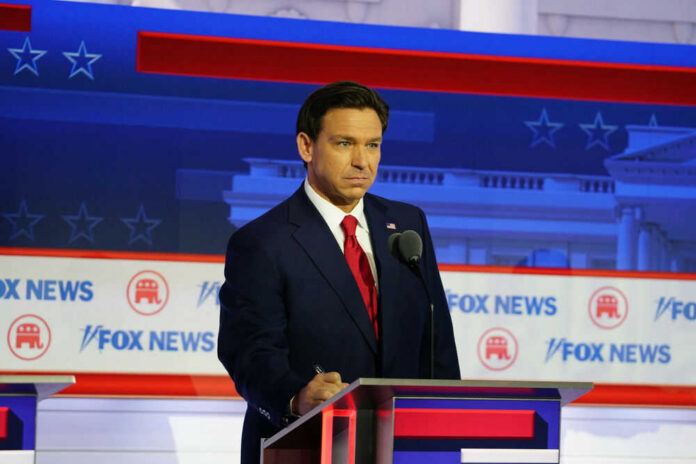
A federal judge’s pushback is testing Florida’s new terror designation law, but Governor Ron DeSantis is doubling down on keeping taxpayer money away from groups tied to radicalism.
Story Snapshot
- Florida’s new law lets state officials label domestic groups as terrorist organizations and cut off state funds.
- DeSantis has designated CAIR, the Muslim Brotherhood, Antifa, and violent cartels, citing security and taxpayer protection.
- Federal courts and civil rights groups claim the policy violates free speech and due process and are suing to stop it.
- The fight in Florida shows a bigger clash between red states and Washington over how to handle terror-linked nonprofits.
DeSantis Uses New Law To Target Terror-Linked Organizations
Florida lawmakers passed House Bill 1471 in 2024 to give the state clear power to name domestic terrorist organizations and shut off state funding to them and their supporters. The law blocks money from state agencies, local governments, colleges, and K–12 scholarship programs for any group tied to a designated organization. Governor Ron DeSantis then used that framework and his executive authority to label the Council on American-Islamic Relations, the Muslim Brotherhood, Antifa, and certain cartels as terrorist groups operating in or touching Florida.
Governor DeSantis and Florida Department of Law Enforcement Commissioner Mark Glass say the goal is simple: protect Floridians and stop taxpayer money from flowing to groups that help extremists. They argue the designations build on existing criminal laws to cover both foreign and domestic networks, including those tied to fentanyl and human trafficking. DeSantis insists the decisions are based on conduct and evidence, not ideology, and points to violent episodes like Antifa activity at his residence in 2020 as part of the record.
Why CAIR And The Muslim Brotherhood Are In Florida’s Crosshairs
For CAIR and the Muslim Brotherhood, DeSantis points back to the Holy Land Foundation terror financing case in Texas as a key piece of evidence. In that federal trial, the Holy Land Foundation and five leaders were convicted of sending $12.4 million in material support to Hamas, a federally designated Foreign Terrorist Organization. Prosecutors listed CAIR as an unindicted co-conspirator in the case, and Judge Jorge Solis later said the government had “ample evidence” tying certain listed entities to Hamas networks. DeSantis now cites that history to justify treating CAIR as part of a terror-support system.
Critics note an important gap: CAIR itself was never charged or convicted in the Holy Land Foundation case, and the trial record stated there was no allegation the charity sent money directly to Hamas. A later federal ruling found that publicly naming unindicted co-conspirators in that case violated due process, which civil rights groups say undercuts the evidentiary weight of the list. CAIR points to those facts to argue Florida is branding a major Muslim civil rights group as terrorist without clear proof of actual material support or violent acts within the state.
Judges Push Back As Civil Rights Groups Sue Florida
Once DeSantis issued his order, CAIR and allied organizations moved quickly in federal court, arguing the state was punishing protected speech and advocacy under the First Amendment. In a key ruling from the Northern District of Florida, a federal judge preliminarily blocked enforcement of a 2025 DeSantis order, saying Florida likely violated the Constitution by pressuring third parties to cut off CAIR’s speech and relationships. The American Civil Liberties Union and Southern Poverty Law Center have also sued, calling the new designation law “draconian” and warning it could be used to silence any group that crosses those in power.
Gov. Ron DeSantis announced Florida is officially designating Antifa, CAIR, the Muslim Brotherhood, and over 90 foreign drug cartels as terrorist organizations under a new state law. 👇 pic.twitter.com/bncKhQQx0G
— TMcCarty (@Jatrac04) July 8, 2026
Florida’s attorney general is now defending the law and orders at the U.S. Court of Appeals, arguing the state is not targeting speech but simply keeping state resources away from terrorist organizations and their material supporters. The legal fight matters for every conservative who worries about government overreach, because the same tools used today against groups tied to Hamas or Antifa could be turned tomorrow against gun rights groups, churches, or parents’ organizations. Red-state governors in Texas, Florida, and Indiana are pushing this model while federal agencies like the Department of Justice and Federal Bureau of Investigation have not designated CAIR or the Muslim Brotherhood as terrorist groups, creating a tense split between state and federal standards.
What This Means For Florida Families And Taxpayers
For everyday Floridians, the stakes are high on both sides. The law promises that school choice scholarships, college funds, and local tax dollars will no longer end up at institutions tied to radical networks, foreign cartels, or groups that excuse political violence. That lines up with conservative demands to stop subsidizing enemies of our way of life while Washington drags its feet. At the same time, if courts find the law too vague on what evidence is needed to brand someone a terrorist, innocent nonprofits and their donors could face sudden loss of funding or land rights without a fair chance to respond.
Conservatives who support DeSantis see Florida as a test case for finally taking groups like CAIR, Antifa, and cartel fronts seriously, instead of letting them hide behind civil rights branding while they cozy up to extremists. Civil libertarians warn that once states normalize broad “terror” labels, future leaders could aim them at pro-life groups, border security advocates, or gun owners. The outcome of CAIR v. DeSantis will help decide whether states can act faster than Washington to choke off support for suspected terror-linked organizations, or whether federal courts will force tighter limits to protect speech and association.
Sources:
thegatewaypundit.com, justice.gov, charityandsecurity.org, investigativeproject.org, capitol.texas.gov, flsenate.gov, wlrn.org, facebook.com