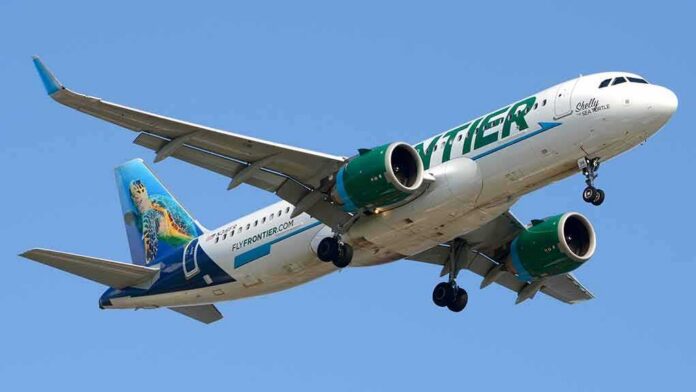
A Frontier Airlines flight diverted to Chicago after a leaking bathroom faucet flooded the cabin and prompted the pilot to declare an emergency, citing concern about aircraft electronics.
Story Highlights
- Pilot declared an emergency over a lavatory leak and diverted to O’Hare, citing electronics risk.
- Frontier confirmed the forward bathroom faucet leaked and water spread along the cabin floor.
- The Denver-to-Detroit flight landed safely with no reported injuries.
- Video appeared to show water soaking the aisle during the flight.
Emergency Declared After In-Flight Lavatory Leak
Air-traffic-control audio captured the pilot reporting a forward sink leak, cabin flooding, and a request to divert to Chicago O’Hare on November 11, 2026. The pilot declared an emergency and said the crew was worried about electronics as water spread along the floor. The flight had departed Denver and was bound for Detroit when the crew changed course. The situation reflects a simple truth in aviation: even “just water” can become a real safety issue fast.
Frontier Airlines said the faucet in the forward lavatory “sprung a leak,” sending water along part of the aircraft floor and forcing the diversion. The airline reported a safe landing and no injuries among passengers or crew. That account matches the radio call about flooding in the cabin and concern for systems. The crew’s quick action steered the flight to a major airport with strong emergency support and maintenance options, which is standard practice in such events.
Visual Evidence And Route Details Align Across Outlets
ABC7 Chicago reported video that appeared to show the cabin floor soaked with water as passengers sat in their seats. The same outlets agreed on the route: the flight left Denver for Detroit, then diverted to O’Hare, where it landed safely. Some reporting identified the flight as 3566, while another outlet referenced 3655; that mismatch does not change the core facts of the diversion, the emergency call, and the safe outcome. Frontier’s statement stays consistent with the audio and the video accounts.
Nobody wants a bathroom leak at 35,000 feet. But the concern was not comfort. It was risk to systems if water reached wiring or electronics under floor panels. Federal safety guidance warns that leaks from aircraft plumbing can create secondary hazards when fluid reaches electrical connectors or freezes in flight. Past National Transportation Safety Board cases have tied water intrusion to electrical problems, which explains why pilots take even small leaks seriously. The conservative lesson is simple: fix problems early, and do not gamble with safety.
Why Water In The Cabin Can Threaten Electronics
Federal Aviation Administration guidance highlights why crews act when water spreads near wiring. Plumbing components sit near other systems, and moisture can travel into places it does not belong. National Transportation Safety Board investigators have documented events where lavatory or cabin fluids contaminated connectors and led to malfunctions. That technical record backs the pilot’s caution on this flight. The crew did not wait to see if something failed. They moved to prevent a failure, which is the right call when lives are on board.
The exact mechanical cause of the faucet failure is not yet reported. Frontier did not specify whether a fitting cracked, a valve stuck, or a seal failed. Reporters also did not publish the timing of each step, such as when the leak started or how long water flowed. Those details belong in maintenance and incident logs, which usually follow after inspections. What is clear is that a leak started, water spread, a pilot declared an emergency, and the jet landed without injury.
Operations, Accountability, And The Passenger Experience
Frontier told local stations the diversion ended safely with no injuries, and the airline’s statement aligned with the pilot’s description of a forward lavatory leak. ABC7’s video added visual proof that water reached the aisle. Airlines are required to review incidents like this, determine the component failure, and return the aircraft to service only after fixes and checks. That is how a safe system should work: see the risk, land, fix the hardware, and document the work.
For passengers, the delay was frustrating, but safety won. For the rest of us, there is a broader point. Strong, no-nonsense standards protect people and keep travel moving. That means disciplined maintenance, parts that meet the mark, and crews who have the authority to act fast. This event showed that approach in action. A small part failed. The crew treated it as a real threat, not a public-relations issue, and brought everyone down safe. That is the outcome we want every time.
Sources:
nypost.com, nbcchicago.com, cbsnews.com, viewfromthewing.com, faa.gov