A Boston concert trip ended with a federal immigration arrest at Logan Airport, spotlighting how old removal orders now drive tough enforcement — even for a Deferred Action for Childhood Arrivals recipients with no criminal record.
Story Snapshot
- A 32-year-old Deferred Action for Childhood Arrivals (DACA) recipient was detained by immigration agents at Boston Logan Airport after a Noah Kahan concert.
- Immigration and Customs Enforcement (ICE) says she had a 2017 removal order and overstayed a visitor visa, making her a lawful target in a “targeted operation.”
- Her lawyer says she never knew about the order and had a Deferred Action for Childhood Arrivals renewal pending, raising questions about notice and fairness.
- The case fits a broader Trump-era pattern: federal agents are focusing on immigrants with old removal orders, including some with active Deferred Action for Childhood Arrivals protections.
Concert Trip Ends in Arrest at Logan Airport
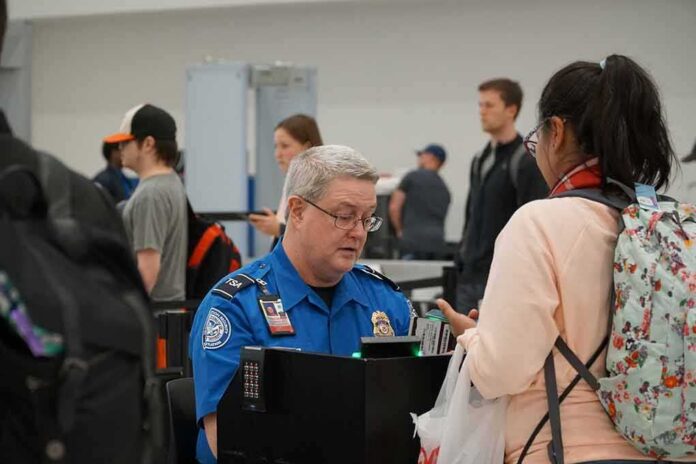
On July 10, 2026, Maria Rosales, a 32-year-old woman living in Florida, arrived at Boston Logan International Airport to fly home after seeing singer Noah Kahan perform at Fenway Park. Her lawyer says she cleared the Transportation Security Administration checkpoint and was waiting at the gate when Immigration and Customs Enforcement agents approached and detained her. She was then taken into federal custody and moved to an immigration detention facility in Burlington, Massachusetts, where she remains while her case plays out.
Rosales came to the United States from Colombia as a young child and later gained protection under the Deferred Action for Childhood Arrivals program, which shields certain immigrants brought here as children from removal and allows them to work legally. Her attorney, Todd Pomerleau, told local media that her Deferred Action for Childhood Arrivals renewal application has been pending since 2023, meaning she believed she was still protected when she traveled to Boston for the concert. He says she has no criminal record, works, and helps care for her family in Florida, painting a picture of someone who has built a life in the country over decades.
ICE Cites Old Removal Order and Visa Overstay
Immigration and Customs Enforcement officials say the arrest did not come out of nowhere. In a statement to Boston outlets, a spokesperson said Rosales first entered the United States on a visitor visa in September 1998, with permission to stay until March 1999. According to that statement, she was ordered removed by an immigration judge on June 28, 2017, and has “illegally overstayed her visa and remained in the country for over eight years since being ordered removed.” The agency said she was picked up as part of “targeted operations” at Logan Airport, suggesting agents were working from a list of people with outstanding removal orders that day.
Rosales’ lawyer does not dispute that an order exists but challenges how it came about. He says the order traces back to a 2017 encounter with immigration authorities at a checkpoint in New Mexico, where she was briefly detained and given a notice to appear in court. Rosales has stated in an affidavit that she was “unaware” she had a deportation order and never received a clear date, time, or place for a hearing. Supporters online claim she missed a 2017 hearing she did not know about, which triggered the order that now drives her detention. The clash between the paper record and her account highlights a key tension: federal law treats the order as final, even if she did not understand when she was supposed to appear.
Detention Conditions and the “Choice” to Stay
Rosales is currently held at the Burlington facility north of Boston, where she has described harsh conditions. In a sworn statement reported by local television, she says she has had to “beg” staff for basic needs and clear information about her case, and that officers sometimes grow irritated when detainees ask questions. Her lawyer and local politicians who have visited the facility say they worry about extended stays in a space not designed for long-term detention. One recent court ruling has already limited how long Immigration and Customs Enforcement can hold people at that Burlington office, but it does not bar detention altogether.
María Rosales allegedly missed a 2017 immigration court hearing, triggering an outstanding removal order that led to her arrest by ICE at Logan Airport. Her lawyers secured an emergency stay, arguing her detention was unlawful because she has active DACA protections, no criminal… pic.twitter.com/T3z0mBVoum
— HotTakes NobodyAskedFor (@HotTakesNobody) July 17, 2026
An Immigration and Customs Enforcement spokesperson framed detention as a matter of personal choice. In comments reported by Boston media, the spokesperson said that noncitizens without legal status can agree to leave the United States voluntarily, “Being in detention is a choice.” From that view, Rosales could end her time in custody by accepting removal under the 2017 order. Her attorney has instead filed legal challenges, seeking to keep her in Massachusetts and out of a deportation pipeline while he argues that her active Deferred Action for Childhood Arrivals protections and lack of notice should block removal. That legal push mirrors other battles across the country where lawyers say federal officials are stretching the law to make fast use of old orders.
Part of a Wider Trump-Era Enforcement Surge
Rosales’ case is not happening in a vacuum. Data and advocacy reports show that, during President Trump’s second term, Immigration and Customs Enforcement has stepped up arrests of Deferred Action for Childhood Arrivals recipients, especially those with old removal orders or immigration violations on their record. One analysis found that in the first ten months of this term, the agency detained more than 260 Deferred Action for Childhood Arrivals recipients and deported over 80, even though the program’s protections remain formally in place for many. Federal officials have stressed that Deferred Action for Childhood Arrivals “does not confer legal status” and does not bar arrest if someone violates immigration law, including missing a hearing or ignoring a removal order.
For constitutional conservatives, the case raises two competing instincts. On one hand, many see tough enforcement of immigration law and long-ignored removal orders as necessary after years of lax border control and executive overreach. Immigration and Customs Enforcement is focusing on people with formal removal orders, not random citizens, and the Logan operation fits that pattern. On the other hand, serious concerns emerge when the government detains people for long periods, in poor conditions, based on hearings they say they never knew about. That touches due process values rooted in the Fifth Amendment, and it feeds fears of federal power that feels unchecked.
What This Means for Flyers With Old Immigration Cases
Rosales’ arrest also sends a warning to anyone with unresolved immigration history who travels by air. Legal guidance notes that federal law does not ban undocumented immigrants from flying inside the United States, but airport travel increases the chance of contact with federal officers who can check databases and see open cases or old orders. Logan Airport has already seen other high-profile detentions, including a 19-year-old college student who was deported to Honduras despite a judge’s order blocking removal, prompting her lawyer to call the government’s actions “lawless.” These stories show how airports now function as key enforcement points, where paperwork from years ago can lead to sudden detention.
For now, Rosales’ future depends on the courts. Her lawyers have reportedly secured an emergency stay to pause deportation while they argue that her Deferred Action for Childhood Arrivals protections and a lack of clear notice make the 2017 order unfair. Supporters who see her as a long-time neighbor and caregiver are pressing for her release to continue her life in Florida while her case is heard. Immigration and Customs Enforcement, backed by Trump administration policies, continues to defend the arrest as lawful and necessary. The result will help shape how far federal agents can go when they turn old paperwork into new arrests — and how much protection Deferred Action for Childhood Arrivals really offers when immigration law and executive action collide.
Sources:
twitchy.com, nbcboston.com, youtube.com, wmtw.com, cbsnews.com, wbur.org, fwd.us, abcnews.go.com, hoodline.com, instagram.com, homeishere.us, wusf.org, theguardian.com, nbcnews.com, uscis.gov