For the third year in a row, Gaza’s war-zone border closures have blocked thousands of Muslims from fulfilling the Hajj pilgrimage, exposing how ordinary believers get trapped whenever governments turn faith into a bargaining chip.
Story Snapshot
- Israel’s control over key crossings has stopped roughly 2,500 registered Gaza pilgrims from traveling to Mecca this year.
- Border closures and permit rules are part of a decades-old blockade system that sharply restricts movement in and out of Gaza.
- Palestinian authorities scrambled to reassign unused Hajj visas so they would not be lost entirely.
- The episode highlights how security states worldwide use “emergency” powers to curb basic religious freedoms.
Border Closures Turn a Religious Duty into an Impossible Journey
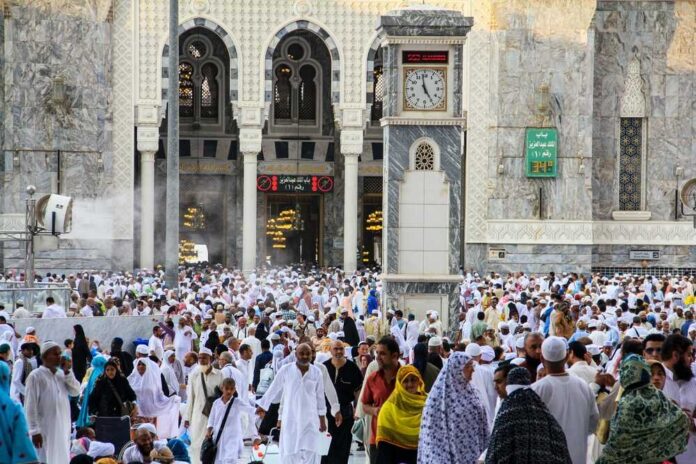
Reports from regional media state that Israel’s capture and closure of the Rafah crossing, Gaza’s primary exit to Egypt, prevented around 2,500 Palestinians from traveling to Saudi Arabia for Hajj this year, even though these pilgrims had already registered and prepared for the journey.[1] Palestinian religious officials confirmed that residents who were supposed to depart for Mecca instead remained trapped behind sealed borders, with no clear alternative route and no timeline for when travel might resume.[1]
Statements from Gaza’s Ministry of Endowments describe how the closure blocked officially approved Hajj delegations, leaving the ministry to announce that its faithful could not leave the Strip for the pilgrimage at all this season.[2] Officials stressed that the pilgrims affected were not last‑minute applicants but people who had completed the required vetting and logistical steps long in advance, underscoring that the disruption came from border decisions rather than from internal Palestinian administrative failure.[2]
Long-Running Blockade System Limits Every Form of Movement
Background reporting on Gaza’s access regime notes that restrictions on movement in and out of the Strip date back to the early 1990s, when Israel and, later, Egypt tightened border controls and introduced complex permit systems for travelers.[5] Analysts describe this as a blockade structure in which all civilian movement, including for medical care, study, work, or religious worship, is treated as an exception granted by security authorities rather than as a basic right that people can exercise freely.[5]
Travel advisories for foreigners visiting Palestinian territories now routinely warn that land borders around Gaza can be closed without notice, kept shut for long periods, or become targets of attack during escalations, making any attempt to cross highly unpredictable and sometimes dangerous. These notices describe how crossing points may shift from partially open to fully closed in response to security events, leaving civilians, including would‑be pilgrims, unable to plan or rely on previously announced travel schedules.
Palestinian Authorities Scramble to Salvage Hajj Visas
Officials from the Palestinian side explained that once it became clear that Gaza residents could not leave, they moved to reallocate the Strip’s Hajj quota to other Palestinians who could travel, in order not to lose those limited visas altogether.[2] The ministry framed this as an emergency step forced by the closure, emphasizing that the choice was between using the visas elsewhere or allowing them to lapse completely while Gaza’s pilgrims stayed stuck behind blocked crossings.[2]
Thousands of Palestinians in Gaza remain barred from Hajj as war, displacement and border closures prolong humanitarian suffering.https://t.co/GTNezuZfwM pic.twitter.com/5UmYbRMbJt
— The Palestine Chronicle (@PalestineChron) May 21, 2026
Humanitarian coverage and on‑the‑ground accounts depict the denial of Hajj as part of a broader pattern in which war, displacement, and strict border controls have disrupted nearly every aspect of civilian life in Gaza for three consecutive pilgrimage seasons.[3] Reporters describe thousands of aspiring pilgrims whose names were finally drawn after years on waiting lists, only to see the opportunity vanish because no authority was willing or able to guarantee safe passage from the enclave to Saudi Arabia.[3]
Security Claims Versus Basic Religious Freedom
Supporters of tight border controls point to long‑standing security concerns, including fears of weapons smuggling and militant movement, as justification for the restrictive policy framework that governs Gaza’s exits.[5] They argue that any relaxation of surveillance or crossing rules could be exploited by hostile groups, and that wartime conditions especially require closing or minimizing traffic through sensitive border points until authorities judge that threats have decreased to a manageable level.[5]
Palestinian religious leaders, rights advocates, and affected families respond that while governments have a duty to protect their citizens, using broad closures that trap thousands of unarmed pilgrims amounts to collective punishment rather than targeted security enforcement.[1][3] They stress that Hajj is a core religious obligation in Islam for those who are physically and financially able, and that sealing borders during the pilgrimage season effectively strips Gaza’s Muslims of a duty they have prepared for over many years.[1][3]
Why This Matters to Americans Who Care About Liberty
For American readers who value constitutional protections for religious freedom and freedom of movement, the Gaza Hajj story carries a clear warning about what happens when security states treat every citizen as a suspect. The same governing logic that justifies indefinite border closures there mirrors the logic behind emergency decrees, travel bans, and heavy‑handed surveillance wherever bureaucrats decide safety trumps liberty, with little transparency and even fewer checks on abuse.[5]
Watching thousands of ordinary believers blocked from a once‑in‑a‑lifetime pilgrimage by distant authorities should sharpen our resolve to defend limits on government power at home. Whether the faith in question is Christian, Jewish, or Muslim, and whether the border lies in the Middle East or on America’s own frontier, the principle is the same: security should never become a blanket pretext for erasing God‑given rights and turning worship into a privilege granted by the state.[5]
Sources:
[1] Web – Israel blocks Hajj for 2,500 Palestinian pilgrims from Gaza
[2] Web – Gaza Crossing Closures Prevent Residents from Performing Hajj …
[3] Web – Thousands in Gaza Denied Pilgrimage for Third Consecutive Year