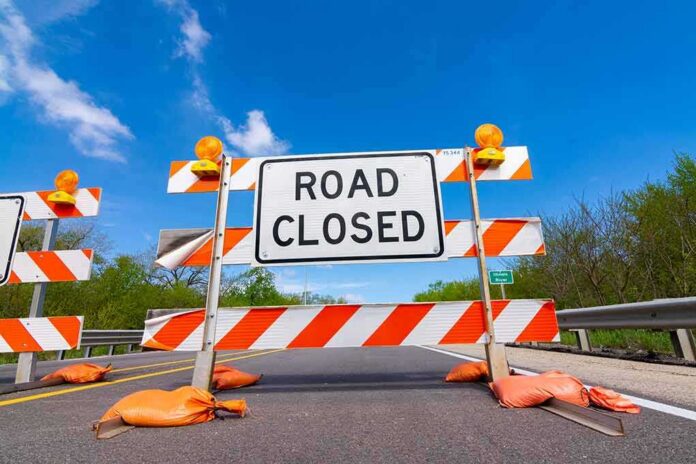
A key ramp on one of Southern California’s busiest freeways is shutting down for months so the state can finish a $114 million wildlife bridge, and local drivers are furious.
Story Snapshot
- California is closing a major northbound Highway 101 on-ramp at Liberty Canyon Road around the clock for two months to advance the Wallis Annenberg Wildlife Crossing project.
- The wildlife bridge, now in its final construction stretch, carries a price tag of about $114 million and has already sparked years of lane and road closures in Agoura Hills.
- Supporters say the project will reconnect habitat and reduce deadly animal collisions, while critics see another example of California putting ideology and “green” symbolism over everyday drivers.
- President Trump’s administration now has to manage the fallout as frustrated commuters, business owners, and taxpayers demand stricter oversight of big-ticket infrastructure driven by environmental activism rather than core transportation needs.
Ramp Closure Hits Commuters for Months
The California Department of Transportation plans to shut the northbound Highway 101 on-ramp at Liberty Canyon Road twenty-four hours a day, seven days a week, for roughly two months as crews place rock and landscaping materials for the Wallis Annenberg Wildlife Crossing, starting March 24, 2025. The City of Agoura Hills confirms this closure as part of a series of ramp and road shutdowns linked directly to the crossing’s construction. For regular drivers, especially those who commute toward Los Angeles or Malibu, losing this key access point means longer detours, more time in traffic, and added fuel costs on top of already high prices. Many local residents are asking why a project meant for mountain lions and deer is allowed to disrupt their daily lives for weeks at a time, and why state planners did not design a plan that protected human mobility first.
Earlier phases of the project already brought repeated overnight closures of entire directions of Highway 101 near Agoura Hills, with Caltrans closing all southbound lanes for about five hours each weeknight to install massive concrete beams for the crossing’s bridge structure. During those nights, traffic was detoured onto Agoura Road and other local streets, pushing freeway-level volume into quiet neighborhoods not built for that load. Now, as the crossing moves into its final stretch, Caltrans has also ordered full daytime closures of Agoura Road between Rondell Street and Hydepark Drive from 7 a.m. to 5 p.m. on weekdays through July 1, 2026, further squeezing local access. These stacked closures form a pattern many conservative Californians know too well: drivers carry the burden of long, frustrating detours, while state agencies insist the pain is “temporary” for a future benefit most commuters will never personally see.
What the Wildlife Crossing Is Supposed to Do
The Wallis Annenberg Wildlife Crossing is promoted by its backers as the world’s largest dedicated wildlife bridge, stretching over Highway 101 to reconnect habitat in the Santa Monica Mountains and protect species such as mountain lions from deadly road crossings. The project’s official materials describe it as a public-private partnership led by Caltrans, the National Park Service, and conservation groups, designed to create a green corridor over the freeway so animals can safely move between fragmented areas. Supporters point to studies of other wildlife crossings that show fewer animal deaths and fewer dangerous encounters for drivers when roads are separated from key migration routes. They argue that decades of urban sprawl and car traffic have trapped wildlife in shrinking islands of habitat, and say this bridge is a way to repair past damage without fully removing roads. For many environmental activists, the crossing is a flagship symbol of how government can respond to climate and conservation concerns with bold physical infrastructure, not just regulations on paper.
Even supporters admit that the project has been complex and expensive, with total costs around $114 million funded by a mix of state money and private philanthropy. Long-term plans call for extensive native planting and soil on top of the bridge to make it feel like natural ground to animals, which explains the current ramp closure for rock and landscaping work. But that design choice also drives up the bill and extends construction timelines, as crews must build a structure strong enough to hold soil, plants, and fencing across multiple lanes of freeway traffic. For taxpayers already squeezed by California’s high taxes and inflation-driven living costs, the idea of a nine-figure price tag for a bridge wildlife will use, while roads and water systems still need work, raises serious questions about priorities. Many conservative voters see this as proof that environmental symbolism has pushed aside kitchen-table issues like commute time, road safety for families, and smart use of public funds.
Local Frustration and National Implications
Residents and commuters in Agoura Hills and nearby communities have now lived with years of rolling closures tied to this single project, including extended fourteen-hour shutdowns of Agoura Road while crews poured concrete for the bridge. Reports describe a “bridge to nowhere” effect, where drivers see a giant new structure rising over the freeway yet still do not experience any direct relief from congestion, lane narrowing, or rising travel times. That feeling feeds a wider frustration many conservatives share about California’s political culture: big-ticket projects driven by environmental and “woke” priorities get fast approval, while basic road expansion, new water storage, or real crime reduction move slowly. With President Trump and Vice President JD Vance now steering the federal side of transportation and infrastructure policy, this local controversy also becomes a test case for how a conservative administration responds when blue-state agencies push symbolic projects that create real pain for normal people. The administration can press for stricter cost-benefit reviews, greater transparency, and better protection of commuter routes when federal funds or approvals are involved, sending a message that roads exist first to serve citizens, not political branding. As this wildlife bridge nears completion, the question for many readers is simple: will leaders finally put everyday drivers, family schedules, and common sense ahead of high-dollar experiments, or will Californians keep paying in time and money while the state congratulates itself for another “world’s largest” project?
Wallis Annenberg Wildlife Crossing Construction
🚧 CLOSED: NB on-ramp at Liberty Canyon Rd to U.S. 101
🗓️ Monday, Aug. 3 – Friday, Aug. 7
⏰ 9 AM-3 PM each day
A concrete pour is scheduled for the morning of August 1. No lane or ramp closures are anticipated for this work. pic.twitter.com/601pXWTm4l— Caltrans District 7 (@CaltransDist7) July 31, 2026
For conservative Americans, this story is not only about one ramp in Agoura Hills. It reflects a wider struggle over who government really serves. When projects like the Wallis Annenberg Wildlife Crossing shut down key ramps, close local roads, and divert traffic through residential areas, families lose time together, businesses lose customers, and emergency responders face new obstacles. Supporters can show real benefits for wildlife, and that matters, but the process must honor the people paying the bills and living with the closures. Many readers will see this as one more reminder to stay alert, demand oversight, and insist that future infrastructure respects both nature and the constitutional promise of a government that works for its citizens, not for activist agendas.
Sources:
nypost.com, agourahillscity.org, nbclosangeles.com, dot.ca.gov, latimes.com, vcstar.com, secretlosangeles.com, cnn.com, abc7.com, facebook.com, instagram.com