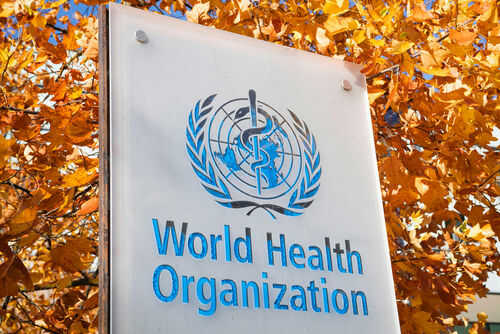
WHO’s Ebola warning was not political theater; it was a blunt reminder that weak borders, weak health systems, and delayed response can turn one outbreak into an international crisis.
Quick Take
- The World Health Organization (WHO) declared Ebola a Public Health Emergency of International Concern after an emergency committee unanimously backed the move [1].
- WHO cited the outbreak’s scale, fatality count, and risk to other nations as the reason for escalation [1][2].
- Officials also pointed to weak health systems and transmission patterns that made coordinated action necessary [1][2].
- Later Ebola declarations in the Democratic Republic of the Congo show WHO used the same emergency framework when cross-border spread risk rose [4][5].
Why WHO Escalated the Ebola Outbreak
WHO Director-General Margaret Chan declared the Ebola outbreak a Public Health Emergency of International Concern after a unanimous recommendation from an emergency committee [1]. WHO said the outbreak had reached 1,779 infections and 961 deaths, and officials described it as the largest, most severe, and most complex Ebola outbreak in nearly four decades [1][2]. For readers who have watched bureaucracies hesitate too long, that kind of language signals a real alarm, not a talking-point exercise.
WHO also said the outbreak posed more than a local African problem because it threatened other nations and required a coordinated international response [1][2]. The agency cited worrisome transmission patterns in countries with weak health systems, which is exactly where contagion can outrun hospitals, border controls, and public messaging [1]. WHO recommended against general bans on travel or trade, but it did urge restrictions for Ebola contacts and cases to reduce spread [1][2].
Why the Label Matters for Public Health and Sovereignty
The emergency label matters because it can trigger urgency without automatically forcing every country into lockdown-style reactions [1][3]. WHO’s guidance emphasized targeted measures instead of blanket bans, a distinction that matters for commerce, travel, and personal freedom [1][2]. Conservatives should notice that the agency’s own language rejected indiscriminate restrictions while still demanding serious action. That balance is important: it shows emergency policy can be focused and disciplined instead of sprawling into the kind of overreach people rightly resent.
CDC outbreak history backs up the scale of the problem and notes that poor infection control and strained health care systems helped fuel the devastation [6]. CDC also records that by August 2014, WHO had already declared the situation a Public Health Emergency of International Concern [6]. A peer-reviewed chronology likewise says WHO promptly issued the declaration on August 8, 2014, underscoring that the move was not improvised panic but a formal response to rising danger [5].
What Later Ebola Declarations Show About WHO’s Threshold
WHO used the same emergency framework again in 2019 when Ebola in the Democratic Republic of the Congo spread into a more dangerous setting [4][5]. The agency said the first confirmed case in Goma, a city near Rwanda and a gateway to the region, helped drive the declaration [4]. WHO also said the outbreak had become a level 3 emergency, its most serious internal mobilization category, which shows the organization treats PHEIC status as a threshold for cross-border risk, not a casual headline generator [4][5].
🚨 UPDATE: WHO has declared a Public Health Emergency of International Concern (PHEIC) for the Ebola Bundibugyo outbreak in DRC and Uganda.
This is the highest level of global health alert WHO can issue.
Here’s what changed in the last 24 hours. 🧵#DiseaseDecoded… https://t.co/Nh0S8AO1Vz— MedExplained101 (MD. MPH.) (@MedExplained101) May 17, 2026
The record also shows why some critics distrust global health institutions: WHO coordinates the response while also judging when the emergency threshold has been crossed [4][5]. That dual role can invite suspicion, especially when public reporting mixes terms like “international emergency” and “global emergency” as if they mean the same thing [2][3]. Still, the core facts here are hard to dismiss. Ebola spread fast, killed heavily, and moved through fragile systems that could not absorb delay [1][2][6].
What the Evidence Supports
The available record supports the conclusion that WHO had a factual basis for escalation. The outbreak was severe, deadly, and capable of crossing borders; the agency also warned against reactive policies that would damage travel and trade more than they helped [1][2]. What the record does not show is that the declaration alone solved the outbreak. It does show, however, that when disease, fragility, and international spread line up, waiting for perfect certainty is often how public authorities make a bad problem worse [4][5][6].
Sources:
[1] Web – WHO declares Ebola a public health emergency | CIDRAP
[2] Web – World Health Organization declares Ebola outbreak an international …
[3] YouTube – WHO declares Ebola outbreak in DR Congo ‘a global emergency’
[4] Web – Ebola outbreak in the Democratic Republic of the Congo declared a …
[5] Web – The Chronology of the International Response to Ebola in Western …
[6] Web – Outbreak History | Ebola | CDC