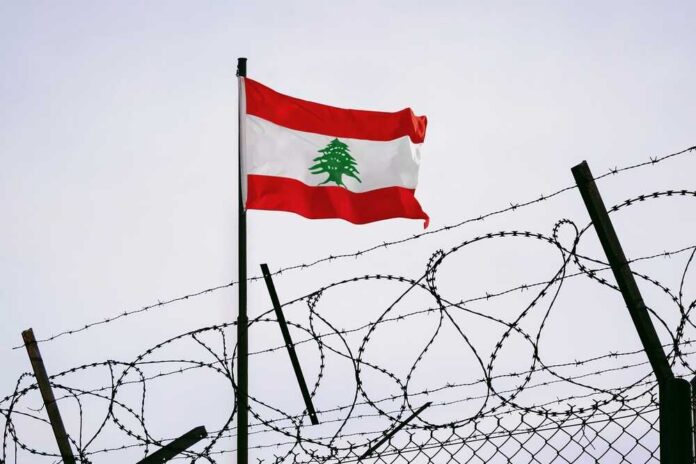
Lebanon is openly accusing Iran of sneaking Revolutionary Guard operatives into Beirut under “diplomatic” cover, and the fallout shows exactly how dangerous appeasing Tehran’s terror network has been for decades.
Story Snapshot
- Lebanon has ordered the pursuit, arrest, and deportation of any Iranian Revolutionary Guard personnel on its soil, signaling a rare public break with Tehran.
- Reports describe dozens of Iranian Revolutionary Guard officers fleeing Beirut and earlier deployments to rebuild Hezbollah after the 2024 war.
- Lebanese leaders say Iran used its embassy and “diplomatic activity” as cover for military operations that dragged Lebanon into war with Israel.
- The episode is a warning for Americans about what happens when regimes like Iran exploit diplomacy while Washington looks the other way.
Lebanon Moves Against Iranian Revolutionary Guard Presence
Lebanon’s government has taken the extraordinary step of ordering security forces to “pursue and arrest” any members of Iran’s Islamic Revolutionary Guard Corps found in the country, with instructions to deport them and ban their military activity on Lebanese soil.[5] Officials also directed agencies to verify whether such personnel are present, confirming Beirut treats Revolutionary Guard activity as more than rumor. This is not a pro-Western government speaking; this is usually cautious, divided Lebanon saying Tehran crossed a red line.
Alongside the security order, Lebanon has accused Iran’s Revolutionary Guard of operating in tandem with Hezbollah and entangling the country in a devastating conflict with Israel.[1] Lebanese leaders have framed the Revolutionary Guard presence as a violation of sovereignty, not as benign “advisers.” For years, analysts warned that allowing a foreign militia proxy to embed inside the state would eventually blow back on ordinary Lebanese families. That prediction has now arrived, and Beirut is admitting the cost publicly.
Diplomats or Terror Officers? Accusations of Cover Operations
Lebanese action did not stop at a general warning; authorities revoked approval for Iran’s ambassador, declared him persona non grata, and ordered him to leave, while recalling their own ambassador from Tehran.[1][4] In public messaging, Lebanon accused Iran of “blatantly” violating diplomatic norms and inserting Revolutionary Guard operatives into the country “under the guise of diplomatic activity,” using embassy channels to shield military personnel.[4] That is a serious charge: weaponizing diplomacy is how terror infrastructure hides behind immunity and paperwork.
Reports from Israeli officials and regional media describe the scope of that presence. Axios cites Israeli defense officials who say several dozen Revolutionary Guard officers fled Beirut within forty-eight hours over fears they would be targeted, with some reportedly operating out of the Iranian embassy itself.[2] Another account from the Jerusalem Post says roughly one hundred Revolutionary Guard officers arrived after the November 2024 ceasefire specifically to help Hezbollah rebuild its command structure and military infrastructure.[3] Those sources portray Revolutionary Guard officers not as mere liaisons, but as hands-on managers of Hezbollah’s war machine.
Evidence Gaps, Propaganda Risks, and What We Actually Know
Despite the strong rhetoric, Lebanon has not publicly produced arrest warrants, border logs, staffing rosters, or named Revolutionary Guard officers to prove specific individuals entered under diplomatic cover.[2][3][5] Much of the detail about deployments, embassy activity, and command roles comes from unnamed sources in Israeli or regional reporting, which limits how far anyone can treat each claim as courtroom-grade proof. Lebanon’s own orders instruct agencies to verify whether Revolutionary Guard personnel are present, which signals an active investigation more than a completed case.[5]
That uncertainty does not erase the larger picture. For decades, open-source research and regional history have described how Iran’s Revolutionary Guard, especially its external operations arm, uses a blend of overt diplomacy, “advisers,” and proxy militias like Hezbollah to project power while keeping deniability.[1] By design, the line between diplomat, military adviser, and covert operative is blurred. That makes it harder for citizens anywhere—Lebanon, Israel, or the United States—to see where legitimate diplomacy ends and terror logistics begin. The ambiguity itself is a tool, and sovereign states are left to sort the mess out after the damage is done.
Why This Matters to Americans Who Are Tired of Being Played
For American conservatives watching from afar, Lebanon’s crisis is not just another Middle East headline; it is a case study in what happens when elites treat terror regimes like normal partners. Western governments spent years insisting that engagement and deals with Tehran would moderate its behavior, even as the Revolutionary Guard trained and armed Hezbollah and other militias.[1] Now a fragile country like Lebanon is openly accusing Iran of abusing diplomatic channels, and families there are buried under rubble while bureaucrats argue over “process.”
Trump’s second term is facing a world shaped by those earlier decisions—nuclear concessions, soft responses to embassy assaults, and a mindset that diplomacy is always harmless. Lebanon’s warning should stiffen American resolve, not weaken it. When a regime uses embassies as forward operating bases, the answer is not more naïve engagement but clear-eyed pressure, secure borders, and an America that refuses to bankroll or apologize for any network tied to terror. That is what real sovereignty looks like, whether in Beirut or in Texas.
Sources:
[1] Web – Lebanon bans Iran operatives as strikes hit Beirut
[2] Web – Scoop: Dozens of IRGC members flee Lebanon, Israeli officials say
[3] Web – Iran deployed about 100 IRGC officers to Lebanon post 2024 war …
[4] YouTube – Lebanon Expels Iranian Envoy, Accuses Iran’s Revolutionary Guard …
[5] Web – Lebanon decides to pursue members of Iran’s Revolutionary Guards …