A U.S. government delegation landed in Cuba last week for the first time in a decade, delivering ultimatums to the collapsing communist regime while ordinary Americans remain locked out of the island nation by federal travel restrictions.
Story Snapshot
- First official U.S. government flight to Cuba outside Guantanamo Bay since 2016 delivers demands for political reform and prisoner releases
- Trump administration maintains hardline embargo and travel bans on Americans while officials conduct diplomatic negotiations
- U.S. delegation proposes Starlink internet access as Cuba’s economy deteriorates under decades-old sanctions
- Cuban President Díaz-Canel rejects characterization of security threat but affirms readiness to defend sovereignty
Historic Diplomatic Mission Amid Contradictions
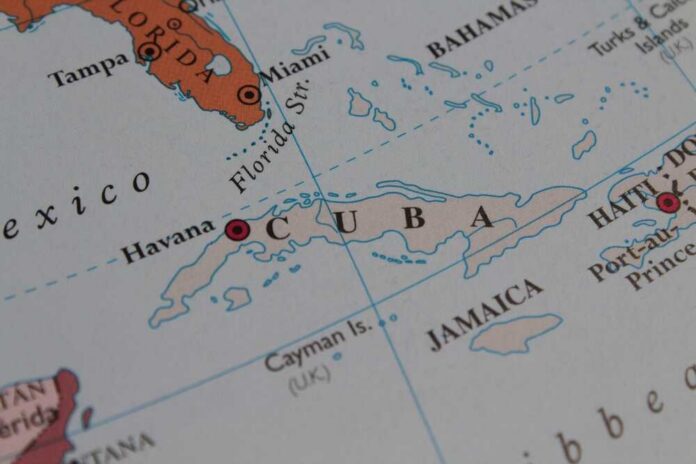
U.S. State Department officials flew to Havana aboard the first American government aircraft to land in Cuba outside the Guantanamo Bay military base since 2016. The delegation met with Cuban government representatives, including the grandson of retired leader Raúl Castro, to present demands for sweeping political and economic reforms. The visit represents a striking contradiction in federal policy: government officials conduct high-level negotiations while everyday Americans face strict travel prohibitions and financial restrictions preventing them from visiting the island just 90 miles from Florida’s coast.
Washington’s Demands for the Communist Regime
The State Department delegation outlined specific requirements for Cuba’s government: end political repression, release political prisoners, liberalize the failing economy, and reform economic practices that benefit military and intelligence agencies. A June 2025 National Security Presidential Memorandum established the framework for these demands, emphasizing enforcement of the tourism ban and maintaining the economic embargo. The administration characterized Cuba as a potential national security threat requiring major governmental changes, justifying continued pressure on the regime despite its economic deterioration.
Officials proposed providing free internet access to Cuban citizens through Starlink satellite connections, positioning the offer as humanitarian assistance while demanding political concessions. The proposal highlights the administration’s dual approach: technological engagement paired with economic isolation. Cuba’s government rejected intervention threats but acknowledged preparedness to defend against potential military action, creating a standoff between diplomatic engagement and confrontational rhetoric that leaves the Cuban population trapped between competing pressures.
Six Decades of Failed Embargo Policy
The U.S. embargo against Cuba has persisted for over 60 years, surviving multiple administrations and failing to achieve its stated objectives of democratic reform. The Obama administration briefly normalized relations from 2015 to 2017, easing travel restrictions and import regulations in recognition that decades of isolation had accomplished little beyond impoverishing ordinary Cubans. Trump’s 2017 return to power reversed those accommodations, tightening financial restrictions and reimposing travel bans that prevent individual Americans from visiting while government officials fly in on diplomatic missions.
This policy disconnect exemplifies the broader problem Americans increasingly recognize: government elites operate under different rules than ordinary citizens. Federal officials travel freely to conduct negotiations while enforcing prohibitions that prevent American families from visiting relatives, businesses from exploring opportunities, and individuals from exercising their liberty to travel. The embargo continues not because it works, but because it serves political interests and bureaucratic inertia, regardless of its failure to produce democratic change or its impact on suffering populations.
Questions About Government Priorities
The delegation’s visit raises fundamental questions about whose interests the federal government serves. While officials demand Cuba liberalize its economy and expand freedoms for its citizens, Washington maintains restrictions preventing Americans from exercising economic liberty and freedom of movement regarding Cuba. The administration enforces a statutory tourism ban, requires full-time civil society engagement for permitted travelers, and conducts regular compliance audits—treating American citizens as subjects requiring supervision rather than free individuals capable of making their own decisions.
Cuba’s economic crisis deepens while the embargo grinds on, affecting ordinary Cubans far more than the regime officials who remain insulated from its worst effects. Similarly, travel restrictions harm Cuban-American families and American businesses while government officials conduct diplomacy unimpeded. This pattern reflects a governing class increasingly detached from the principles of individual liberty and limited government, pursuing policies that expand federal control while failing to achieve stated objectives. The question remains whether this diplomatic engagement represents genuine policy evolution or merely another chapter in six decades of ineffective posturing.
Sources:
U.S. and Cuban Officials Met Recently in Havana Amid New Diplomatic Push – WSVN
National Security Presidential Memorandum NSPM-5 – White House
Move On From Washington’s Outdated Cuba Policy – Defense Priorities