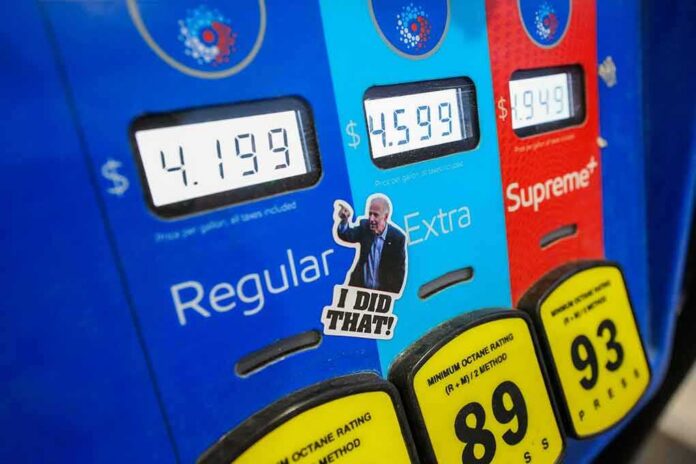
For the first time ever, Americans entered Labor Day weekend paying $4-plus for a gallon of gas nationwide.
Story Highlights
- AAA reported a national average around $4.14 per gallon leading into Labor Day, the highest ever for the holiday.
- GasBuddy projected a Labor Day average near $4.03, topping the prior holiday record of about $3.83 set in 2012.
- Analysts linked the spike to war-related supply fears and late-season price strength heading into September.
- Higher diesel costs add pressure on trucking, farming, and retail prices nationwide.
Record Labor Day Prices Confirmed by National Trackers
AAA said the national average sat a little above $4.14 per gallon in the days before Labor Day, marking the first holiday weekend with a $4 handle nationwide and eclipsing the old Labor Day high from 2012. GasBuddy, which tracks real-time station data, separately forecast a Labor Day average near $4.03, describing it as a clear holiday record over the previous peak in 2012. Those two snapshots show the same story: drivers faced the priciest Labor Day gas on record this year.
Reuters reported that GasBuddy’s forecast anticipated the $4.03 holiday mark and that national prices were already around $4.13 late in the week, nearly a dollar higher than last year’s level at the same time. USA Today highlighted AAA’s data calling for a record-setting weekend with national prices in the low $4.10s by September 3. While daily averages move by pennies, both sources aligned on the central fact: this Labor Day pushed past all prior holiday records at the pump.
What Drove the Spike: War Jitters and Late-Season Strength
Reuters tied the broader 2026 run-up to renewed conflict with Iran, which stoked fears over oil supply and shipping lanes that feed global crude markets. AAA emphasized that the country had never crossed $4 for Labor Day until now, underscoring how unusual this late-summer strength was compared with normal seasonal easing. When overseas risk lifts crude and wholesale prices, retail stations adjust quickly. Families then feel the hit on every road trip, errand, and commute.
AAA’s dashboard also showed diesel near historic highs, which acts like a tax on everything delivered by truck, train, or tractor. Higher diesel costs raise freight rates and farm expenses and can ripple into grocery and hardware prices. That squeeze lands hardest on working families and small businesses that cannot pass on every new cost. The result is a nagging price pressure that keeps budgets tight even when other bills stay flat.
How This Compares to Past Years and What Comes Next
Analysts pointed out that while this is not an all-time high for any day of the year, it is the highest level ever this late in the calendar, and it shattered the specific Labor Day benchmark set in 2012. AAA noted the previous Labor Day record near $3.82, and that the holiday had never topped $4 until now. GasBuddy’s forecast and the week’s observed levels both cleared that bar, putting a hard number on what drivers already felt in their wallets.
Heading into fall, prices will track crude markets, refining runs, and regional supply. Any easing needs fewer global shocks and steady domestic output. Households can still fight back by shopping around using price apps, keeping tires properly inflated, and combining trips to cut miles. But large moves hinge on policy and global events. A stable energy posture, reliable refining capacity, and strong supply chains remain the surest path to sustained relief at the pump.
Sources:
cnbc.com, reuters.com, gasprices.aaa.com, usatoday.com