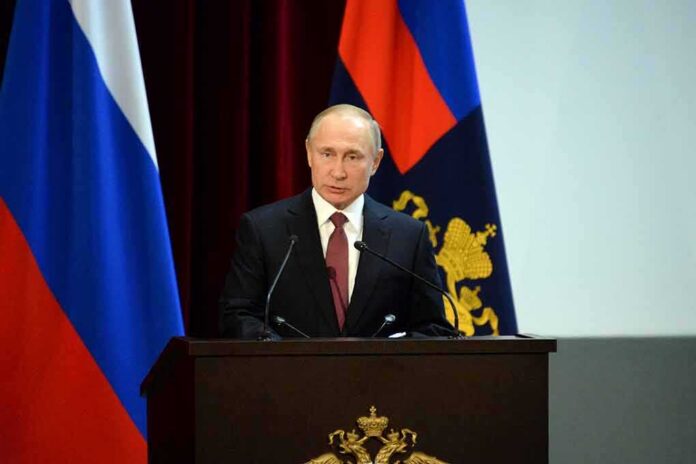
After the Crimean Bridge strike, Vladimir Putin publicly shut the door on ceasefire talks and warned of “much more painful” reprisals.
Story Snapshot
- Putin tied any limited ceasefire talks to the bridge attack and then rejected negotiations.
- Russia promised a response “much more painful” than the bridge damage, escalating risk.
- Reports said Ukraine struck the bridge, knocking out sections and halting traffic.
- Ukraine framed the bridge as a military route and claimed responsibility for planned strikes.
Putin Links No-Negotiations Stance To Crimean Bridge Strike
On November 19, 2026, Russian President Vladimir Putin said Russia would not negotiate limited ceasefires after strikes on the Crimean Bridge. He said he had discussed possible maritime and energy pauses but ruled them out following the attack. His statement drew a direct line from the bridge incident to Moscow’s policy choice. That clarity matters. It signals a harder phase of the war and fewer off-ramps for talks that could shield civilians or energy sites this winter.
Putin’s remarks followed days of reports that the bridge, a key link to occupied Crimea, suffered major damage. Russian authorities suspended or restricted traffic while they assessed the situation. The timing and tone showed the Kremlin wants to project strength and control. A strike on a high-profile symbol invites pressure to answer. The decision to cancel even narrow talks means more risk for shipping, energy grids, and families caught near the front lines this season.
Kremlin Warns Of “More Painful” Retaliation, Details Unclear
Putin vowed a response “much more painful” than the bridge damage. He did not specify targets, timing, or legal basis. That kind of open-ended threat increases uncertainty for ports, rail, and power sites far from the front. It also raises insurance and shipping risks in the region. The lack of public detail leaves observers guessing about the scale and aim of any strikes, which is often part of the message itself in information warfare.
The Kremlin also claimed the bridge was not carrying military cargo, which outside reporting does not confirm. The bridge’s role has long had both symbolic and military value. Russia says it can rely more on land routes now, while Ukraine and independent outlets call the bridge a vital artery for troops and supplies. These conflicting claims matter because they shape public views of whether attacks are military targets or civilian harm.
Kyiv Claims Responsibility And Calls Bridge A Military Route
Ukrainian President Volodymyr Zelenskyy said the strike answered Russian attacks on Ukrainian infrastructure. He described a planned operation over weeks and credited domestic drones and missiles. Ukraine’s pitch is clear: the bridge supports Russian military logistics and is a lawful target. Kyiv’s account also highlighted damage to bridge spans, suggesting a hit to both movement and morale. That narrative contests Moscow’s portrayal of the bridge as mainly civilian.
Independent and regional outlets reported severe damage and traffic stoppages after the strikes. Photos and videos circulated widely, but a single, audited structural assessment is not in the public record. In wartime, fast reporting and propaganda collide. Readers should focus on what both sides put on the record and what actions follow. Here, those actions include Moscow’s refusal to pursue even narrow maritime or energy pauses tied to civilian needs.
Why This Matters For America’s Security And Wallet
Energy routes, grain flows, and shipping insurance all react to threats like these. When Russia cancels even limited ceasefire talks, risk premiums rise. That can push fuel and food costs higher worldwide. American families already pay more for groceries and gas when foreign conflicts choke supply or scare shippers. President Trump has pressed allies to share the burden and keep sea lanes open. But threats without clear limits make that job tougher and more costly for everyone.
Putin retaliates with heavy bombers following strike on Kerch Bridge #Ukraine #Kyiv #bombers #explosions https://t.co/gdD7o3xNze
— Front Page Hacks Fella (Ukrainian Hub News) (@UkrainianH8125) November 20, 2026
Conservatives value peace through strength and clear goals. Open-ended threats and strikes on critical links invite blowback and mission creep. The smart path is narrow deals that shield food and energy while larger talks remain stalled. The Black Sea lessons show targeted arrangements can calm markets without rewarding aggression. Washington should keep pressure on all parties to protect trade lanes and avoid civilian harm, while keeping America out of blank-check commitments abroad.
Sources:
cbsnews.com, hromadske.ua, themoscowtimes.com, ukrinform.net