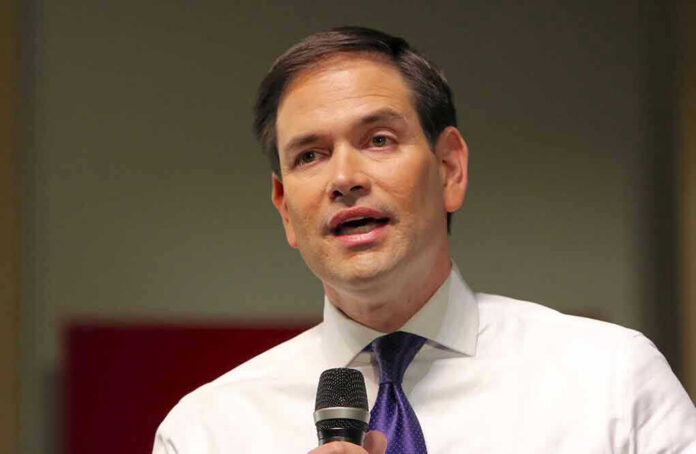
At the United Nations, Secretary of State Marco Rubio backed free elections in Venezuela only after real reforms, and he told Cuba’s rulers their revolution has failed.
Story Highlights
- Rubio said credible Venezuelan elections require debt fixes and rebuilt institutions before any vote.
- Rubio warned against rushing elections that hand a new leader a broken state.
- Rubio said the Cuban revolution failed and urged political and economic freedom in Cuba.
- A brief Trump–Rodríguez meeting focused on Venezuela’s transition path, Rubio said.
Rubio Links Venezuela Elections to Real Reforms, Not Timetables
Secretary of State Marco Rubio told reporters in New York that Venezuela needs stable finances and working institutions before an election can be credible. He said talks centered on steps to ease the economic crisis, restructure debt, and rebuild election bodies so votes are free and fair. He argued against a fast election that would only hand the winner a collapsed system. He framed the United States approach as pushing a political transition that lasts beyond one vote.
Rubio’s remarks echoed a broader view among regional experts that election calendars do not fix broken courts, weak election agencies, or media limits. He pointed to the need for an enduring republic, not a photo-op ballot. That stance favors sequencing: fix core systems in parallel with political talks, then vote. It aligns with years of lessons from failed openings in Venezuela where weak rules let old abuses snap back after election day.
Trump–Rodríguez UN Huddle Put Transition Mechanics on the Table
Rubio said President Trump and Venezuela’s Delcy Rodríguez held a short but important meeting at the United Nations. He described the focus as Venezuela’s transition framework and the groundwork needed for credible elections. The point was not to bless a date, he said, but to set conditions so any vote would count and a new government could actually govern. That meeting signaled direct engagement while keeping pressure for concrete reforms first.
Rodríguez told the General Assembly that elections will be held at the right moment and that institutions would be prepared for an inclusive and transparent process. She cited talks with opposition sectors but did not set a date. Her pledge matched Rubio’s call for preparation in principle, though she left timing vague. The contrast highlights the core dispute: promises versus proof of real institutional change before the ballot.
Rubio Tells Havana: Freedom First, Then Help Will Follow
Rubio said bluntly that the Cuban revolution has failed and that conditions will not improve without big political and economic changes. He said the United States is prepared to help if Cuba opens the door to real reform. He defined the path as political freedom and economic freedom together. That means rights for citizens, space for private enterprise, and rules that protect ownership and investment so families can work, save, and build.
Rubio Gives Major Breakdown on What's Next for Cuba, Russia and Venezuela at UN https://t.co/6654ogHC2f
— C E C (@ChristineC82003) September 24, 2026
Rubio also pushed back on claims that minor tweaks in Havana can fix decades of damage. He argued that small steps without liberty or rule of law will not last. He tied any serious help to visible change from the regime, not slogans. For Cuban families facing blackouts, inflation, and shortages, the test is simple: Can people speak freely, start businesses, and keep what they earn? Until the answer is yes, he said, promises mean little.
Why This Matters for American Interests and Values
The United States has a stake in neighbors that are free, stable, and lawful. Rubio’s sequencing message aims to stop the cycle where rigged systems hijack votes and crush hope after the cameras leave. That protects those who fight for basic rights and aligns with our belief that power comes from the people. It also guards U.S. taxpayers from funding broken schemes and tells global bodies to support freedom, not just process for process’s sake.
What To Watch Next
Watch for concrete steps in Venezuela: clean voter rolls, independent election authorities, and rules that let all parties compete. Look for real debt talks that stabilize the economy so a new government can stand. In Cuba, watch whether leaders free political prisoners, lift controls on speech, and secure property rights. The Trump administration’s stance, as explained by Rubio, ties any help to those measurable changes, not to speeches at the United Nations.
Sources:
redstate.com, aa.com.tr, townhall.com, en.cibercuba.com, c-span.org