
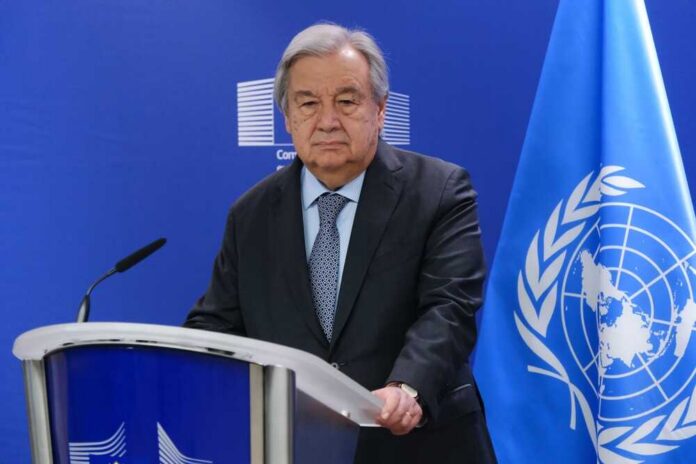
UN Secretary-General António Guterres delivered a stark warning that global arms control is collapsing as nuclear arsenals expand for the first time in decades, raising alarm that bureaucrats and elite power players are sleepwalking into a catastrophic arms race while everyday Americans bear the burden of record military spending.
Story Snapshot
- Nuclear Non-Proliferation Treaty eroding due to unfulfilled commitments and accelerating proliferation drivers, Guterres warns at April 2026 review conference
- Global military spending hit $2.7 trillion in 2025—13 times total foreign aid and equal to Africa’s entire GDP—diverting resources from struggling citizens
- Nuclear warheads proliferating for first time since Cold War as major powers modernize arsenals amid geopolitical mistrust
- AI and quantum computing create new nuclear threats while arms control treaties lapse, leaving world vulnerable to catastrophic escalation
Arms Control Framework Crumbling After Five Decades
The Nuclear Non-Proliferation Treaty, which entered force in 1970 and binds 191 nations to prevent nuclear weapons spread, faces unprecedented erosion according to UN Secretary-General António Guterres. Speaking at the eleventh NPT Review Conference in New York on April 27, 2026, Guterres declared that commitments remain unfulfilled, trust is wearing thin, and proliferation drivers are accelerating. The treaty historically prevented widespread nuclear proliferation through safeguards and five-year review cycles, but post-Cold War arsenal reductions have reversed while nuclear testing discussions resurface among major powers.
Record Military Spending Fuels Nuclear Buildup
Global military expenditures reached $2.7 trillion in 2025, a staggering sum equivalent to the entire economic output of Africa and thirteen times larger than worldwide foreign aid budgets. This unprecedented spending surge coincides with the first increase in nuclear warheads in decades as the United States, Russia, China, the United Kingdom, and France pursue comprehensive modernization programs. The massive reallocation of resources toward weapons development occurs while millions of citizens struggle with inflation, stagnant wages, and diminishing economic opportunities—a clear example of elites prioritizing power projection over the welfare of ordinary people.
Technological Threats Compound Nuclear Risks
Artificial intelligence and quantum computing capabilities are creating novel pathways for nuclear proliferation and warfare that the 1970-era NPT framework never anticipated. Guterres emphasized that these emerging technologies amplify existential threats at a time when geopolitical mistrust is fracturing international consensus on arms control. US-Russia bilateral treaties have lapsed without replacement, while tensions involving Iran and other regional flashpoints erode the taboo against nuclear weapons use. UN disarmament officials warn the path forward is “less certain” than at any point since the treaty’s inception, with concrete dangers of armed conflict between nuclear states.
Elite Failures Leave Citizens Vulnerable
The NPT’s deterioration reflects a broader pattern of government failure where powerful nations and international bureaucrats talk endlessly while taking little meaningful action to address threats facing ordinary people. Nuclear-weapon states holding UN Security Council veto power have dominated global arsenals for decades while lecturing non-nuclear nations about compliance, creating a perception of hypocrisy that non-aligned states openly criticize. Meanwhile, the $2.7 trillion diverted to military budgets could fund healthcare, infrastructure, education, and economic development that directly benefits struggling families. Guterres called for “breathing new life” into the treaty through strengthened International Atomic Energy Agency safeguards and renewed no-testing norms, but conference outcomes remain uncertain as diplomatic gatherings continue.
The stakes are undeniably high as the review conference unfolds. A failed outcome risks accelerating the NPT’s erosion, emboldening proliferation cascades, and breaking down the nuclear war taboo that has held since 1945. Future generations face the prospect of a world without effective non-proliferation constraints, where regional conflicts can rapidly escalate to nuclear exchanges. Analysts warn that weakening the NPT increases proliferation risks and heightens dangers of miscalculation or intentional escalation. As nuclear sabers rattle in an environment of deep mistrust, the fundamental question remains whether elite decision-makers and career diplomats will prioritize global security over institutional preservation and political posturing.
Sources:
Disarmament is Not Reward for Peace UN Chief Warns Nuclear Non-Proliferation Treaty is Eroding
Looming Risk of Nuclear Arms Race UN Proliferation Meeting Hears
UN Chief Warns Drivers of Nuclear Proliferation Accelerating