President Trump just turned a far-off island chain into a blunt warning about what happens when Western governments sign away strategic ground and call it “progress.”
Story Snapshot
- The UK agreed to transfer sovereignty of the Chagos Islands to Mauritius while keeping the Diego Garcia base through a 99-year lease.
- Trump, after previously signaling support, blasted the arrangement on Truth Social as “an act of great stupidity,” and the White House treated the post as official policy.
- Reports describe Starmer’s government as pausing or freezing the handover plans amid growing political and financial risk.
- Diego Garcia remains a major US-UK strategic hub in the Indian Ocean, often cited in the context of deterring Iran and protecting regional security lines.
Trump’s message: leases don’t equal control
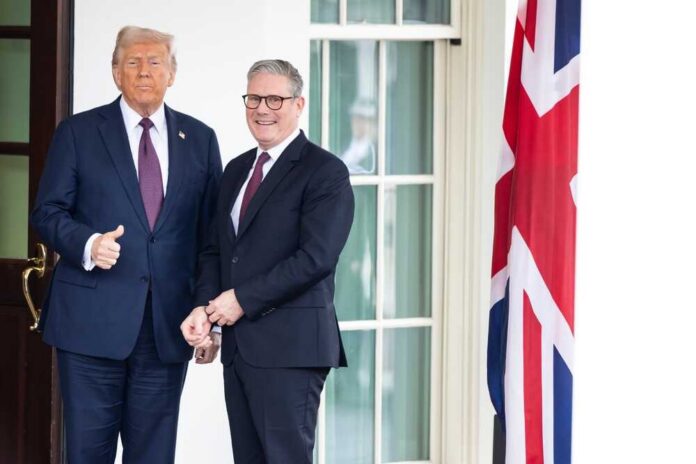
President Donald Trump’s latest criticism of the UK-Mauritius Chagos arrangement centers on a simple point: a lease is not sovereignty. The deal would hand Mauritius formal control of the archipelago while the UK and US keep operating from Diego Garcia under a long-term lease, reported as 99 years. After earlier shifts in tone, Trump publicly warned Prime Minister Keir Starmer that “leases are no good,” framing the agreement as strategically risky.
The policy confusion matters because the US position has looked split-screen. Reporting describes the US government backing the deal officially, while Trump posted opposition and the White House confirmed those posts as policy. That creates a practical dilemma for London: even if diplomats and defense planners believe the lease protects access, Trump’s view signals that Washington may not treat a lease as a durable guarantee if regional conditions deteriorate or if partners reinterpret the terms.
Why Diego Garcia is the real center of gravity
Diego Garcia is not a symbolic outpost; it is a core logistics and power-projection node for the US and UK in the Indian Ocean. The base has supported major operations for decades and sits within reach of Middle East hotspots and shipping lanes. In the current debate, Trump explicitly tied the base to the prospect of confrontation with Iran, arguing that the US cannot afford uncertainty over legal authority, access, or the political climate surrounding the facility.
Starmer’s government has argued the opposite: transferring sovereignty could reduce legal vulnerability created by international rulings and claims against Britain’s continued control. The 2019 International Court of Justice advisory opinion urged the UK to end administration of the territory, and the dispute is tied to the historic forced removal of roughly 1,500 Chagossians in the 1960s and 1970s so the base could be built. Those facts create moral and legal pressure even if the ruling is non-binding.
Starmer’s squeeze: security arguments vs. domestic backlash
Politically, Starmer faces pressure on multiple fronts at once. Conservatives and defense hawks question why Britain would relinquish sovereignty over territory hosting a critical allied base. At the same time, activists and some legal observers see the handover as long overdue, citing the displacement of Chagossians and the international legal findings. Reporting suggests Starmer has faced accusations of a “U-turn” or a pause, even as the UK insists the agreement secures the base “for generations.”
The money angle sharpens the controversy. The reported lease cost—about $136 million per year—lands on UK taxpayers at a time when voters across the West are increasingly skeptical of elite-driven foreign policy projects that never seem to come with a clear off-ramp. UK officials have also voiced concern that if the deal collapses after commitments were made, the bill could run into the billions in compensation and related costs, turning a strategic argument into a fiscal one.
What the stop-and-start politics reveals about allied governance
The most striking feature is how quickly big strategic decisions can become hostage to political legitimacy problems. The deal was described as welcomed by major partners at points, including within the broader US-led security ecosystem, and US Secretary of State Marco Rubio reportedly endorsed it after review in 2025. Yet Trump’s repeated reversals—support, opposition, renewed praise, then opposition again—show how fragile “consensus” can be when leaders believe voters no longer trust bureaucratic assurances.
‘U-Turn’ Starmer Pauses Plans To Hand Over Chagos Islands and the Diego Garcia Airbase Back to Mauritius After Trump Called It ‘An Act of Great Stupidity’
READ: https://t.co/AriTK8Ek7e pic.twitter.com/Ofg0pQjz7g
— The Gateway Pundit (@gatewaypundit) April 12, 2026
For American audiences frustrated with globalism and elite bargaining, the episode lands as a familiar pattern: officials promise that a complex arrangement will “secure” national interests, then citizens watch terms get renegotiated under pressure. For liberals worried about discrimination and historical wrongs, the Chagossian story remains unresolved even if sovereignty changes hands. What’s still unclear is the concrete status of any UK “pause,” because public reporting notes pressure and implications, while official lines emphasize continuity and security.
Sources:
Trump slates Starmer over Chagos Islands lease deal – in third U-turn
Trump U-turns on U.K.’s Chagos Islands deal, claims it’s “great stupidity”