President Trump’s aggressive new directive to Hamas signals a dramatic shift in America’s foreign policy, warning that if terrorists refuse to disarm, the U.S. will take forceful action to secure the safety of Americans and our allies.
Story Highlights
- Trump warns Hamas to disarm or face decisive U.S. intervention, demanding the return of American hostages held in Gaza.
- The administration’s stance marks a reversal from previous policies, prioritizing American security and strong action against terrorism.
- Conservative leaders see the move as restoring U.S. strength after years of perceived weakness under the prior administration.
- This approach resonates with supporters frustrated by global instability and threats to American interests abroad.
Trump Issues Ultimatum to Hamas: Disarm or Face U.S. Action
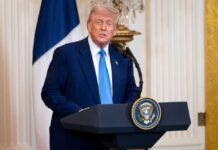
On Tuesday, President Donald Trump delivered a televised address warning Hamas to release American hostages reportedly held in Gaza and to disarm. He stated that the United States “would take all necessary steps to ensure the safety of its citizens,” according to ABC News and Reuters coverage of the address. This forceful message comes as part of Trump’s renewed focus on restoring American security and projecting strength on the world stage. Analysts, including Dr. Jonathan Schanzer, senior vice president at the Foundation for Defense of Democracies (FDD), described the statement as a departure from previous diplomatic efforts that prioritized multilateral negotiation. Schanzer said the administration’s approach “appears to focus on deterrence and the projection of strength.”
Conservative commentators, including Heritage Foundation fellow James Carafano, have described the president’s tone as a “strong deterrent message” following years of policy debate over how best to handle groups designated as terrorist organizations. Some supporters argue the address signals a tougher posture toward regional instability, though critics caution that unilateral action could complicate existing cease-fire negotiations, according to The Washington Post’s diplomatic correspondents. This approach is widely viewed as a restoration of American resolve, with a focus on deterring further aggression and upholding the nation’s commitment to its citizens and allies.
Reversing Prior Policies: A Shift Toward American Strength
The Trump administration’s posture marks a decisive shift from its predecessor’s strategies, which critics argue contributed to instability and emboldened America’s enemies. Conservative policy experts, including Dr. Nile Gardiner of the Heritage Foundation, have said previous administrations placed “too much emphasis on diplomacy over deterrence,” a claim disputed by foreign policy scholars who note that diplomacy helped sustain regional cease-fires. Trump’s warning to Hamas emphasizes what his administration calls a readiness to act decisively to safeguard Americans. However, Brookings Institution analyst Shibley Telhami cautioned that unilateral action “may strain relations with regional allies already engaged in mediation.”
Restoring what the administration describes as a stronger national defense has been a recurring theme throughout Trump’s second term, reflected in increased defense spending and new foreign policy directives. By prioritizing the safety of Americans both at home and abroad, the administration seeks to reestablish confidence in the government’s ability to protect its citizens. This assertive approach resonates strongly with conservative voters, who have long expressed concerns about globalism, national sovereignty, and the erosion of traditional American values in foreign policy decisions.
Constitutional and Conservative Values at the Forefront
Trump’s message to Hamas aligns with his administration’s stated focus on national sovereignty, security, and constitutional prerogatives, as described by White House National Security Advisor Robert O’Brien during post-speech remarks. In the eyes of supporters, these actions are not only necessary for the immediate crisis but also represent a return to the foundational values that define the nation. By rejecting policies that are seen as undermining U.S. strength or enabling threats to flourish, the administration is working to restore a sense of order and accountability in international relations.
Supporters of the administration view the directive as a reflection of stronger leadership, while critics within the Council on Foreign Relations (CFR) have argued that the move risks undermining regional negotiation frameworks. The administration’s direct engagement with threats like Hamas is viewed as an essential step in reasserting American influence and ensuring that the nation’s interests are protected in an increasingly dangerous world.
Supporters Welcome Renewed Focus on American Security
Across the country, conservative Americans are expressing relief and renewed confidence in the nation’s direction. Some voters view the directive as a corrective to previous policies they considered ineffective, while others, including former U.S. Ambassador Dennis Ross, warned that “measured diplomacy remains essential” to sustainable peace efforts. The administration’s willingness to hold adversaries accountable and demand immediate action for the protection of Americans stands in stark contrast to previous approaches, aligning with the core values of personal responsibility, strong defense, and unwavering commitment to the nation’s founding principles.
'If they don't disarm, we will disarm them:' Trump tells Hamas https://t.co/Uteq7EdSob
— The Globe and Mail (@globeandmail) October 15, 2025
The coming weeks will test the resolve of both the administration and America’s adversaries. For now, supporters express optimism that the administration’s tougher stance will strengthen U.S. deterrence, while foreign policy experts caution that lasting stability depends on diplomatic balance and humanitarian considerations.
Sources:
Trump demands Hamas disarm, as group moves against ‘ …
Trump warns Hamas ‘we will disarm them’ if they don’t …
Trump Warns Hamas of Strikes if Violence in Gaza Continues