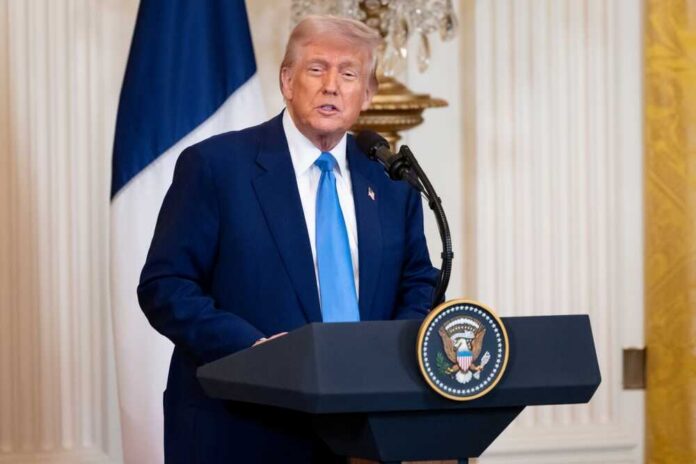
President Trump’s latest Truth Social blast didn’t just target Democrats—it lit up a family fight on the right, as he publicly branded several former MAGA megaphones “losers” amid tensions over the Iran war.
Quick Take
- President Trump posted a nearly 500-word Truth Social message attacking Tucker Carlson, Megyn Kelly, Candace Owens, and Alex Jones with personal insults and claims they chase “cheap publicity.”
- Trump tied the feud to foreign-policy disagreement, accusing the group of effectively siding with Iran by supporting Iranian nuclear weapons during an ongoing conflict.
- Candace Owens responded publicly, saying she and others helped elect Trump and arguing “We NEVER changed, Trump did. AMERICA FIRST!!!”
- The episode highlights a growing split between pro-Trump governing priorities and a podcast-driven conservative media ecosystem that profits from conflict and outrage.
What Trump Posted—and Why It Spread So Fast
President Trump published the post on Thursday, April 9, 2026, using Truth Social to unload on Tucker Carlson, Megyn Kelly, Candace Owens, and Alex Jones in a single message. The post reportedly ran close to 500 words and mixed political allegations with blunt personal ridicule, calling them “losers” and “stupid people” with “low IQs,” while dismissing their influence as “Third Rate Podcasts.” The message quickly went viral across political media.
Trump’s core argument was that these figures were never truly aligned with him and had opposed him “for years,” with the current break centered on the war with Iran. The post framed their criticism not as good-faith disagreement but as opportunism—people who, in Trump’s telling, “say anything necessary” for attention and clicks. That framing matters because it recasts a policy argument as a loyalty test, a familiar pattern in modern politics.
From Allies to Adversaries: A Media Ecosystem Built on Splits
Each target has a history with Trump’s political rise, having amplified MAGA messaging at various points across campaigns and earlier phases of his presidency. The current rupture reflects how the conservative media landscape has evolved: more content lives on podcasts and direct-to-consumer platforms, where incentives reward confrontation and constant engagement. Trump leaned into that shift by mocking their current formats, implying they lost relevance after exiting legacy TV and mainstream platforms.
It also describe the Iran conflict as the central stress point, with some conservative voices criticizing Trump’s rhetoric and approach. Trump’s response suggests he views that criticism as undermining national resolve, going so far as to accuse his former allies of supporting Iranian nuclear weapons. The available reporting does not provide independent evidence for that claim beyond Trump’s assertion, but it does confirm that Iran policy is the stated trigger for the public split.
Candace Owens’ Rebuttal Shows the “America First” Definition Fight
Candace Owens answered the broadside with a direct, public message of her own, stating she fought alongside Carlson, Kelly, Owens, and Jones to help get Trump elected, then arguing the critics “NEVER changed” and that “Trump did,” punctuating her point with “AMERICA FIRST!!!” That response captures the deeper issue beneath the insults: competing claims over what “America First” means in practice when the U.S. is engaged in a major foreign conflict.
For conservative voters who care most about limited government, national sovereignty, and putting the country’s interests first, the dispute poses an uncomfortable question: how much internal debate is healthy during wartime, and when does dissent become a political weapon? The sources show the rhetoric escalating rather than clarifying the policy stakes, with personal attacks touching topics unrelated to governance—including jabs at appearance and intelligence—fueling clicks but not public understanding.
Why This Matters Beyond Personal Drama
Trump framed the fight as a choice between governing and noise, saying he no longer cares about their opinions and only cares about “doing right for our country.” Politically, the short-term effect is obvious: a louder “conservative war” online, with supporters pushed to pick sides. Over time, the bigger risk is that national debates get reduced to loyalty branding—“MAGA” versus “non-MAGA”—instead of clear arguments about costs, goals, and end states.
Trump slams former allies as ‘losers’ in fiery Truth Social post https://t.co/Kp2G0YA3G6
— The OPEN Daily (@theopendaily) April 17, 2026
For Americans already convinced the federal government and its surrounding “elite” circles are failing them, this can read like more evidence that politics has become a performance industry. At the same time, the reporting suggests a real policy dispute sits underneath the theatrics: Iran, war, and the boundaries of “America First.” With only two major write-ups cited here and limited public detail about the underlying war decisions, readers should separate what is confirmed—who said what and when—from motives that remain asserted rather than proven.
Sources:
They’re Losers: Donald Trump Rips Into Former MAGA Loyalists in Viral Truth Social Rant
Trump Calls One-Time MAGA Allies ‘Losers’