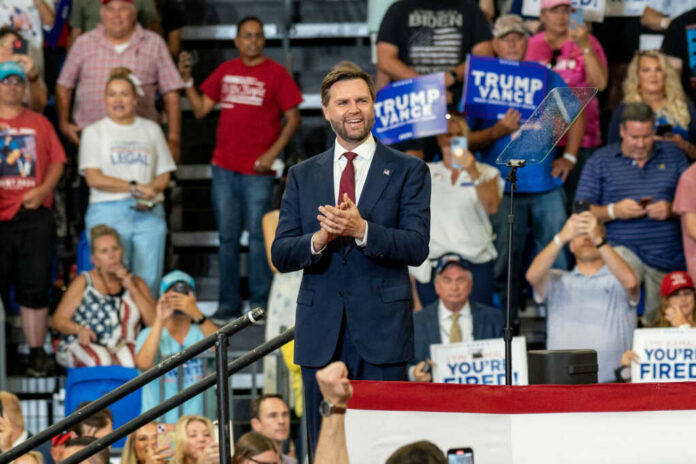
Vice President JD Vance stands alone as the sole American leader trusted to negotiate peace with Iran in Pakistan, a high-stakes gamble amid threats of renewed U.S. military action that could spike global oil prices and endanger American interests.
Story Snapshot
- Vance leads U.S. delegation in Islamabad for talks aimed at securing a lasting ceasefire and reopening the Strait of Hormuz, vital for 20% of world oil.
- President Trump backs Vance with firm warnings, criticizing Iran as “dishonorable” while preparing U.S. forces to “reload” if negotiations fail.
- Pakistan hosts as neutral ground, hosting bilateral meetings and ongoing discussions at a secure hotel following a fragile two-week truce.
- Delegates include Steve Witkoff and Jared Kushner; Iranian team led by Mohammad Bagher Qalibaf arrives with preconditions amid shipping disruptions.
Vance Arrives to Lead Critical Talks
Vice President JD Vance landed in Islamabad on Friday, spearheading U.S. negotiations with Iran to enforce a two-week ceasefire agreed on Tuesday. The talks target de-escalation after U.S. strikes and Israeli actions in Lebanon. Vance met Pakistan’s prime minister at 10:30 a.m. local time, joined by special envoy Steve Witkoff and Jared Kushner. Pakistan’s Foreign Ministry reaffirmed its facilitation role, emphasizing regional stability. This setup projects American strength under Trump’s America First policy.
Trump’s Tough Stance Backs Diplomacy
President Trump oversees the effort, declaring the U.S. military is “reloading” should talks collapse. On Thursday, he labeled Iran “doing a very poor job, dishonorable.” Vance warned against “playing games” before departure, extending an “open hand” only for good faith. Trump insists on no nuclear weapons and Strait reopening “with or without him.” This blend of diplomacy and deterrence underscores limited government intervention abroad while safeguarding U.S. economic security from energy disruptions.
Saturday’s discussions proceed at an Islamabad hotel, with Iranian delegates arriving under Parliament Speaker Mohammad Bagher Qalibaf. Security seals the Red Zone, and a media center supports coverage. Vance expressed optimism for a “positive outcome,” but enforcement lags as shipping fears persist despite Iran’s commitments.
Stakes Tied to Strait of Hormuz
The Strait of Hormuz, handling 20% of global oil, remains choked by security concerns, threatening price spikes and inflation burdens on American families. Success could stabilize energy markets and reduce refugee flows from de-escalation. Failure risks wider war, defense escalations, and economic volatility hitting everyday workers. Shipping firms halt operations, while Gulf states and importers watch closely. Trump’s team prioritizes practical outcomes over endless foreign entanglements.
Only Vance Can Go to Pakistan https://t.co/qhopAmux9W
— Marlon East Of The Pecos (@Darksideleader2) April 11, 2026
Pakistan’s Role and Broader Implications
Pakistan provides neutral venue, drawing on precedents like Afghan talks, with visa-on-arrival for delegates and journalists. Discrepancies emerge: U.S. focuses on Iran and allies like Israel, while Pakistan’s PM includes Lebanon in the truce. Iranian preconditions add tension. Long-term, stable Hormuz eases global energy costs, aligning with conservative values of energy independence via fossil fuels over risky renewables. Both sides share frustration with elite-driven policies failing ordinary citizens.