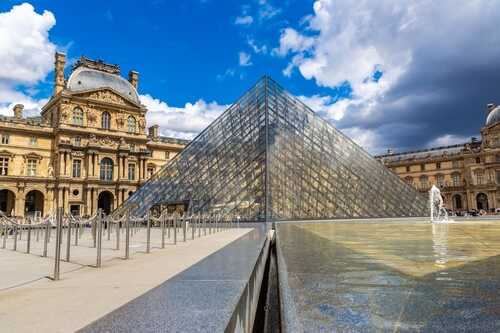
Two arrests in the audacious Louvre heist expose alarming security failures at one of the world’s most prestigious cultural institutions, raising serious questions about France’s ability to protect its national heritage from brazen criminals.
Story Highlights
- Masked thieves stole eight priceless French crown jewels in a seven-minute daylight heist using simple tools
- Two suspects arrested after stealing items including Napoleon III’s wife’s diadem from the Apollo Gallery
- Security experts warn the incident exposes vulnerabilities in even the most advanced museum protection systems
- French officials call for nationwide museum security review following the brazen attack on national heritage
Brazen Daylight Robbery Shocks Paris
French law enforcement arrested two men connected to the stunning October 19th heist at the Louvre Museum, where masked criminals executed a precision robbery lasting just seven minutes. The thieves used basic tools—ladders and grinders—to breach a second-floor window in the Apollo Gallery, smashing display cases and stealing eight pieces of priceless French crown jewels. Among the stolen treasures was a diadem worn by the wife of Napoleon III, representing irreplaceable French cultural heritage now lost to common criminals.
The robbery occurred at 10:00 AM on a Sunday, merely thirty minutes after the museum opened to the public. Within seven minutes, the perpetrators had completed their operation and escaped on motorbikes, dropping only one piece during their hasty retreat. This timing demonstrates either remarkable luck or insider knowledge of the museum’s operations, raising troubling questions about potential security breaches from within the institution itself.
🇫🇷 According to the latest report from France’s Ministry of Culture, eight pieces of jewelry were stolen from the Louvre:
– a sapphire tiara,
– a necklace and earrings that once belonged to Dutch Queen Hortense de Beauharnais and later to French Queen Marie-Amélie,
– an emerald… pic.twitter.com/5SbHiuK593— Visegrád 24 (@visegrad24) October 19, 2025
Security Failures Expose Institutional Weakness
The Louvre’s security apparatus, despite housing some of the world’s most valuable artifacts, proved inadequate against determined criminals using low-tech methods. The Apollo Gallery, which contains France’s most precious crown jewels, should have been impenetrable to such a simple approach. Instead, the thieves bypassed supposedly advanced security systems with tools available at any hardware store, highlighting the gap between expensive technology and practical protection.
Nikos Passas from Northeastern University noted that the heist exposes vulnerabilities in even the most sophisticated security systems. Security professionals now emphasize that overreliance on technology creates dangerous blind spots, while human oversight and training remain inadequate. This represents a fundamental failure in protecting cultural assets that belong to the French people and world heritage.
Government Response Falls Short
Interior Minister Laurent Nuñez described the theft as an “attack on national heritage,” while President Emmanuel Macron emphasized the cultural loss and need for vigilance. However, these statements ring hollow when the government’s own institutions failed so spectacularly to protect irreplaceable artifacts. The Louvre operates under French Ministry of Culture oversight, making this security failure a direct government responsibility that officials cannot deflect.
French officials have promised a comprehensive review of museum security nationwide, but this reactive approach comes too late for the stolen crown jewels. The government’s failure to anticipate and prevent such an obvious security vulnerability demonstrates the kind of institutional complacency that conservatives have long warned undermines national strength and cultural preservation.
Sources:
Louvre Museum Robbery Security Analysis – Northeastern University
Museum Security Louvre Heist – ASIS Security Management
The Louvre’s History of Burglaries – Le Monde