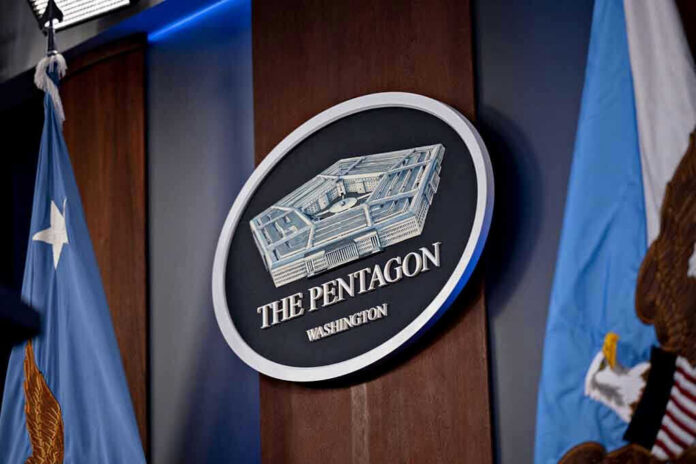
The Pentagon’s quiet decision to slash nearly 180 faith and belief categories from its official records has opened a new front in the battle over religious freedom inside the U.S. military.[1][2][4]
Story Snapshot
- The Department of Defense cut its religious affiliation codes from 211 down to just 31, eliminating about 180 previously recognized identities.[1][2][4]
- Minority and nontraditional beliefs such as Pagans, Wiccans, Druids, Asatru, Humanists, Atheists, and Unitarian Universalists reportedly disappeared from the list.[1][4]
- Officials say the move is only an administrative “streamlining” to help chaplains, but it concentrates recognition heavily around major Christian groups and a few broad categories.[1][2][4]
- Critics warn that erasing detailed codes risks sidelining minority believers, weakening data transparency, and inviting future abuses of service members’ First Amendment protections.[1][2][4]
Pentagon Shrinks Recognized Faith Codes From 211 to 31
A May 20 memorandum signed by Under Secretary of Defense for Personnel and Readiness Anthony Tata ordered a dramatic cut in the number of religious affiliation codes the military uses in its personnel systems, reducing the list from 211 down to just 31.[1][4] These codes are not merely cosmetic labels; they are used to record each service member’s faith in official databases and to help plan religious support, including chaplain assignments and coverage of religious needs across units.[1] The Department of Defense has described this move as part of a broader reform of the chaplain corps and religious-support infrastructure initiated by Defense Secretary Pete Hegseth, who argued that the code system had grown bloated and unwieldy over time.[2] From a conservative perspective, any major change to how the government tracks and serves the free exercise of religion inside the armed forces deserves careful scrutiny, especially when it involves an internal process shielded from public debate by bureaucratic language.[1][2][4]
Reports based on the memo and supporting documents say roughly 180 existing categories were removed or merged when the list was cut down.[1][2][4] Before the change, the codebook explicitly recognized a wide range of faiths and belief systems, from multiple Christian denominations to newer or smaller traditions such as Wicca, Druidry, Asatru, and other Pagan paths, along with explicitly nonreligious identities like Atheists and Humanists.[1][4] Military.com and other outlets note that the new list still includes Agnostics, Buddhists, Hindus, Islam, Judaism, Sikhs, and a large cluster of Christian denominations such as Baptists, Catholics, Lutherans, and Methodists.[2][4] However, approximately two-thirds of the remaining codes are now Christian categories, meaning most of the diversity that was trimmed came from minority religious or alternative belief groups rather than from the dominant faith traditions already well-represented in the chaplain corps.[1][4]
Minority Faiths and Nonreligious Identities Lose Specific Recognition
Coverage by religion-focused outlets underscores that some of the clearest losers in this reshuffle are minority and nontraditional belief systems that previously had their own entries in the code system.[1][4] The Wild Hunt and Religion News Service report that designations for Atheists, Asatru, Deists, Druids, Humanists, Pagans, Wiccans, Rosicrucians, Spiritualists, and Unitarian Universalists, among others, no longer appear as distinct options under the revised scheme.[1][4] These removals do not formally ban anyone from holding those beliefs, but they do collapse once-specific identities into vague buckets like “other religion” or “no religion,” which weakens the government’s ability to see how many service members share a given worldview.[1][2][4] Earlier guidance on “Faith and Belief Codes” stressed that this coding system existed precisely to give the Department accurate data for personnel reporting and religious support planning, which makes the loss of specificity more than a symbolic change. When a faith or belief disappears from that ledger, it becomes harder to justify chaplain expertise, tailored resources, or even awareness at the command level that these communities exist inside the ranks.[1][2]
Defense officials are presenting a calmer narrative, emphasizing that this is about trimming an unwieldy list rather than picking winners and losers in the marketplace of ideas.[2][4] Statements cited in several reports say the goal is to “streamline” how religious preferences are collected and to “enhance the delivery of targeted religious support from the chaplaincy,” not to restrict worship or private belief.[2][4] Audacy notes that service members can still choose “other” or decline to state a religious preference on forms and dog tags, and that the memo does not alter their basic right to practice their faith.[2] The Department of Defense has also stressed that these codes are a reporting mechanism, not a list of “officially sanctioned” religions, and that chaplains remain responsible for serving all personnel regardless of how neatly their beliefs fit into the remaining categories.[1] That argument has some weight, but it leaves unanswered how chaplains and commanders will proactively identify and plan for the needs of groups that are now statistically invisible or buried under “other.”[2][4]
What This Means for Religious Liberty, Transparency, and Conservative Concerns
From the standpoint of religious liberty and limited government, the most immediate concern is not that soldiers, sailors, airmen, or Marines are suddenly banned from worshiping according to conscience, because no evidence has yet surfaced of a service member being denied accommodation solely because a code vanished.[1][2][4] Instead, the risk is subtler but real: once the Department of Defense stops tracking minority beliefs with any precision, it becomes easier for bureaucrats to downplay their presence, under-resource their needs, or quietly postpone requests that require specialized knowledge.[1][2] A system that once signaled to chaplains, planners, and Congress that genuine pluralism exists within the ranks is being flattened into a chart dominated by a handful of large traditions plus a catch-all “other,” which undermines transparency and real accountability.[1][2][4] That should trouble conservatives who believe the First Amendment protects free exercise for all and who distrust federal agencies that ask us to “just trust” their internal processes without providing full documentation and a clear explanation of the criteria behind each cut.[1][2][4]
Hegseth directs DOD to drop hundreds of faiths from recognized religion list
DOD moved this week to dramatically reduce the number of recognized religions, faiths and belief systems from more than 200 all the way to 31.https://t.co/JvIHeLfsOx via @@YahooNews— そもそも☮☕🌳🐱🎶 (@1959Somosomo) June 6, 2026
At the same time, the Pentagon insists that 82 percent of religious service members already fell into just a few major codes, which it cites as justification for the consolidation.[2] That statistic, combined with the claim that the old system had become “impractical and unusable,” fits a broader pattern where agencies frame category cuts as harmless efficiency gains, even though those cuts predictably fall hardest on smaller, less politically powerful groups.[2] For conservative readers who value both religious heritage and equal treatment under the law, this moment is a reminder to watch federal “streamlining” efforts closely, demand the full May 20 memo and annexes, and press Congress to verify that “other religion” does not become a bureaucratic black hole.[1][2][4] A military that claims to defend the Constitution must be able to demonstrate in detail, not just in talking points, that every service member’s conscience is respected—not only the ones whose faith fits neatly in the surviving 31 boxes.[1][2][4]
Sources:
[1] Web – Pentagon cuts its list of religious identities by 180
[2] Web – Pentagon Cuts Religious Affiliation Codes, Dropping Pagan, Wiccan …
[4] Web – Pentagon drops 180 faiths from military’s recognized religions list