
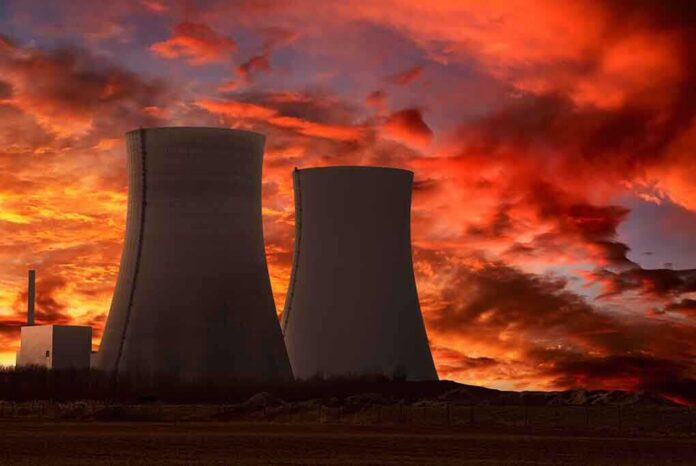
Hungary just shut down its only nuclear power plant and dimmed the lights on more than 300 landmarks in Budapest because a river got too low.
Story Snapshot
- Record-low Danube water levels forced Hungary’s Paks nuclear plant to shut down for the first time in over 40 years.
- Budapest Mayor Gergely Karácsony ordered decorative lighting turned off on more than 300 buildings, including Parliament and Buda Castle.
- Officials say street lighting, public transit, and essential services remain fully operational.
- The government asked households and businesses to cut electricity use during peak evening hours from 5 p.m. to 10 p.m.
- Hungary’s Prime Minister called it “the most critical five days” the country’s grid has faced.
A Single Plant, A Single Point of Failure
Hungary’s entire nuclear power supply runs through one facility: Paks. That plant needs Danube River water to cool its reactors. When the Danube dropped to record lows this summer, Paks had to shut down entirely for the first time in more than four decades, according to Reuters. That single-source dependency left the country scrambling for backup power almost overnight.
Hungary’s Prime Minister publicly warned the nation faced its “most critical five days” as the shortage bit down. That kind of blunt admission from a national leader is rare, and it signals just how fragile the country’s power grid became once its one nuclear source went offline. Reuters also reported the government told households and businesses to cut usage during peak evening hours.
Budapest Goes Dark, But Not Completely
Mayor Karácsony announced that Budapest Public Works would switch off decorative lighting on more than 300 buildings across the capital, including Parliament, Buda Castle, and the Citadella. Photos of the darkened skyline spread fast, feeding a dramatic “Budapest goes dark” narrative that Reuters itself highlighted in a video report on the crunch.
The reality is narrower than the headlines suggest. Reporting on the ground made clear that “regular street lighting will stay on exactly as normal” and that the policy “only affects festive, decorative lighting,” not core infrastructure. Slovak outlet iMeteo confirmed street lamps and public transit were untouched by the measure. Hungary’s Energy Minister, Dávid Vitézy, said the lights would stay off only until running them stopped placing “an unnecessary burden” on the grid.
A Warning Sign for Energy-Dependent Nations
Officials insist the blackout is temporary and tied directly to river levels, with lighting set to return once the Danube recovers enough to let Paks restart. That’s a reasonable emergency response on its face. But it also exposes a hard truth: when a country builds its power supply around one plant and one water source, a drought can bring the whole system to its knees.
Hungary faces “the most critical five days” ahead as a record drought in Central Europe has forced Budapest to shut down a nuclear power plant that generates 40 percent of the country’s electricity, Prime Minister Péter Magyar said today.https://t.co/ylDiHXdfy4
— POLITICOEurope (@POLITICOEurope) August 2, 2026
American conservatives have watched Europe lecture the world on climate policy while its own energy grids buckle under weather swings. Hungary’s blackout is a small but telling example of what happens when energy security takes a back seat to political comfort. President Trump’s “energy dominance” push at home, drilling more, building more plants, and refusing to bet the grid on a single fragile source, looks a lot smarter next to Budapest’s darkened skyline.
Hungary’s leaders deserve credit for keeping street lights and transit running while triaging a real supply gap. But the episode should serve as a warning here at home too. Diverse, reliable domestic energy production isn’t a talking point, it’s the difference between a minor inconvenience and a national emergency when the weather turns against you.
Sources:
straitstimes.com, reuters.com, en.people.cn, instagram.com, politico.eu, ground.news