The Justice Department sued California to stop counting tens of thousands of mail ballots flagged to “likely noncitizens,” sharpening a high-stakes fight over election integrity just weeks before votes are tallied.
Story Highlights
- The Department of Justice (DOJ) filed a federal lawsuit to halt counting of disputed ballots until citizenship is verified.
- Federal agencies flagged more than 20,000 registrants as likely noncitizens after matching state and federal data.
- California’s top election official said the federal government did not provide supporting evidence for the list.
- DOJ asked courts for a narrow remedy: segregate and verify before tabulation, not blanket rejection.
Federal Lawsuit Seeks to Protect Federal-Only Voting Rules
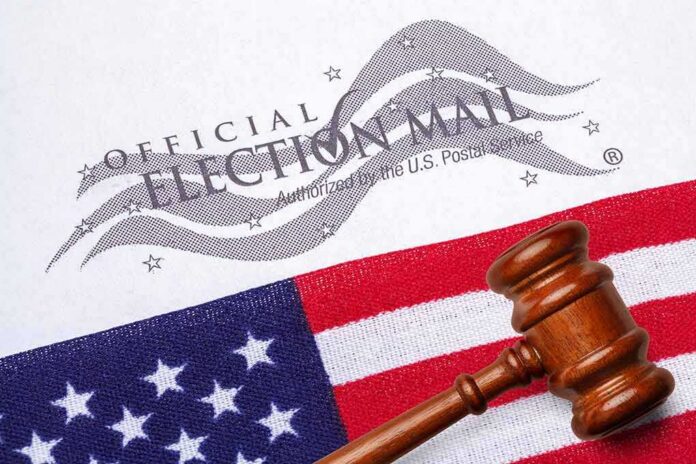
The Department of Justice filed United States v. State of California on October 15, asking a federal court to block the state from counting mail ballots tied to a list of registrants flagged as likely noncitizens until their citizenship can be confirmed. Federal law bars noncitizens from voting in federal elections. The lawsuit seeks court-ordered segregation and verification, not an immediate purge. The government argues this step guards lawful votes while preventing illegal ones from slipping through.
The Justice Department says the list comes from a review that compared California voter rolls with federal databases. The review, described by the government as multiagency, identified more than 20,000 registrants who were likely not citizens and who received vote-by-mail ballots. According to reporting, federal officials delivered the names to California on a password-protected device and gave a 48-hour window to review before suing when the deadline passed. The DOJ’s request focuses on verification before any counting proceeds.
What the Data Can—and Cannot—Prove Right Now
The federal filing uses the term “likely,” which signals a data flag, not a final ruling on any person’s status. The materials cited in news reports do not claim that each flagged registrant cast a ballot or that any specific ballot was counted. The list’s matching method has not been fully described in public reports, so the error rate is unknown. That makes verification the hinge: separating unlawful votes without disenfranchising citizens who were misidentified by imperfect databases.
California’s secretary of state, Shirley Weber, said her office did not receive the underlying evidence or a clear method explaining how the federal list was built. She also argued the state would not strip rights based on an unsupported and likely inaccurate designation from Washington. State officials and outside experts have raised concerns that database matches can misfire due to name overlaps, outdated records, or later naturalization that federal files do not yet reflect. These are known issues in large, cross-agency data sweeps.
Verification First: A Narrow Remedy to Secure Election Integrity
Federal officials asked the court for a targeted remedy that aligns with common sense: hold the flagged ballots aside, check citizenship, then count only those that belong to eligible voters. That approach aims to protect legal votes from dilution while avoiding mass rejection. For conservatives who demand both secure rolls and fair treatment, this is the practical lane: verify each case, document decisions, and keep a clean chain of custody through Election Day and canvass.
California disputes the process, timeline, and transparency. Reports say the state got about 48 hours to assess around 20,000 names, a tight window for county officials who must confirm identity and citizenship one by one. That timetable could stress local systems and risk errors. Still, the legal line remains bright: noncitizens cannot vote in federal races, and counting unlawful ballots undermines equal protection and trust. The court will now weigh speed, accuracy, and the clear federal interest in lawful elections.
What Comes Next and What Voters Should Watch
The court could order California to segregate ballots tied to the flagged names and set verification steps with clear deadlines. That would include agency checks and notice to voters whose status is disputed, with a path to correct records. The key questions are how many flagged registrants returned ballots, how many are confirmed citizens, and how fast accurate checks can be finished before certification. Transparent, auditable steps will steady public faith.
Election integrity is not partisan. It is the backbone of consent of the governed. Patriots expect rules that are simple and firm: one citizen, one legal vote, counted once. The Justice Department’s suit presses that standard with a narrow ask. California’s pushback demands evidence and time to review. Both points can be honored if the court orders swift, case-by-case verification. That outcome would protect lawful voters, deter illegal ballots, and keep faith with the Constitution.
Sources:
redstate.com, justice.gov, politico.com, usatoday.com, apnews.com, rhodeislandcurrent.com