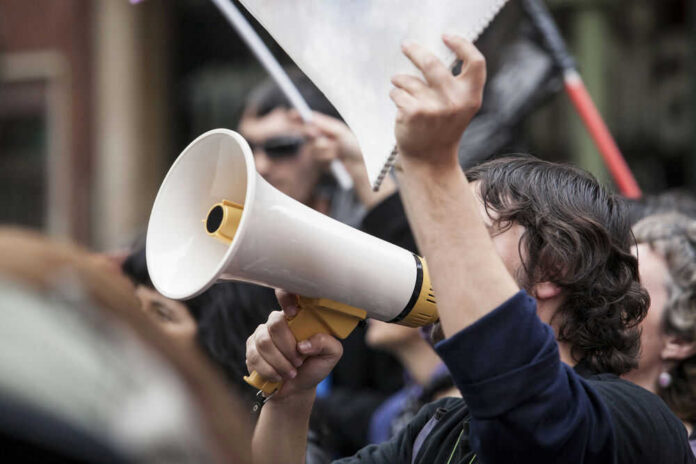
The American Civil Liberties Union (ACLU) is now coaching anti-Trump protesters on how to hide their identities and dodge government tracking tools — and the group’s own published guides spell out exactly how to do it.
Story Highlights
- The ACLU is telling protesters to use the Signal app, turn off Bluetooth, and enable airplane mode to avoid being tracked by law enforcement.
- The group’s guides advise disabling face and fingerprint locks on phones so police cannot force access to data if a device is seized.
- Protesters are told to wear masks and sunglasses to beat facial recognition cameras and to avoid driving so license plate readers cannot track them.
- The ACLU warns against posting photos or live-streaming at protests, saying images can reveal exact locations and expose other protesters’ identities.
ACLU Tells Protesters: Go Dark Before You March
The ACLU is giving anti-Trump protesters a detailed digital playbook to avoid being tracked. The group’s Washington, D.C., chapter published a guide telling demonstrators to fully encrypt their phones, switch on airplane mode, and disable face and fingerprint unlock features. The reason given: police may seize phones at a protest, and without biometric locks disabled, officers could potentially force access to personal data.
ACLU Senior Policy Counsel Chad Marlow went further at a recent “No Kings” protest in New York City. He told the crowd to use Signal — an encrypted messaging app — for all communication. He also warned protesters not to post photos showing other people’s faces or to live-stream, saying those actions can reveal exact locations and make it easy to identify individuals in the crowd.
License Plates, Facial Recognition, and Metadata Warnings
The ACLU’s guides go well beyond phone settings. The group warns that police use automated license plate readers to log the movements of people who drive to protests. Its advice: walk or ride a bike instead. The guides also tell protesters to wear face masks and sunglasses to block facial recognition cameras that law enforcement may operate near demonstration sites.
The group also flags a less obvious risk — photo metadata. Every digital photo contains hidden data that can tell investigators the exact time and location the picture was taken, plus the model of the device used. The ACLU’s fix: transfer photos to a computer, take a screenshot of the image, and post only the screenshot. That strips the embedded location and device data before anything goes online.
A Decades-Long Pattern — But New Questions in 2026
The ACLU frames all of this as standard civil liberties work. The group has published protest surveillance guides for years, and its own materials note that surveillance targets have included anti-war, anti-abortion, and animal rights activists — not just left-leaning groups. The guidance is not new, but the timing — aimed squarely at anti-Trump demonstrations — is drawing fresh attention and sharp criticism from conservatives who see it as the ACLU helping protesters evade legitimate law enforcement oversight.
"Turn Off Bluetooth, Use Signal": ACLU Advises Anti-Trump Protesters On Evading Gov't Surveillance | ZeroHedge https://t.co/XSuGAl7rV7
— AzLawDawg (@KellerDavi4755) July 10, 2026
It is worth noting that the ACLU has not cited specific, documented cases of anti-Trump protesters being harmed by surveillance tools to back up its “significant risk” warnings. The group’s own legal filings show it believes many surveillance programs operate with some level of judicial oversight. Still, the group’s public-facing advice treats every protest as a high-risk surveillance environment — and tells demonstrators to act accordingly, whether the threat is proven or not.
What This Means for Law-Abiding Americans
There is a real tension here. Americans do have Fourth Amendment rights against unreasonable searches, and police cannot demand to view your phone photos without a warrant or legally delete your data. Those are genuine protections worth knowing. But there is a big difference between knowing your rights and running a counter-surveillance operation. The ACLU’s step-by-step guide — turn off Bluetooth, scrub your metadata, cover your face, ditch your car — reads less like a rights primer and more like an operational security manual for people who want to make sure no one can ever identify them.
For conservatives who believe in law and order and transparent civic participation, the ACLU’s playbook raises a fair question: if your protest is lawful and peaceful, why do you need to go this far to make sure the government cannot see you? That question deserves a straight answer — and the ACLU has not provided one.
Sources:
aclu-sdic.org, aclu.org, acludc.org